

By Habila Ibrahim, Abuja | Last Updated on September 17, 2026.
Introduction
When people talk about the major ethnic groups of Benue State, the Idoma people naturally come into the conversation. Most of their homeland is in the south of the state, and Otukpo has been an important centre of Idoma feeling and traditional life.
But there is a question that keeps coming up whenever the history of the Idoma is discussed: Where did the Idoma people migrate from?
The answer is not as simple as pointing to one place on a modern map.
Idoma history has been preserved through oral traditions, family genealogies, songs, poetry, migration stories and the memories passed from one generation to another. Apa is a place where many Idoma traditions link with their ancestral past and the ancient Kwararafa or Okolofa tradition. At the same time, historical research shows that the people who eventually became part of the wider Idoma identity did not necessarily come from one single community or follow one migration route.
That is what makes the story interesting.
Rather than presenting one version as the only truth, it is better to look at the different traditions and understand how migration, settlement, marriage, interaction and the formation of communities gradually shaped the Idoma people we know today.
In this article, I take a closer look at the Idoma people, their origin and migration, their traditional beliefs, festivals, food, clothing, marriage customs and the cultural identity they continue to preserve.
Who Are the Idoma People?
The Idoma are one of Nigeria’s major ethnic groups, with a traditional homeland largely in southern Benue State.
Major Idoma-speaking communities are found in places such as Otukpo, Apa, Okpokwu, Ogbadibo, Ado, Agatu, Ohimini, Obi and surrounding areas. Idoma communities can also be found outside Benue State, including parts of Nasarawa, Cross River, Enugu, Kogi and other parts of Nigeria.
Also Read: Tarok Language: Where Did Tarok In Nigeria Migrate From?
It is important to understand that “Idoma” does not describe a completely uniform population. There are different dialects, local histories and community traditions within the broader Idoma identity. Historical linguistic studies have also described Idoma as a dialect cluster with considerable internal diversity.
So, we should understand that there could be diversities in the culture of Idoma when we talk about Idoma culture.
That diversity is not a weakness. In many ways, it is part of what makes Idoma history worth studying.
Where did the Idoma People Migrate From?
This is probably the most difficult part of the story.
As strongly preserved Idoma oral history has it, many Idoma people share ancestral lineage to an ancient homeland called Apa, associated with the Kwararafa confederacy.
The name Apa has a lot of significance in the history of Idoma. It is not just a place name. To many people, it is their original country and the time prior to the establishment of the various Idoma communities in their present territory.
Traditional accounts describe political instability, warfare and pressure from neighbouring groups as among the reasons people left their earlier settlements. Different groups moved through different places before eventually establishing communities in the Benue Valley and surrounding areas.
Historical sources also support the idea that the Niger-Benue region was an important meeting point for migrations, trade, warfare and cultural exchange. The area was never isolated. Different peoples moved through it over generations, and these movements influenced language, customs and political organisation.
That is why it would be very wrong to assume that every Idoma individual generally moved in one direction from elsewhere, to the present day Otukpo.
The migration was much more complicated.
Some communities have their own ancestral stories, while others trace their origins through particular founding ancestors. The genealogists who have tried to trace the lineage of all the Idoma communities have expressed skepticism about the validity of this claim.
Therefore, the story of migration should be interpreted as a multi-stage process with various groups and settlement, instead of one.
Apa and the Kwararafa Tradition
The connection between the Idoma and Apa is one of the most important parts of Idoma oral history.
Apa is often associated with the wider Kwararafa tradition, a historical confederacy remembered in the traditions of several peoples in the Middle Belt.
The precise location, political organisation and dates of Kwararafa are matters of historical debate. Because of that, it is preferable not to treat all traditional narratives as a straightforward history.
What is clear is that the memory of Apa has remained important in Idoma identity.
For generations, stories about ancestors, migrations and former settlements have been preserved through oral tradition. Within the culture of the Idoma it has traditionally been of utmost importance for people to know of their ancestry. Knowing one’s father, lineage and community was not merely a matter of family pride; it could also tell a person where they belonged within the wider community.
Part of the reason oral history remains so relevant in discussion of Idoma origins.
The Migration into Present-Day Idoma Land
The various groups moved away from earlier settlements and gradually settled in the areas that constitute Idomaland today.
The Benue Valley and neighbouring territories are mentioned in some migration traditions as places communities traveled through before settling here.
The Otukpo area became particularly important in the development of Idoma political and cultural identity.
Villages and lineage groups developed their own leadership structures over time. These communities maintained relationships through kinship, marriage, trade, farming and shared cultural practices.
The formation of Idoma identity was therefore not something that happened overnight.
It developed over generations.
This is an important point because modern maps can sometimes make ancient migration look very simple. A person may look at the present location of the Idoma people and ask, “Where did they come from?” It is better understood by looking at the movement of families, clans, and communities over time.
Idoma Traditional Leadership
Traditional leadership remains an important part of Idoma identity.
The Och’Idoma is the traditional ruler of the Idoma people. Otukpo has long been a center of Idoma traditional administration.
The traditional institution has changed over time, particularly through the colonial period and the development of modern government. However, traditional rulers continue to play important cultural and ceremonial roles.
The Idoma traditional system is not simply about a king sitting in a palace. It is connected with communities, chiefs, families and the history of different groups.
This layered structure reflects the wider history of Idoma society itself.
Alekwu and the Idoma Ancestral Tradition
Alekwu tradition is one of the most fascinating aspects of Idoma cultural heritage.
Alekwu is closely associated with the ancestors and the spiritual world in traditional Idoma thought. It has also been connected with moral behaviour, family life and the relationship between the living and those who have died.
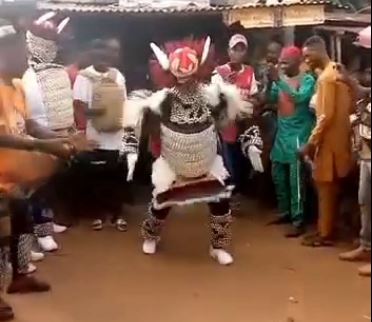
For traditional believers, ancestors were not simply people who disappeared after death. They kept ties with the community and were believed to affect the moral life of their descendants.
Oral poetry and masquerade performances are also ways in which Alekwu traditions are preserved. Scholars have described Idoma Alekwu poetry as an important source for reconstructing aspects of Idoma genealogy, migration and collective memory.
Christianity has changed the religious landscape considerably. Many Idoma people today are Christians, while others maintain cultural practices to different degrees. While some people have abandoned traditional religious practices completely, others continue to value aspects of their cultural heritage.
It is therefore better to speak about Alekwu as a cultural and traditional institution rather than making the blanket statement that all Idoma people still practise it in the same way.
The Famous Red and Black Idoma Attire
Red and black are the famous colors associated with Idoma cultural identity.
The colours have become a powerful symbol of Idoma identity, especially during cultural celebrations, traditional ceremonies and public events.
Different explanations have been given for the meaning of the colours. Historically, red has been associated with strength, power, courage, or the blood of ancestors and heroes, while black has been associated with death, the earth, and remembrance.
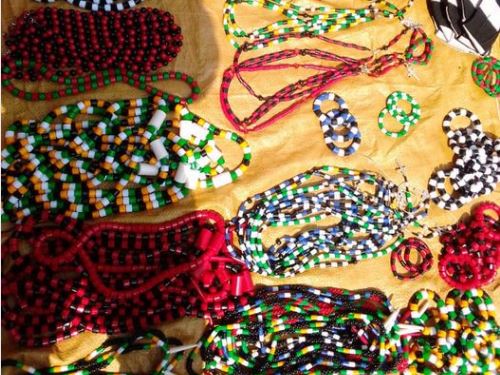
Different sources and communities may interpret the text differently.
What matters most today is that the red and black combination has become a strong visual representation of Idoma identity.
It is worn with pride.
Festivals and Cultural Celebrations
Festivals provide another window into Idoma culture.
They pull people together for more than just entertainment. There’s remembrance in there, real community connection, and a living effort to keep old traditions from disappearing.
Among the celebrations associated with different Idoma communities are Eje Alekwu Ugboju, Igede Agba, Awume Day and the Agatu Fishing Festival.
The traditions of the celebrations are not the same because Idoma communities have their own histories and customs.
The Agatu Fishing Festival, for example, reflects the importance of fishing and waterways to communities in the Agatu area. Fishing is not simply an economic activity there; it can also become a cultural celebration that attracts visitors and creates an opportunity for people to reconnect with their community.
The wider Idoma cultural calendar has also continued to change. Some traditional celebrations have declined, while others have been revived or adapted to contemporary life.
The modern Idoma International Carnival in Otukpo is another instance of the presentation of cultural identity in a contemporary environment. The event brings together traditional dress, music, dance, masquerades and other forms of cultural expression.
Farming and the Idoma Economy
Traditionally, agriculture has been the mainstay of life in the Idoma communities.
The fertile lands of Benue support the cultivation of crops such as yam, cassava, maize, rice, sorghum, soybeans and other food crops.
Farming is more than an economic activity. It is connected to family life, food, festivals and the rhythm of the seasons.
Fishing is also important in riverine communities, particularly around areas such as Agatu.
Traditional skills such as blacksmithing, weaving, dyeing, hunting and other crafts have also formed part of the economic and cultural life of Idoma communities.
Today, of course, Idoma people work in many professions. Teachers, farmers, civil servants, traders, academics, politicians, athletes, entrepreneurs, professionals and religious leaders can be found among Idoma communities in Nigeria and abroad.
The culture has therefore not disappeared simply because the economy has changed.
It is adapting.
Idoma Food and Traditional Dishes
Food is another part of culture that is often easier to understand because it brings people together around the same table.
Traditional Idoma meals are closely related to agriculture and local available ingredients.
Foods commonly associated with Idoma communities include yam, rice, cassava-based meals and different soups prepared with vegetables, seeds and other local ingredients.

Okoho soup is particularly associated with Idoma cuisine and is widely recognised as one of the traditional foods of the people.
Other dishes and ingredients such as okra, egusi and ogbono are also part of the wider food culture of the region.
Food is served during weddings, funerals, festivals, family meetings and other important occasions.
For me, this is one of the easiest ways to get a handle on what culture actually is. A community does not preserve its identity only through books or museums. Sometimes it happens in the kitchen, where an older woman shows a younger one how to make a meal they’ve both eaten a hundred times before.
Traditional Marriage Among the Idoma
Marriage traditionally involves more than the couple.
It connects families.
Like a lot of Nigerian cultures, Idoma marriage traditions have long centered on conversations between the two families involved. Relatives and trusted go-betweens can step in to introduce the families and help everyone get on the same page.
Marriage ceremonies differ quite a bit across Idoma communities, so no single version can honestly be called universal to all Idoma people.
Bride-price negotiations, family visits, gifts and other customary requirements may form part of the process.
Christianity and modern education have also influenced marriage practices. Many Idoma couples today combine traditional family customs with church weddings and modern legal requirements.
You see this blend of old and new playing out across Nigerian communities, and the Idoma are no different.
The Idoma People Today
The Idoma people are not simply a people of the past.
They are a living community.
Idoma people today are found throughout Nigeria and in different parts of the world. Migration for education, employment, business and other reasons has taken many people away from their ancestral communities.
Yet identity often travels with them.
A person living in Abuja, Lagos, Port Harcourt, Jos, Kaduna or outside Nigeria may still identify strongly with their Idoma heritage. Language, food, family history, traditional clothing, festivals and community associations all help maintain that connection.
Younger generations don’t experience culture the way their grandparents did. Not even close.
Social media, education, urbanisation, Christianity, modern employment and intermarriage are changing the way cultural traditions are practised.
That does not necessarily mean the culture is disappearing.
In some cases, it is simply finding a new form.
Why the History of the Idoma People Matters
The history of the Idoma people matters because it tells us something larger about Nigeria.
Nigeria was not created culturally by the boundaries drawn on a modern political map. Long before the country became a republic, communities were already moving, trading, marrying, fighting, forming alliances and creating new settlements.
The Idoma story is part of that larger history.
It also reminds us to be careful with simple statements about ethnic origins. Oral history is valuable, but it should be read alongside archaeology, linguistics, genealogy, written records and scholarly research.
When historians don’t agree, we should say so rather than acting like one version has settled everything.
That approach does not make Idoma history weaker.
It makes the story more honest.
Conclusion
The question of where the Idoma people migrated from cannot be answered with one sentence.
A majority of Idoma customs link their ancestral heritage to that of the Apa and the larger Kwararafa heritage, but at the same time each community has its own heritage. Historical research also suggests that Idoma identity developed through the movement and interaction of different groups over generations.
What eventually emerged was a people with a strong sense of identity, distinctive language traditions, memorable red and black attire, rich food culture, festivals, ancestral traditions and a deep connection to family and community.
Today, the Idoma people continue to balance heritage with modern life.
You Can Also Read: Air Commodore Ishaku Komo (Rtd.): His Life, Military Career and the Long Journey of the Zaar People to Chiefdom
Their history can be heard in the stories of elders, seen in traditional festivals, expressed through music and dance, tasted in local food and carried by people who have moved far from their ancestral homes.
That, perhaps, is what makes culture worth documenting.
A culture is not only something that belongs to yesterday. It is something people continue to carry, change and pass on.
About the Author
Habila Ibrahim is a Nigerian cultural writer and the author of cultural and educational articles published on Kunzaar. His interest is in documenting African peoples, traditions, historical memories and cultural practices in a way that makes them accessible to younger generations and readers interested in Africa.
Through Kunzaar, he explores the stories behind different communities, not simply as lists of facts, but as living histories connected to people, places, families and traditions.
Sources and Research
This article was paraphrased and verified with various previously published sources, historical and scholarly including:
Robert G. Armstrong, The Idoma-Speaking Peoples, in the Ethnographic Survey of Africa.
Idris O. O. Amali, “Alekwu Poetry as a Source of Historical Reconstruction: The Pursuit of Idoma-Otukpo Origin, Genealogy and Migration.”
Ebute Obiabo, Idoma of Benue State Nigeria: Their Reception and Development of Christianity Since 1924, University of Edinburgh.
Academic articles from Benue State University about Alekwu custom and Idoma social customs.
National Institute for Cultural Orientation (NICO), information on the Idoma International Carnival.
Nigerian National Library repository materials concerning the Idoma-speaking peoples and the history of the Niger-Benue region.
Please Note: Migrations of Idoma People are explained with scholarly interpretations and oral traditions. Where accounts differ, this article presents them as traditions or historical interpretations rather than claiming that every detail is universally established fact.
Lovart AI Agent is a game-changer for designers blending AI with creativity. Its tri-modal interface makes complex tasks intuitive, especially the pixel art conversion. Definitely one to watch! Lovart AI Agent
türkiye’nin en iyi req bet, escort hit botu. alanında bir numara. Rakipsiz, dünyanın en iyi escort ve bet hit botu. https://www.inetmar.com/blog/request-hit-botu-nedir/ https://www.inetmar.com/blog/request-hit-botu-nedir/ https://www.inetmar.com/blog/request-hit-botu-nedir/ [eibwvqtlasqeoenepz]