
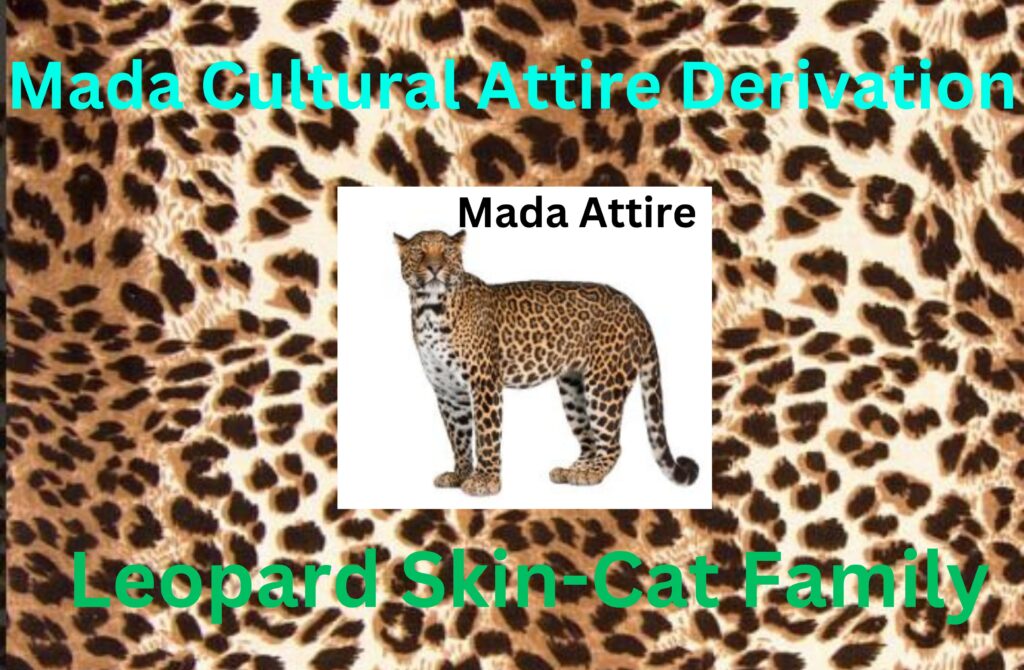
By Habila Ibrahim, Abuja | Last Updated on September 11, 2026.
Introduction
When people talk about the ethnic diversity of Nigeria, attention often goes to the country’s largest and most widely known ethnic groups. And these are the community and social work stories of many others that are no less compelling, just perhaps no less often ignored, either.
The Mada people of Nigeria are one of those communities.
Mada village and other Mada villages are primarily based in the Middle Belt of Nigeria, in the area surrounding Akwanga in Nasarawa State. Their cultural story is one of language, farming, family, traditional leadership, oral history and a strong attachment to their ancestral land.
What makes the Mada story interesting to me is that it cannot be reduced to one simple migration story. Like many communities in the Middle Belt, much of their earlier history has been preserved through oral traditions, family accounts, cultural practices and the work of researchers who have studied their language and society.
So, rather than presenting every traditional account as proven historical fact, this article looks at what can reasonably be said about the Mada people while also recognising that some parts of their early history remain matters of oral tradition and interpretation.
This is the story of the Mada people—their homeland, history, language, culture, food, festivals, religion, marriage traditions and the role their heritage continues to play in modern Nigeria.
Who Are the Mada People?
The Mada are a people of central Nigeria who are predominantly found in Nasarawa State and in some of the surrounding states including Kaduna State.
Akwanga occupies an important place in Mada history and traditional organizations. The people’s work has also documented Mada language and community outside of their homeland, such as in Abuja and other central parts of Nigeria.
The Mada are traditionally an agrarian people. Farming has played an important role in household life and community relationships for generations. But agriculture is only one part of their identity.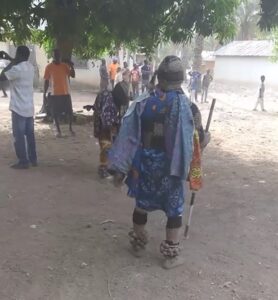
Their language, family relationships, traditional institutions, music, festivals, stories and customs all contribute to what it means to be Mada.
One thing that stood out to me while looking into Mada history is how closely language and culture are connected. A language is not simply something people speak at home. It can carry names, jokes, proverbs, songs, memories and stories that may not have the same meaning when translated into another language.
For the Mada, their language remains an important part of that cultural identity.
History and Origin of the Mada People
The early history of the Mada people is one area where caution is necessary.
Mada history has been preserved substantially through oral tradition, while scholars have also studied the people’s language, clans, settlement patterns and cultural institutions. Because of this, different accounts of their origin can exist side by side.
Also Read: Step-By-Step With Highest Common Factor
Some traditional narratives describe movements and settlement across parts of the central Nigerian region. Other discussions have looked at relationships between Mada and neighbouring Plateau peoples. There have also been suggestions of links to ancient populations of the wider Middle Belt, but such claims should be treated with caution unless supported by archeological or historical evidence.
What is clearer is that Mada communities have had a long-established presence in the region around present-day Nasarawa State and have developed their own social, linguistic and cultural identity.
The history of a people does not always survive in one old document sitting in an archive. Sometimes it survives in the words of grandparents, in the names of places, in family traditions, in songs and in the customs that communities continue to practise.
That is particularly important when discussing the Mada.
Where Do the Mada People Live?
The traditional heartland of the Mada is in Nasarawa State, especially around Akwanga and surrounding communities.
Mada communities are also found in parts of neighbouring Kaduna State, including around Sanga and Jema’a. Migration, education, employment and marriage have naturally taken Mada families to other parts of Nigeria as well.
This movement does not necessarily mean that people have abandoned their cultural identity.
Like many Nigerian ethnic groups, a Mada person can live in Abuja, Jos, Kaduna, Lafia or another city while still maintaining connections with home through language, family visits, traditional ceremonies and community associations.
This movement between the village and the city is one of the realities facing many Nigerian cultures today.
Mada Language and Cultural Identity
Language is one of the strongest markers of Mada identity.
Mada is generally classified among the Plateau languages within the Niger-Congo language family, rather than the Chadic language family sometimes stated in less reliable accounts.
Research on Mada language has examined its classification, dialect variation, clans and the development of reading and writing in the language. Linguist Roger Blench and Barau Kato also produced a substantial dictionary of Mada based on the Rija dialect, showing the importance of serious linguistic documentation.
The existence of written materials matters because oral languages can face pressure when younger generations increasingly use English, Hausa and other widely spoken languages for education, work and public life.

Keeping Mada alive therefore involves more than speaking it occasionally. It also means encouraging children and young people to hear it, understand it, read it where materials are available and appreciate the stories carried through it.
Traditional Leadership Among the Mada
Traditional leadership remains an important part of Mada cultural life.
The traditional ruler is associated with the title Chun Mada, and the institution of chieftaincy connects leadership with history, community identity and customary responsibilities.
Recent academic work on Mada chieftaincy describes the role of traditional kingmakers, known as Chun, in the selection and installation of traditional rulers.
The installation of a ruler is therefore not simply a political ceremony. It is culturally significant, in that it links the leader to the community’s history and values.
Traditional institutions have changed with the arrival of colonial administration, modern government and contemporary political structures. Nevertheless, traditional rulers and elders can still play important roles in community representation, dispute resolution, cultural preservation and social organisation.
Mada Culture and Community Life
One of the strongest features of Mada culture is the importance of community.
Family relationships, clan connections and respect for elders have traditionally shaped social life. Elders are often viewed as custodians of knowledge because they carry memories of families, customs, places and events that may not be written down.
This does not mean that every Mada community lives exactly as it did generations ago.
Modern education, Christianity, urbanisation, technology and changing economic conditions have all influenced everyday life. Yet cultural identity can survive change. Most culture change continues to adhere to the original values it was formed upon.
Music, dance, storytelling, traditional dress and communal gatherings provide ways through which people maintain that connection.
The book Mada People and Culture by Emmanuel Samu Dandaura, published in 1997, is particularly useful for understanding the depth of Mada social and cultural life. Its subject matter includes chieftaincy, marriage, festivals, masquerade performances, music, traditional society and other aspects of Mada culture.
Traditional Economy and Farming
Farming has traditionally been central to the Mada way of life.
The fertile areas around their settlements have supported the cultivation of crops such as guinea corn, yams, beans, maize, vegetables and other food crops.
For farming communities, agriculture is never only about producing food. It influences the rhythm of the year. Planting, weeding and harvesting create periods when families and neighbours work together.
The Mada people are hardworking farmers and also in skills such as pottery, weaving, blacksmithing and basket making.
These types of crafting are significant because they show that the earlier economy was not exclusively dependent on farming. Skills were transmitted from one generation to the next and could be sold for household goods, tools and money.
Today, Mada people participate in many professions beyond agriculture, including education, business, public service, politics, professional careers and other modern occupations.
Food of the Mada People
Food provides another simple way of understanding a culture.
Mada traditional meals are affected by the crops in their surroundings. Grain-based foods, yam, beans, maize and vegetables have long been part of the wider food culture of the region.
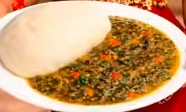
Meals may include thick grain preparations such as tuwo, pounded yam, bean dishes and different vegetable soups. The exact meal varies from household to household and from one community to another.
Food becomes especially important during weddings, festivals, family gatherings and other occasions when people come together.
In these moments, a meal is more than something you put on a plate. It becomes part of hospitality and community.
Mada Festivals and Traditional Celebrations
Festivals provide an opportunity for people to remember where they come from.
The Mada have one festival, the Nzeh Festival. It is popularly known as yam or harvest festival. Agricultural festivals are linked to thanksgiving for the harvest and wishing for a good planting season.
Traditional festivals can also feature drumming, dancing, songs and other forms of cultural performance.
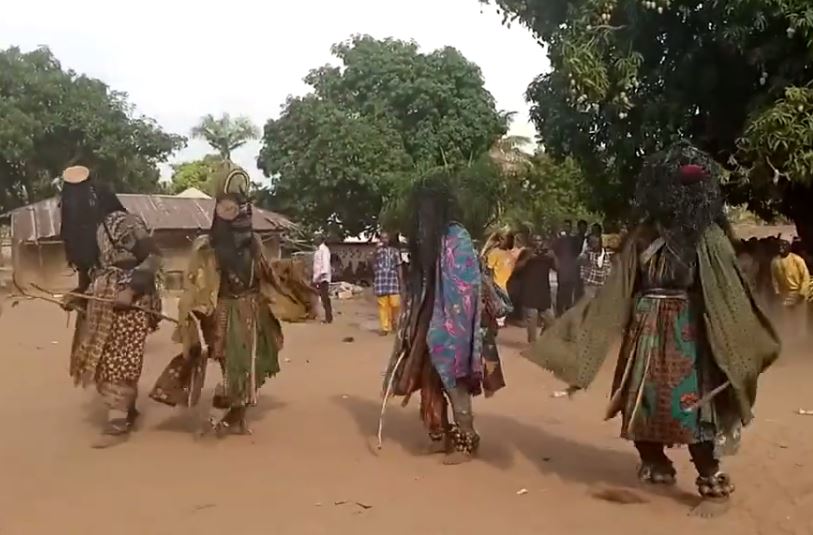
These events have a much more important reason. A festival of culture can unite those members of the older generation who have the traditional knowledge, with the younger who are perhaps living in a very different modern environment.
That meeting between generations is valuable.
Provides young people with the chance to see that the culture they hear about from their parents is not just something from a history book. It is still something which can be practised and enjoyed.
Music, Dance and Masquerade
Music has an important place in traditional African societies, and Mada cultural performances are no exception.
Traditional instruments used in Mada cultural settings have included drums and other locally made instruments, while dance and performance can accompany festivals, ceremonies and community events.
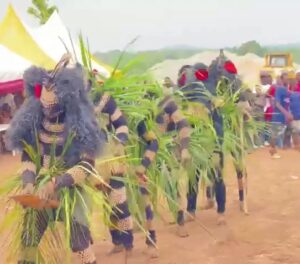
Mada cultural performances and masquerade traditions have also been documented in studies of Mada theatre and culture.
These performances can combine movement, costume, music and storytelling.
For someone watching from outside the community, a masquerade may look like entertainment. But within its cultural setting, the performance can carry deeper meanings connected with history, identity, social values and community memory.
Religion and Belief
Religions of the Mada have undergone very drastic changes.
Traditional Mada religious life included indigenous beliefs concerning spiritual forces, ancestors and the relationship between human beings and the spiritual world.
Christianity is now major religion among Mada, but Mada are also practicing Islam. Traditional beliefs and cultural customs may continue to influence aspects of community life even among people who identify with Christianity or Islam.
It is important not to describe the Mada as if every person follows exactly the same religious practices. Religious life, like culture itself, varies from family to family and community to community.
Marriage Among the Mada
Marriage has traditionally been more than a private relationship between two individuals.
As in many Nigerian societies, marriage can involve two families and wider community relationships. Traditional expectations may include discussions between families, the payment of bride price and other customary responsibilities.
You Can Also Read: The History of Jukun People
However, marriage practices have naturally changed with Christianity, Islam, formal education, urbanisation and modern law.
Today, a Mada wedding may combine traditional customs with church, mosque or civil marriage practices, depending on the families involved.
This combination of old and new is not unusual. This is how living cultures adapt.
The Mada People in Modern Nigeria
The Mada story is not frozen in the past.
Today, Mada people are involved in education, politics, business, agriculture, professional careers, religion and public service. A lot of people have migrated to Nigerian towns and still kept tangling with their ancestral positions.
At the same time, modernization creates a question that many smaller ethnic groups face: How can a community move forward without losing the language and cultural knowledge that make it unique?
The answer may lie in documentation, education and participation.
Writing about Mada culture, recording oral histories, supporting the Mada language, documenting traditional performances and encouraging young people to learn about their heritage are all ways of keeping cultural memory alive.
What Makes Mada Culture Important?
What the Mada story definitely is to me is not exactly where the people could have moved from hundreds of years ago.
It is the fact that a community can experience changes in religion, education, politics, technology and settlement patterns and still maintain a sense of identity.
That is what makes cultural history worth documenting.
The Mada story is also a reminder that Nigeria’s history cannot be told properly through only its largest ethnic groups. There are hundreds of places across country, rich in culture, with tales well known only locally, to their surrounding areas.
All this is, clearly understandable to the reader when the stories are well preserved.
Conclusion
The Mada people of Nigeria have a cultural history deeply connected with the Middle Belt, especially Nasarawa State and the communities around Akwanga.
Their story includes oral history, farming, language, traditional leadership, festivals, food, music, marriage and strong family relationships. Their language remains integral to their cultural identities, traditional institutions of the Chun Mada to links to their past and culture.
There are still unanswered questions about the earliest origins and migrations of the Mada. Instead of filling those gaps in with conviction we ought to hold oral tradition with respect and clearly separate what current research and knowledge based on linguistics and history allow.
That approach, in my view, makes the story even more interesting.
Mada is not just another ethnic group of the past of Nigeria. It is a living people whose experiences, tradition, and memory of forebears are integrated and adapted to the complexities of today.
And perhaps that is the real beauty of culture: it does not have to remain unchanged to remain meaningful.
About the Author
Habila Ibrahim is a Nigerian writer and cultural-content creator interested in documenting African cultures, traditions, languages, festivals and historical stories.
He discusses Nigerian and worldwide culture through Kunzaar intending to make culture an accessible tool for the ordinary reader.
My interest in documenting global, African and Nigerian cultures comes from the belief that many communities have stories worth telling, even when those stories are not often found in mainstream history books.
In my research on the Mada I have attempted to break out the known information from the oral tradition and claims of which have yet to be substantiated. I will not make an effort to write down a page of facts, but to introduce the culture in a way that is respectful of the people and that makes the story comprehensible for someone who might not know the Mada.
Culture is best understood when we listen to the people who have it.
Sources and Research
This article was researched and rewritten using a combination of published cultural, linguistic and academic materials, including:
Emmanuel Samu Dandaura, Mada People and Culture, Victory Family Books, 1997. The book covers Mada society, chieftaincy, marriage, festivals, masquerade, music, traditional institutions and cultural performances.
John Saleh Aria, “Mada Language Adaptation: Clans, Classifications and Skills,” Journal of Communication and Culture, Vol. 9, Nos. 2 & 3, 2018. The study discusses Mada language, history, clans, classification and language use.
Roger Blench and Barau Kato, A Dictionary of Mada, a linguistic work based on the Rija dialect of Mada.
John Ishaku, “Historical and Installation of Chiefs Among the Mada People of Nasarawa State, Nigeria (Chun Mada),” International Journal of Multidisciplinary Studies, 2026. The study focus on the Mada traditional leadership and the installation of Chun Mada.
Previous cultural-historical materials on the Mada people have also been taken into account and compared before this revised article was written.
Note: Some aspects of Mada origin are based on oral tradition and competing historical accounts. Where evidence is uncertain, this article deliberately uses cautious language rather than presenting tradition as established fact.
Lovart’s AI-driven design approach is a game-changer for creative workflows. Its tri-modal interface and Figma/Photoshop integration offer real value for designers. Check it out at Lovart.
I LOVE TO BE A MADA MAN WHY BECAUES MADA MADA MAN IS HEARD WORKING MAN, A MAN OF FORCOS FORWARD WHO SHOW LOVE TO ONE ANOTHER. WHO EAT FROM HIS HAND LABOURS. A MADA MAN FARM A LAND OF ABOUT TWO HUNDRAN HEATER, WHO EAT FROM JANUARY TO DISEMBER.