
By Habila Ibrahim, Abuja | Last Updated on September 7, 2026.
Introduction
Every community has people whose personal stories become connected to the larger story of their people. At times, it may be because of their livelihood; at other times, it may be due to their accomplishments and at others still, because of where they stand at a pivotal point in the history of their locale.
The story of Air Commodore Ishaku Komo (Rtd.) is a part of that kind.
Born in Bar in present-day Bogoro Local Government Area of Bauchi State, Ishaku Komo went on to build a distinguished career in the Nigerian Air Force, rising to the rank of Air Commodore. But beyond his military exploits and academic achievements, his name was associated with one of the most significant traditional and cultural issues in the history of the Sayawa, popularly known as the Zaar people; the protracted struggle for their own chiefdom.
The issue of traditional leadership is not new to the Zaar; It is connected to a much older system of village leadership, clan organization, political relationships, colonial administration and decades of community advocacy.
This is therefore not only the biography of a retired military officer. It is also a story about identity, leadership, culture, history and the aspirations of a people.
Also Read: The Sayawa (Zaar) Story During the Pre-Colonial Era
As we look at the life of Air Commodore Ishaku Komo, we will also take a walk through the cultural pathway of the Zaar people—from their traditional communities and Gung leadership system to the long search for a recognized Zaar Chiefdom.
Who Is Air Commodore Ishaku Komo?
Air Commodore Ishaku Komo (Rtd.) was born on 25 November 1953 in Bar, in what is today Bogoro Local Government Area of Bauchi State.
Growing up in Zaarland, he belonged to a community with a strong sense of identity, history and cultural consciousness. His early years were shaped by the environment of the Zaar people, a community whose history has been influenced by traditional institutions, Christianity, Western education and changing political structures.
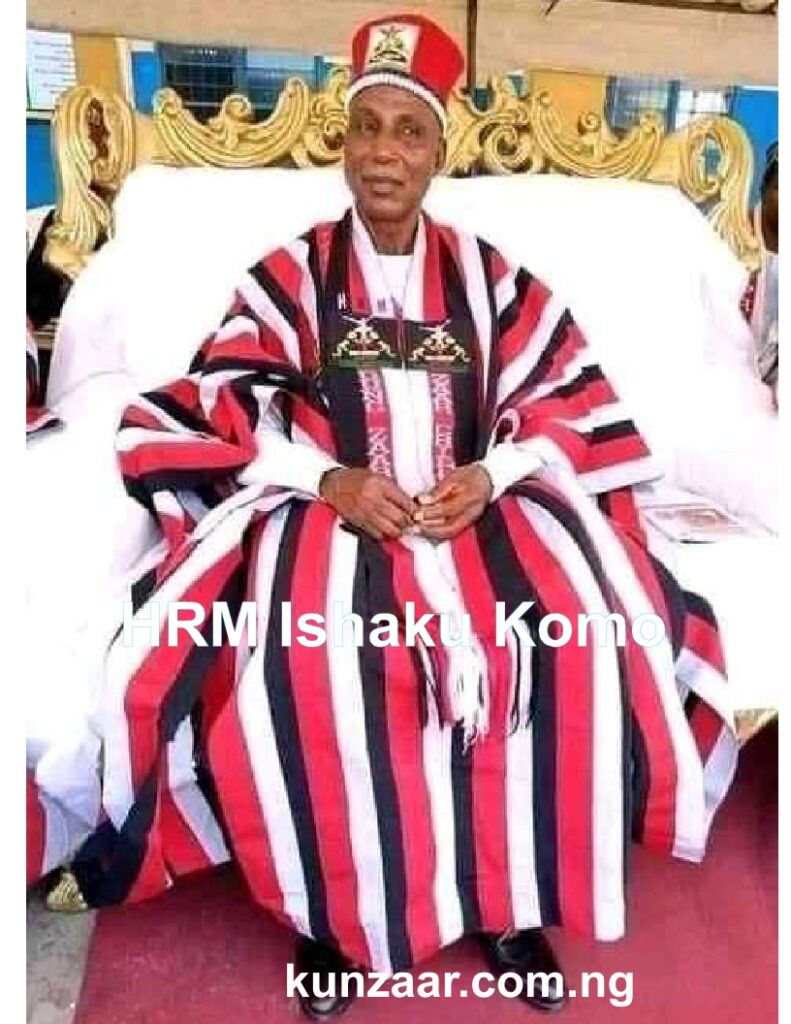
Komo, however, did not stay in his immediate community, but instead joined the Nigerian Military, embarking on a professional path that would take him beyond Nigeria’s borders and expose him to diverse military training and strategic education.
His career would later become one of the things for which he was widely known within and beyond Zaarland.
Early Life and the Zaar Background
To understand Ishaku Komo properly, it is useful to understand something about the community from which he came.
The people, who also are quite known as Sayawa in other terms, are traditionally settled in parts of Bogoro and Tafawa Balewa in the State. Their history contains a strong tradition of village-based administration, clan organization and community decision-making.
Historically, the Zaar social structure was not built around a single centralized king in the modern sense. Families formed lineages, lineages formed clans, and communities had their own structures of authority. Academic work on Zaar society describes how religious and political authority were historically connected and later became increasingly separated, with secular political authority developing around the office of the Gung.
This traditional background is important because the modern Zaar chiefdom question did not suddenly appear in the twentieth or twenty-first century. It developed from a much older history of how the people organized and governed themselves.
A Distinguished Military Career
One of the most incredible parts of Ishaku Komo’s story is his career in the Nigerian Air Force.
He joined the Nigerian Air Force and was commissioned as a Pilot Officer. He then trained as a specialist soldier, on flight, flying training in Nigeria and abroad.
Training and Educational Backgound; A Ground School training at Kaduna; Air Traffic Control course at Shawbury, United Kingdom; Service Aircraft Interceptor Controller at the Fighter Control School, West Drayton, United Kingdom; Student at the Junior Command and Staff School Kaduna; Student at the Senior Command and Staff College Jaji; Student at the National Defence College Islamabad, Pakistan.
His studies in Pakistan led to a Master of Science degree in Defence and Strategic Studies.
Later, he rose through ranks of the military and retired in the Nigerian Air Force as an Air Commodore.
That fact alone would be enough to merit an accounting. But for many people who know his story from the perspective of Zaar history, his military career represents only one chapter of his life.
Beyond the Uniform: Education and Personal Development
Funny, to me, Ishaku Komo’s quest for education didn’t end up in military school too, anyway.
These interests carried into his career following the army. It is understood that he further his academic education with a theology Doctorate Honoris Causa and a Doctorate in Philosophy.
This part of his story gives us another picture of the man behind the military uniform.
A military officer is often viewed through the lens of discipline, command and service. But education reveals another side—curiosity, reflection and the desire to understand people and society beyond one’s immediate profession.
For a man who would later become associated with questions of traditional leadership and community identity, such intellectual development added another dimension to his public life.
Understanding the Traditional Leadership of the Zaar People
Before discussing the journey to Zaar Chiefdom, we need to understand what traditional leadership meant among the Zaar.
In traditional Zaar society, communities were organized around families, lineages and clans. Leadership existed at different levels, and elders played important roles in maintaining order and settling disputes.
Historical studies indicate that the Seng Wari, or chief-priest institution, had both religious and administrative importance in earlier Zaar society. As political circumstances were to change particularly during the 19th and 20th centuries, there began to arise a split between political leadership and political authority and in the process, leadership fell to the Gung.
The Gung therefore became an important symbol of community leadership.
This was necessary for to later idea of an all powerful Zaar to arise out of a vacuum. It grew from an existing cultural tradition of leadership and community organization.
The Cultural Pathway of the Sayawa (Zaar) to Their Chiefdom
From Independent Communities to a Wider Traditional Identity
One of the most fascinating aspects of Zaar history is the evolution of their political organization.
In the pre-colonial period, Zaar communities had their own systems of governance. It is well documented from history Bogoro and Tafawa Balewa was once the vital political home land to the sayawa people.
Kunzaar’s historical account records a line of traditional rulers associated with the earlier Gung dynasty and explains that, around the period of the nineteenth-century jihad and the development of the Bauchi Emirate, the Zaar relationship with the emirate became an important part of their subsequent political history.
Historical sources say an agreement of peace was made between the Zaar communities and Bauchi emirate. The interpretation and later consequences of that relationship became an important part of the Zaar political story.
The Coming of Colonial Administration
The arrival of British colonial administration brought another major change.
The British introduced indirect rule, and existing political arrangements were reorganized around districts and native authorities.
Academic research describes the colonial period as a major turning point for the Sayawa because the community became incorporated into the political and economic structures of the colonial administration. The period also saw the spread of Christian missionary activity and Western education in Zaarland.
The new administrative system affected traditional leadership.
Instead of political authority operating entirely through indigenous community structures, district heads and other administrative officers became part of the system.
This became one of the sources of long-term dissatisfaction among many Zaar people.
The Demand for Indigenous Leadership
As the twentieth century progressed, Zaar people increasingly demanded greater recognition of their own people within the traditional and administrative leadership structure.
The event was celebrated in 1948 when reports say Zaar leaders object to existing state of affairs and demanding “own native district head”.
Peter Gonto is recognized by historical research as one of the prominent figures in the early struggle for greater Zaar political self-determination.
At this time, the demand was first of all for a native district head.
Now the need has increased very much.
And the questions went from:
“Who ought to be the representative of our district?”
to:
“Why shouldn’t the Zaar people have a traditional chiefdom for themselves?”
It was an important stage in the history of the struggle.
The 1970 Indigenous District Head
The journey did not move in a straight line.
In 1970, the Zaar people recorded a great achievement when one of their sons; Mallam Aliyu Wullumba Dadi was appointed District Head of Lere.
Local historians remember it: A great day after petitions by Zaar representatives were submitted to the government.
However, the appointment did not settle the larger question of Zaar traditional autonomy.
The issues from the original system of authority persisted and the longing for a self-governing chiefdom never died.
The Transition from District Head To Desired Chiefdom
There was increasing sophistication in this matter in the years thereafter.
Various government committees and commissions examined the disputes and the wider question of traditional administration in the area.
One of the phases was the Bolarinwa Babalakin Commission of Inquiry in 1991. Later committees and inquiries also examined the question.
The demand for a Zaar chiefdom was therefore not the product of one person or one generation. It became a cause carried forward by community leaders, elders, organizations and successive generations.
There is evidence in the academic and historical literature of a demand for an autonomous Sayawa chiefdom as part of the long-standing tensions surrounding the relationship between the Zaar communities and the Bauchi Emirate.
Why the Chiefdom Became So Important
For many Zaar people, the chiefdom question was about more than the possession of a traditional title.
It was associated with:
– Cultural identity;
– Traditional recognition;
– Community representation;
– Protection of heritage;
– Local development;
– Commonality of the various Zaar communitites;
– Recognition of indigenous leadership.
An interview with Zaar Development Association leadership in 2019 described the chiefdom demand as a long-standing aspiration and also highlighted the importance of Zaar cultural institutions in bringing the people together.
This is why the issue survived for so many decades.
Generations changed, governments changed, political leaders changed, but the question remained.
Ishaku Komo and the Gungzaar Story
It was against this long historical background that the name Air Commodore Ishaku Komo (Rtd.) became associated with the Gungzaar question.
Community accounts reported that he was selected by Zaar stakeholders as Gungzaar-elect and that his name subsequently became an important part of the story of the long-awaited traditional institution.
For supporters of his selection, his military career, education, leadership experience and community standing were among the qualities that made him a suitable candidate.
But it is important to understand that his story was part of a much bigger process.
The question of chiefdoms had been present prior to the creation of Komo and it continued to evolve on the government’s initiatives community and dissenting points of view.
His story must therefore be remembered in the wider history of the Zaar people’s quest for traditional recognition.
A Man Between Two Worlds
There is particular interest in the case of Ishaku Komo.
On one side was the military world—a world of uniforms, commands, discipline, training and national service.
On the other side was the traditional world of the Zaar people—a world of ancestral memory, culture, community, elders and traditional institutions.
His biography therefore sits at an interesting meeting point between modern professional leadership and traditional community leadership.
That is perhaps one reason why his story continues to attract interest among people who want to understand the development of Zaar traditional leadership.
The Zaar Chiefdom Finally Becomes a Reality
After decades of demands, discussions, committees, disagreements and renewed efforts, the Zaar Chiefdom eventually became a reality.
Kunzaar added that the bill for the establishment of Zaar Chiefdom was passed into law by Bauchi State House of Assembly, and thereafter Brigadier General Marcus Koko Yake (Rtd.) became the first ever Gung Zaar I.
The development was widely celebrated among supporters of the chiefdom.
When the Gung Zaar I was installed at the end, it was the fulfillment of a quest that spanned decades.
There was personal emotion for the many of my generation who saw early days of the fight in person. This wasn’t just another ceremony of the old custom, though; it was the fulfillment of a dream in the making.
Ishaku Komo’s Place in the Story
However, with the dawn of Gung Zaar I the previous parts of this tale don’t cease to exist.
Every historical journey has people who become associated with particular stages of the process.
Air Commodore Ishaku Komo is one of those figures in the story of the Zaar chiefdom struggle.
His life—from Bar to the Nigerian Air Force, from military training in Nigeria and abroad to the highest stages of his professional career, and later into the traditional leadership conversation—forms an important chapter worth documenting.
History is rarely about one person alone.
It’s often the accumulation of the people, the decisions, the sacrifices, the disputes and opportunities that can ultimately foster change.
Komo’s story should therefore be viewed as one chapter in the much longer story of Zaar traditional leadership.
A Journey from the Village to the Wider World
When we look at the life of Ishaku Komo from a distance, the journey is remarkable.
A young man born in Bar grew into a military officer.
The military took him through professional training and international exposure.
Education took him further into academic life.
And his connection with the Zaar people eventually brought him into one of the most important cultural and traditional conversations in the history of his community.
It is a reminder that people do not always live in one world.
A person can carry his village with him while serving his country.
Anyone can wear a military uniform and still have deep cultural roots.
Also, a people’s individual can depart the military and carry on serving your own group through one more job.
Why the Story Matters to Younger Zaar People
Perhaps the most important lesson from this story is the importance of preserving history.
Young people today live in a very different world from the one their grandparents knew. Social media, technology, migration, modern education and urbanization have changed how communities communicate and preserve their identity.
Yet culture cannot survive on technology alone.
It needs stories.
It needs people willing to document what happened.
It requires an elders ready to recount to youth from whence they came.
And it needs younger people willing to listen.
The story of the Zaar chiefdom is therefore not only about traditional rulers. It is about the preservation of collective memory.
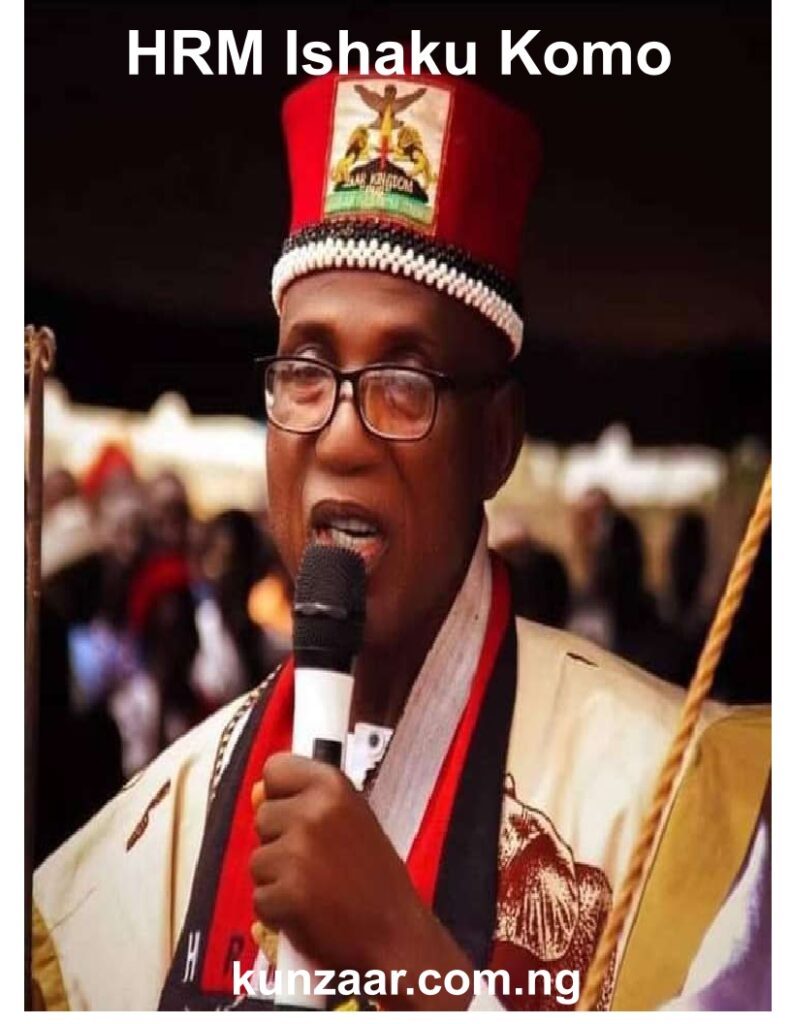
Some Facts About Air Commodore Ishaku Komo
Detail Information
Full Name Air Commodore Ishaku Komo (Rtd.)
Date of Birth 25 November 1953
Place of Birth Bar, Bauchi State
Community Zaar (Sayawa)
Profession Military Officer
Service Nigerian Air Force
Retired Rank Air Commodore
Major Area of Study Defence and Strategic Studies
Other Academic Interest Philosophy and Theology
Traditional Association Gungzaar-elect
Historical Significance Associated with the long Zaar traditional leadership/chiefdom story
Zaar Chiefdom Journey at a Glance
Traditional Era
Zaar communities developed their own systems of village, clan and religious leadership.
Gung Leadership
The Gung became an important form of secular political leadership as traditional institutions evolved.
Nineteenth-Century Political Changes
Relations between the Zaar communities and the Bauchi Emirate became an important part of the region’s political history.
Colonial Administration
British indirect rule introduced new administrative arrangements and district structures.
1940s
Zaar political activism increasingly included demands for indigenous representation and leadership.
1970
Aliyu Wullumba Dadi became an indigenous Zaar District Head of Lere.
1990s–2000s
Government inquiries and community advocacy continued around the question of a separate Zaar chiefdom.
Ishaku Komo Era
Komo became associated with the Gungzaar-elect question and the wider traditional leadership struggle.
Zaar Chiefdom
The creation of the chiefdom was then effected as Brigadier general Marcus Koko Yake(Rtd.) became the Gung Zaar I, according to Kunzaar’s report.
Conclusion
The life of Air Commodore Ishaku Komo (Rtd.) is much more than a list of military ranks, academic qualifications and appointments.
You Can Also Read: Ultimate Guide On How To Migrate Your WordPress Website To Another Host
It is a story that takes us from Bar to the wider world, from military service to community leadership, and from personal achievement to a chapter in the history of the Zaar people.
His journey also gives us an opportunity to look beyond one individual and understand the longer cultural pathway of the Sayawa (Zaar) people.
For generations, Zaar communities have maintained their cultural identity through family, clan, village leadership, language, traditions and community institutions. As political circumstances changed, so too did the form in which their demand for recognition was expressed.
Questions about Indigenous peoples finally gave rise to more open and general expectations: to an established Zaar Traditional institution!
The eventual establishment of the Zaar Chiefdom therefore belongs to a history that was built over many decades. Different people played different roles at different times. Some worked through traditional institutions, some through community organizations, some through government engagement, and others through advocacy and public discourse.
This event is related in a one of the chapters and Air Commodore Ishaku Komo is one of the personalities connected.
Today, the responsibility has shifted to a new generation.
The creation of a chiefdom is not the end of a people’s cultural journey. In many senses it signifies the starting of one more endeavor-endeavor of maintaining traditions, spreading harmony, chronicling, furthering education, spurring development and sustaining the identity of Zaar.
I for one would say that writing about stories like this in no way helps to reflect on the past;
It is about giving tomorrow’s Zaar child an opportunity to understand yesterday.
And perhaps that is the real value of history: when a people remember where they came from, they are better prepared to decide where they are going.
About the Author
Habila Ibrahim is a cultural writer and contributor to Kunzaar, a platform dedicated to documenting Zaar heritage, African cultures, traditions, histories and the stories of people who have contributed to their communities.
The motivation to write about the story of Air Commodore Ishaku Komo and Zaar chiefdoms came from the aspiration to keep those significant memories alive and also make them readable not just to the young people, but also to many around the globe.
Sources and Further Reading
This article was developed from a combination of Kunzaar’s existing historical and biographical materials, academic research and published accounts concerning Zaar traditional leadership and the chiefdom question.
You Can Also Read: Zaar (Sayawa) Chiefdom Now Actualized As Brig. Gen Marcus Koko Yake (Rtd) Officially Became First Gung Zaar
International Journal of Intellectual Discourse – Colonialism and the Sayawa (Zaar) in Transition Up to 1960
Jos Journal of Conflict Management and Peace Studies – historical discussion of the Sayawa/Bauchi Emirate relationship and chieftaincy issue
Traditional Leaders in Nigeria – Case Study on Sayawa and the Bauchi Emirate
Interview on Sayawa Chiefdom, Zaar Culture and Tafawa Balewa
Additional important Notes: The history of Zaar chiefdom is still a topic of more than one version of accounts held by both the community and history. Where appropriate, this article distinguishes between documented historical developments and claims or perspectives attributed to particular community sources.
Pingback: Ultimate Guide on How To Migrate Your WordPress Website to Another Host 2024 - Zaarite-Kunzaar
Lovart’s AI-driven design approach could revolutionize how creatives work, especially with its seamless integration of tools like Figma and Photoshop. Exciting to see AI meet traditional design – Lovart is clearly thinking ahead.