

By Habila Ibrahim, Abuja | Last Updated on September 18, 2026.
Introduction
When we talk about the cultural history of Nigeria, there are some communities whose stories cannot be properly understood by looking at a single thing. The Jukun Wapan are one of them.
Their story is connected to the Benue Valley, the ancient political traditions associated with Kwararafa, the royal institution of the Aku Uka, farming and fishing, traditional festivals, language, marriage customs and, of course, food.
The first thing I noticed while looking into the culture of the Jukun Wapan is how closely everyday life is connected to the land. This is more than just a job. Fishing is not only about catching food. Traditional foods are not just something to put on a dining table and eat. They carry memories of family, community and the environment in which the people have lived for generations.

The Jukun Wapan are mainly associated with Wukari and surrounding parts of Taraba State, although Jukun-speaking communities are also found in other parts of Nigeria. Their language, Wapan, is a member of the Jukunoid group of the Niger-Congo language family.
In this article, I want to look beyond the usual short description of the Jukun people. We will explore their history, origin, language, location, traditional leadership, occupations, food, marriage, religion, festivals and some of the cultural practices that continue to give the Jukun Wapan their distinctive identity.
Who Are the Jukun Wapan?
The Jukun Wapan are a subgroup of the wider Jukun peoples of Nigeria. Wukari in Taraba State is particularly important in their history and cultural identity.
Jukun is used as a generic name for a number of related Jukun-speaking peoples. Wapan is particularly used in relation to the Wukari Jukun. Linguistic sources identify Wapan as a Jukunoid language spoken principally in Nigeria.
The Wapan homeland lies in the Benue Valley; It has always been a site of rich soil for a farm and of important water courses. It also placed the people within a wider network of communities that traded, migrated and interacted with one another over many generations.
Presently the Jukun Wapan are a significant cultural group in Nigeria notably in Taraba State.
The History and Origin of the Jukun Wapan
The history of the Jukun is one of those subjects where oral tradition, historical interpretation and modern research do not always tell exactly the same story.
This is important to mention because the earlier version of this article earlier posted here presented some migration stories that the Jukun came from Yemen, passed through Egypt and eventually reached the Chad Basin should therefore be treated cautiously unless supported by specific historical evidence.
What is much more firmly associated with Jukun history is the Benue Valley and the political tradition of Kwararafa.
The Jukun are strongly connected in historical and oral traditions with the Kwararafa political formation, which became an important power in the Middle Belt of what is now Nigeria. Wukari later became the centre of the Jukun political and royal tradition. Historical discussions of Kwararafa, however, show that the exact origins and composition of the confederacy are complex and remain subjects of historical debate.
That uncertainty does not make the Jukun story less interesting. In fact, it makes it more important to separate what is remembered through oral tradition from what historians can establish through documentary and archaeological evidence.
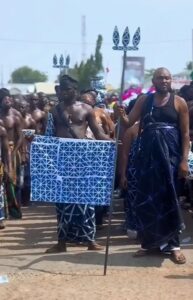
The Aku Uka of Wukari is still considered the paramount traditional leader of the Wukari Jukun. The institution of the Aku Uka is one of the most visible symbols of Jukun historical continuity.
Wukari and the Jukun Cultural Homeland
Wukari occupies a special place in Jukun history.
For many Jukun people, it is more than simply a town in Taraba State. It is a place associated with kingship, history, language and cultural memory.
The surrounding Benue Valley has also influenced the way people make their living. The fertile environment within the valley supports agriculture, while rivers and waterways have encouraged fishing and movement between communities without hindrance.
This relationship with the surrounding of the Benue Valley can still be seen in everyday life. Since there is farming of the crops, there is fishing, the local markets are busy, and the cultural functions still attract people.
Jukun Wapan Language
Language is one of the strongest markers of cultural identity.
Wapan is a Jukunoid language associated particularly with the Wukari Jukun. It belongs to the family Niger-Congo, and to the Jukunoid subgroup, according to linguistic classifications.
This is an essential language not just because it enables communication among people. It also carries names, expressions, traditional knowledge and memories that may not have the same meaning when translated into English.
There are also other Jukun varieties and communities, meaning that the wider Jukun linguistic landscape is more diverse than simply dividing everyone into two groups.
Recent sociolinguistic research has also drawn attention to the relationship between Wapan and other languages used in Wukari, particularly Hausa, and to efforts to maintain and revitalize Jukun Wapan.
This is an important reminder I want to let the reader knows that preserving a culture is not only about wearing traditional clothes or celebrating cultural festivals. Preserving the language is equally important.
Where Are the Jukun Wapan Found?
The main cultural centre of the Jukun Wapan is Wukari in Taraba State.
Jukun communities and related groups are also found in other parts of Taraba and neighbouring states, including Benue, Nasarawa and Plateau. Sources on Wapan identify communities in areas such as Wukari and Gassol in Taraba State; Lafia and Awe in Nasarawa State; Shendam and Langtang South in Plateau State; and Guma in Benue State all in Nigeria.
The Jukun people extend well beyond just the Wapan community. It is quit important not to lump every Jukun-speaking group together as if they all share identical traditions.
Traditional Occupation and Economy
For generations, agriculture has been central to Jukun life.
Farmers cultivate crops such as yam, maize, rice, cassava, groundnuts and vegetables. These crops are not only sources of income but also provide many of the ingredients used in traditional meals.

Fishing is also very important among Jukun communities living close to rivers and waterways. The relationship between fishing and Jukun culture is been confirm during the fishing festivals.
Farming and fishing have therefore influenced more than the economy. They have shaped food, settlement patterns, community cooperation and seasonal celebrations.
Traditional weaving and cloth production have also been associated with Jukun cultural life. Clothing can carry meaning, when worn during ceremonies or by people occupying traditional positions of that tribe.
Jukun Traditional Food
This is where the story of the Jukun becomes more interesting.
Food can tell us a lot about a people. It can reveal what crops they grow, what grows naturally around them and how families have passed knowledge from one generation to another.
The Jukun Wapan have a range of traditional dishes, and some of their food traditions have been documented in academic research.
One notable food of Jukun people is the Aso, is a traditional local cake prepared with ingredients as maize, benniseed and sweetener. This is research was recorded in a historical accounts on Jukun Wapan women’s cultural practices describe Aso as a food that could be carried by hunters and traders, while in modern times it may also appear at occasions such as weddings and birthdays celebrations.
Another important food is Adoo or Abo doo, a benniseed-based soup. Research records its traditional ceremonial importance, including associations with childbirth, while noting that it is now also prepared as an ordinary household food.
There is also Afu, a light porridge made from millet flour and other things for flavoring, usually making it sweet.
Other documented Jukun Wapan delicacies include fried Bambara nuts, local moi-moi, groundnut soup and beans-based dishes.
Fresh fish also naturally features in the food culture of riverine communities. When food together with farming and fishing are considered then it becomes clear that Jukun cuisine is closely connected to the environment.
This is among the reasons why I believe that traditional food deserves more attention in the discussion of cultures. A dish can preserve a piece of history just as effectively as an old photograph.
Jukun Traditional Marriage
Marriage among the Jukun Wapan has traditionally involved families as well as the couple.
The original article was packed with all sorts of terms related to getting hitched, you know, the whole shebang: betrothal, bride-price practices, the works. These terms are valuable cultural material, but marriage customs can differ between communities and can also change over time.
Traditionally, marriage negotiations could involve the families of the prospective bride and groom, gifts, financial obligations and agricultural assistance.
It wasn’t just a matter of tossing some cash around and, voilà, you’ve got yourself a bride. It basically forged this bond between families.
Also Read: Ultimate Guide on How To Migrate Your WordPress Website to Another Host 2024
One part of traditional African marriage that often gets lost in translation – or misinterpreted, really – is when we look at it through a decidedly modern lens. Marriage historically created responsibilities beyond the husband and wife. Families became connected, and cooperation between households could continue long after the wedding.
Christian and civil marriage ceremonies – they’re a thing now, and they often coexist with bits of traditional marriage, all depending on the family, the community, and what they’re comfortable with.
Religion and Traditional Beliefs
Before the spread of Christianity and Islam, Jukun communities practised indigenous religious traditions involving spiritual forces, ancestors, sacred places and ritual institutions.
Historical records of the Wukari Jukun describe a complex religious system involving cults, shrines and ritual responsibilities connected with the traditional political structure.
Christianity is now the major religious identity among Wapan Jukun according to available contemporary people-group data, although traditional cultural memories and practices continue to influence aspects of community life.
It is important, however, not to describe every Jukun person as practising the same religion. Like other Nigerian communities, the Jukun today include people with different religious experiences.
Jukun Festivals
Festivals provide another window into Jukun culture.
So you’ve got these two major celebrations, Puje, and then there’s the Nwonyo Fishing Festival, which are basically the most iconic ones in Jukun cultural life.
Puje Festival
Puje is associated with Jukun cultural traditions and is presented as a celebration involving community gathering, dance, music and traditional performances.
Festivals like these are pretty crucial, they carve out a space where younger folks can actually witness cultural traditions that might otherwise fly under the radar in everyday life, you know?
Nwonyo Fishing Festival
Fishing has long been important in communities around the Benue and related waterways, and the Nwonyo Fishing Festival is one of the cultural events associated with this tradition.
The festival brings together fishing, competition, celebration and community life.
This, to me, is a pretty stark illustration – the environment can really seep into who we are, you know, and become this huge part of a people’s identity. A river is not just a geographical feature. For communities that depend on it, the river becomes part of their history.
Traditional Clothing and Cultural Identity
Jukun traditional clothing is another visible expression of identity.
Jukun communities, they’ve got this rich history with woven and decorated clothing, see. Different forms of it, I mean. And then there are these specific garments that carry some serious weight – ceremonial, social, all that jazz.
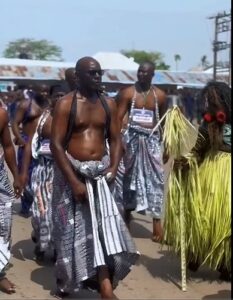
Traditional clothing becomes especially noticeable during festivals, royal events, weddings and cultural gatherings.
The important thing is not simply the colour or design of the cloth. It is the story behind the clothing and the occasion for which it is worn.
What Makes Jukun Wapan Culture Important Today?
What’s really striking about Jukun culture – its visibility, I mean – is how it manages to stay right out in the open, even as everything around it is shifting pretty dramatically.
Modern education, Christianity, urbanisation, social media and movement between cities have changed the way many Nigerians live. Yet cultural identity has not disappeared.
Language, food, festivals, traditional leadership, marriage customs and family stories continue to provide connections between generations.
At the same time, cultural preservation should not mean pretending that nothing has changed. Cultures naturally change. The real question, and it’s a pretty big one, is can people actually hold on to the meaningful bits of their heritage, you know, the stuff that really matters, while still being a part of modern society, fully and completely, no compromises.
For the Jukun Wapan, language preservation is particularly important. Wapan has been identified as a language at risk, which makes documentation and everyday use especially valuable.
A Personal Reflection on the Jukun Wapan Story
As I dug through all the stuff on Jukun Wapan I could find it was pretty fascinating, to be honest and what really caught my attention was not some specific festival or dish, weirdly enough.
It was the connection between everything.
The river connects to fishing. Fishing connects to food. Farming connects to the kitchen. The language connects older people with younger generations. Festivals bring the community together. Traditional leadership connects the present with a much older history.
That is what makes cultural writing meaningful to me.
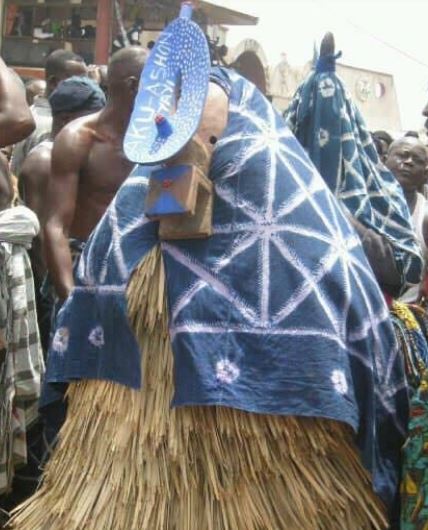
When we write about a people, we should not reduce them to a list of facts. Behind every name of a food, every traditional garment and every festival is a human story.
The Jukun Wapan story is therefore not simply a story about the past. It’s also about the folks around us, you know, the ones dealing with life as it comes, they’re adapting to all this change, yet somehow, they still hold on to memories of their roots, of where they actually came from.
Conclusion
The Jukun Wapan people occupy an important place in the cultural history of Nigeria.
Their identity is strongly tied to Wukari and the Benue Valley, the history of traditions around Kwararafa, the Aku Uka institution, Wapan the major local language, farming and fishing, traditional meals, and community festivals.
Their cuisine – pretty fascinating stuff – shows just how tightly food is woven into the whole environment thing, and family traditions, too. Shows just how closely those things are linked, actually. Foods such as Aso, Adoo or Abo doo, Afu, groundnut-based dishes and other local delicacies form part of a wider culinary heritage that deserves to be documented and remembered.
You Can Also Read: Tarok Language In Nigeria
At the same time – you gotta be super careful when diving into the history of the Jukun. Oral traditions still got some origin and migration stories down, you know, the ones passed around by word of mouth. Meanwhile, historians and researchers are digging deep, trying to make sense of all the evidence they’ve got on Kwararafa and the early days of Jukun history, it’s an ongoing thing, really.
For me, that makes the story even more valuable.
The Jukun Wapan are not simply a people to be remembered in history books. They are a living community with a language, families, foods, celebrations and traditions that continue to evolve.
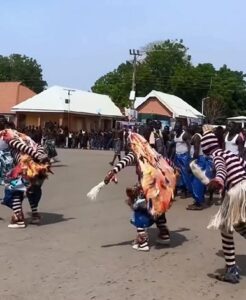
And perhaps that is the real beauty of culture: it remembers where it came from, but it does not stop living.
About the Author
Habila Ibrahim is a Nigerian cultural writer and the author of cultural and heritage stories published on Kunzaar. His interest is in documenting African cultures, traditional practices, ethnic histories, languages, festivals and the everyday experiences that help communities preserve their identity.
Using Kunzaar, he aims at sharing cultural tales easily and straightforwardly to make mainly the younger generation who recognize names of Nigerian ethnic groups without their respective stories, aware.
So this article’s basically a labor of love, part of a bigger push to shed some light on the rich cultural heritage of the Jukun Wapan folks, you know, to get their story out there.
Sources and Research
This article was rewritten and researched using a combination of the existing Kunzaar article, linguistic resources, cultural research and historical material concerning the Jukun Wapan.
Particular attention was given to research on Jukun Wapan food and women’s cultural practices, which documents traditional foods such as Aso, Adoo/Abo doo, Afu and other local delicacies.
So I dug up some info on Wapan – apparently it’s a Jukunoid language – and then I double-checked the geographical distribution against the Endangered Languages Project, plus some other linguistic resources I had lying around.
Historical information concerning Wukari, Kwararafa and Jukun political traditions was treated with caution because some aspects of the history are based on oral traditions and remain subjects of scholarly discussion.
Great read! It’s fascinating how AI tools like Lovart AI Design Agent are streamlining creative workflows. The blend of AI suggestions with hands-on editing could truly reshape design efficiency.
Awsome work,on my pride ❤️
türkiye’nin en iyi bet, escort savunma haber kanalı. alanında bir numara ber escortçular. Rakipsiz, dünyanın en iyi savunma haber kanalı. ücretsiz bet savunma haber kanalı. https://trhabersavunma.com/ https://trhabersavunma.com/ https://trhabersavunma.com/ [ehaselwnwqpcenijmj]