

By Habila Ibrahim, Abuja | Last Updated on September 9, 2026.
Introduction
When people talk about the cultural diversity of Plateau State, the Tarok people deserve a special place in the conversation. Their story is not simply the story of an ethnic group living in one part of Nigeria. It is a story of migration, settlement, interaction, language, farming, family, faith and the gradual coming together of different communities.
The Tarok, who are also known in some historical literature as Yergam, Yergum or Yergem, are predominantly associated with the southern part of Plateau State in Nigeria. Their major homeland is around Langtang, with Tarok communities also found in areas such as Wase, Mikang, Kanke, Shendam, Qua’an-Pan, Kanam and Pankshin. There are also some Tarok settlements outside the boundaries of Plateau state, such as the Tarok settlements in parts of Nasarawa and Taraba state.
What makes Tarok history particularly interesting is that there is no single story that answers every question about their origin. Much of the early history was preserved through oral tradition, while linguists and historians have used language, migration patterns, colonial records and other evidence to reconstruct parts of the past.
This is exactly why the question “Where did the Tarok migrate from?” will definitely need a scientific and expounding answer than a haphazard for a reply.
In this article, we will explore the history of the Tarok people, their migration traditions, language, traditional leadership, economy, food, marriage, religion and cultural identity. We will also look at how their society changed through contact with Christianity, Western education and modern Nigeria.
Who Are the Tarok People?
The Tarok are an indigenous people of central Nigeria, concentrated mainly in southeastern Plateau State. Langtang is considered to be one of the important centres of the Tarok community.
The people themselves have a strong sense of identity built around their language, family relationships, traditional institutions, land and cultural practices.
Overall Academic Grouping Academic studies tend to broadly classify Tarok as Benue-Congo, Plateau language; Tarokoid family. This linguistic classification is important because language provides one of the strongest tools researchers use when examining the history and relationships of peoples whose early histories were not recorded in written documents.
My problem with the tradition, however, is never resolved to firmly say everyone was of one origin at one time.
Evidence has been obtained suggesting that Tarok society emerged through various contacts and absorption of groups. Elias Nankap Lamle’s study, for example, describes the Tarok as a society that developed through the coming together of groups associated with both Benue-Congo and Chadic linguistic backgrounds, including Jukun, Ngas, Boghom, Tel and Yiwom communities.
You Can Read: Ultimate Guide on How To Migrate Your WordPress Website to Another Host 2024
This makes the story of Tarok history as a fascinating instance of how ethnicities come and go.
Where did the Tarok people come from?
This is probably the most interesting question in Tarok history.
The short answer is: there is no universally accepted single place of origin.
Traditional accounts and linguistic research do not always tell exactly the same story.
The Tal Tradition
One of the most popular and most recalled Tarok tradition which links them with the modern Plateau State had its origins in Tal area.
Such had been the practice of the Tarok clan-linked groups moving down from Tal and their tempo of expansion pushed them gradually towards the region that later became their Common Land.
Some versions of the tradition describe Tallok and his descendants, including Zinni, Gunnung and Bwarat, as important figures in the movement and settlement of Tarok communities. There are also accounts of various stages of migration until a number of groups finally established settlement around sites such as Gazum and Langtang.
This traditional version therefore continues to be extant because it has been handed down among the Tarok communities.
However, oral history should be treated with care. It is valuable evidence, but it does not always provide exact dates or a chronology that can be verified in the same way as modern written records.
What Linguistic Research Says
Linguistic explanation is the icing on the cake.
Selbut R. Longtau made a comparison of linguistic and oral traditions in tracing the history of Tarok language. His findings contradict the hypothesis that Tal was a sole contributor to the original features of Proto-Tarok and hypothesised that the homeland of the village of Mama Wamba preceded the Village of Tal.
This does not necessarily mean that Tarok oral traditions are “wrong.” Rather, it shows that ethnic histories can be more complicated than a single migration story.
People move.
Families separate and reunite.
Communities interact through marriage, trade, warfare and settlement.
Languages also change when people live together.
These processes over hundreds of years lead to the transformation of the new identity greater than the sum of all the ancestral identities.
That appears to be an important part of the Tarok story.
The Formation of Tarok Identity
One of the most useful ways to understand Tarok history is to see Tarok society as a historical formation, rather than imagining that today’s Tarok population descended from one isolated group.
According to the Lamle research “a Tarok community consists of many ethnic and cultural group through interplay”. These comprised Tarok-related populations from the Benue-Congo language family region of Benue and Chadic-origin populations.
This process of integration helps explain why Tarok history contains several traditions about different places of origin.
It also reminds us that African ethnic identities have never been completely static.
Communities have moved, intermarried, adopted new languages, formed political alliances and absorbed newcomers. Over time, these relationships can become part of a shared identity.
The Tarok experience is therefore not unusual. It is one example of the wider history of population movement and cultural interaction across Nigeria’s Middle Belt.
Tarok Land and Settlement
All these are typical of the Tarok homelands which comprise hills and valleys.
Historically, settlement in the hills had practical advantages. Hills could offer protection or locations where people in villages could more easily keep an eye out for activities round them. In a region where communities experienced conflict and competition over land and resources, geography mattered.
Over time, however, Tarok settlement expanded beyond the hills into surrounding plains.
So Langtang developed as one of the main points and others Taroks spread throughout the surrounding area.
Historical sources also distinguish between Hill Tarok and Plain Tarok, reflecting different settlement areas and historical political arrangements. These subdivisions would also feed into debates on political management and the eventual evolution of a single Tarok traditional authority.
The Ponzhi Tarok and Traditional Leadership
Traditional leadership remains an important part of Tarok identity.
Ponzhi Tarok is the highest traditional leader title among the Tarok people.
The development of this institution has its own history. Historical accounts indicate that the Hill and Plain Tarok communities had separate political arrangements before the twentieth century. During the colonial period, administrative changes gradually brought these areas into closer political relationship.
A major development came in the 1950s.
Historical accounts record that the 1955 Reak Accord brought the Plain and Hill Tarok political structures together, with Garba Wuyep, the Ponzhi of Langtang, becoming the first Ponzhi Tarok under the new arrangement.
This is an important part of the story because it shows that traditional institutions, like modern political institutions, have histories of their own.
The Tarok Language
Language is one of the strongest expressions of Tarok identity.
The Tarok language belongs to the Tarokoid subgroup of the Plateau branch of the Benue-Congo family. Scholars have studied its phonology, grammar and vocabulary for many years.
The language has also developed a written tradition.
Research on Tarok has contributed to the development of orthography, literacy materials and Bible translation. In the twentieth century, Tarok-speaking educators and translators worked to strengthen literacy in the language.
An interesting example is provided by Mary Nanwor Lar who was involved in the production of Tarok literacy materials and Bible translation. The New Testament has also been published in Tarok (1993), after many years of work in translation.
This is significant because a language survives not only through conversation at home but also through education, literature, worship, media and written communication.
For younger Tarok people growing up in cities, the continued use of the language is therefore an important part of cultural preservation.
Traditional Economy of the Tarok People
Agriculture has historically been central to Tarok life.
The fertile lands of the Tarok region support the cultivation of crops such as maize, millet, sorghum, rice, cassava, beans, groundnuts and other food crops.
Farming was not simply an economic activity. It was closely connected with family life, community cooperation and seasonal rhythms.
Historically, Tarok communities also engaged in activities such as hunting, fishing, blacksmithing, carving and trading.
Farming has many possible social effects on a family & neighbours if it was needed that most families were required to work together during periods of time.
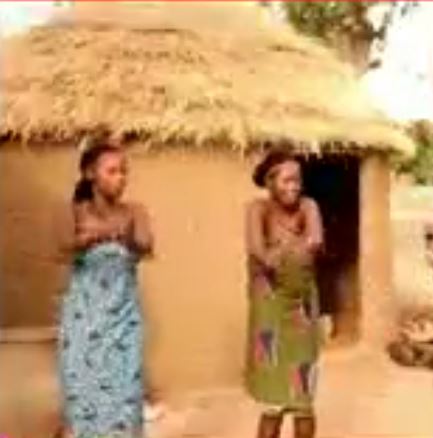
Today, modern economic life has changed considerably. Many Tarok people work in education, public service, business, politics, the military, professional occupations and other sectors while farming remains important in many rural communities.
Traditional Food of the Tarok People
Food provides another window into Tarok culture.
Because farming has historically been central to the community, many traditional meals are based on locally cultivated grains, tubers, legumes and vegetables.
Foods prepared from millet, guinea corn, maize, yam, cassava and beans form part of the traditional food environment.
Tuwo and other related grain dishes are known throughout many ethnic groups in Northern and Central Nigeria although the recipes vary from place to place.
Traditional meals are particularly important during family celebrations, marriages, festivals and other communal gatherings.
For many people, food is more than something to eat. It is a way of welcoming visitors and strengthening relationships.

That is why a visitor to Tarok communities may remember not only the landscape and cultural performances but also the meal shared around the family table.
Tarok Marriage Traditions
Traditionally marriage is of considerable social importance among the Tarok.
There is no sense of a relationship between two people. It connects families and creates obligations between relatives.
Traditional marriage procedures have included negotiations between families, the presentation of gifts and the involvement of relatives and community representatives.
One important aspect of traditional marriage is the role of the maternal family.
The traditions surrounding bride wealth, family responsibilities and the recognition of marriage demonstrate the importance of extended family relationships in Tarok society.
But Tarok marriage practices have evolved.
Christianity, formal education, urbanization, economic changes and Nigerian law have all influenced contemporary marriage practices. Therefore, it is important not to describe every historical practice as though it is still followed exactly the same way today.
Culture is living.
It changes as people change.
Religion Among the Tarok People
Before the arrival of Christianity, Tarok communities practiced traditional religious beliefs involving a supreme creator, ancestors and spiritual forces.
Traditional religious specialists and elders played important roles in rituals connected with community welfare, agriculture, protection and social life.
Christianity grew in influence during the twentieth century.
Missionary work among the Tarok goes back to the early 1900s, especially through the Sudan United Mission (SUM). Historical records indicate that missionary activity reached Langtang among the Tarok in 1907, following earlier mission activity in places such as Wase.
The arrival of missionaries brought more than religious teaching. Mission activity also became connected with education, literacy and medical services.
An important example is the story of Rindap Bawado Damina, who grew up in the mission environment in Langtang, learned to read and write and later became involved in Christian ministry and education.
Christianity is strongly represented among the Tarok today, but elements of traditional culture and historical beliefs continue to influence cultural identity.
Tarok Festivals and Cultural Celebrations
Cultural festivals provide opportunities for Tarok people to celebrate their heritage and bring together people living in different locations.
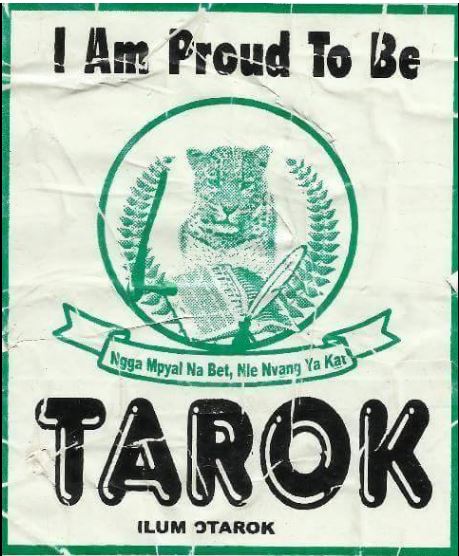
Some have said Ilum O’Tarok, or better known as, Tarok Day.
Such gatherings provide an opportunity for people to return to their ancestral communities, meet relatives, celebrate traditional music and dance, discuss community issues and introduce younger generations to their heritage.
Cultural celebrations are particularly important today because many Tarok people live outside their traditional homeland.
A festival can therefore become more than entertainment. It becomes a bridge between generations.
Tarok Music, Dance and Cultural Expression
Music and dance remain important forms of cultural expression.
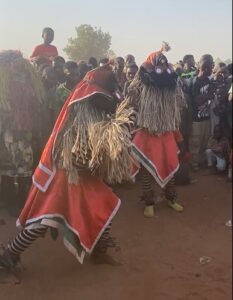
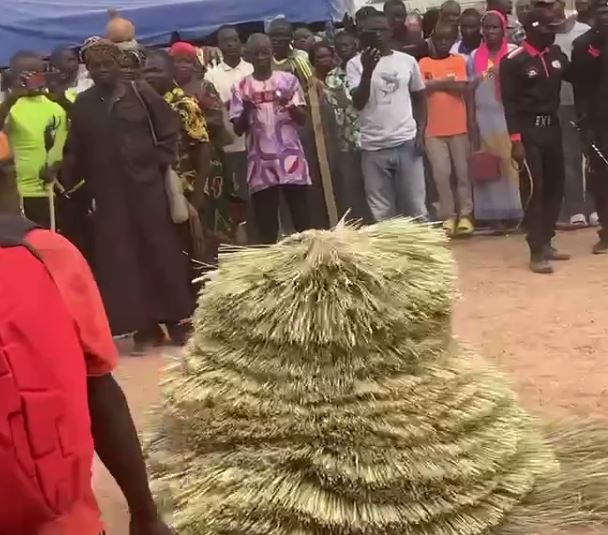
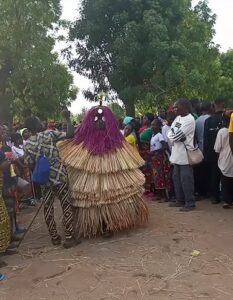
Traditional performances can tell stories, celebrate important occasions and strengthen community identity. Masquerade performances, drumming, songs and traditional attire can all form part of cultural events.
For a newcomer to Tarok customs, these performances would rank among the most conspicuous manifestations of community culture.
But behind the colourful clothing and dancing is something deeper: memory.
A dance can preserve a story.
A song can preserve a language.
A festival can preserve a sense of belonging.
That is why culture should not be restricted to saving the objects in the museum. It has too keep our culture prevelent among young individuals.
How Christianity, Education and Modernization Changed Tarok Society
The twentieth century brought significant changes to Tarok communities.
Christian missionary activity introduced new religious ideas but also helped establish schools and medical work. Western schooling enabled some Tarok men and women to break into the secular world.
The development of written Tarok also contributed to literacy and cultural documentation.
However, at the same time it posed new problems.
Young people migrate to a city for education and work. Formal education and numerous professional domains use English extensively. Nigerian Pidgin and Hausa are also used in different social settings.
These changes can influence the use of indigenous languages.
The challenge for Tarok communities, therefore, is not necessarily to reject modern life. It is to ensure that modernization does not result in the unnecessary disappearance of their language and cultural memory.
Why the Tarok Story Matters
The story of the Tarok people teaches us an important lesson about Nigerian history.
Nigeria is not made up of cultures that developed completely separately from one another.
Communities have interacted for centuries.
You Can Also Read: Biography of Gungzaar Elect-Air Commodore Ishaku Komo (Rtd.)
People have migrated.
Languages have influenced one another.
Families have intermarried.
New identities are forming.
The Tarok example provides us with a particularly illuminating instance of such difficulties since they haveboth rich oral histories and significant textual data.
It’s also a reminder that history isn’t always simple.
Sometimes the honest answer is:
“ There are a few traditions, but the evidence is still being reflected upon by the scholars.”
That is not a weakness.
It is good history.
Conclusion
The Tarok people of Nigeria have a history that stretches far beyond a simple question of where they migrated from.
Their story is a journey of movement, settlement, interaction and identity formation. They trace significant aspects of their past through theoral traditionasto a connection with Tal, also they can use linguistic findings to pose further possibilities as to deeper origins of the language. Scholars have also documented the contribution of different ethnic and linguistic groups to the formation of the Tarok society.
Today, Tarok identity can be seen in the language spoken by families, the traditional institutions of the community, farming practices, food, marriage customs, festivals, music, dance and religious life.
I find the most fascinating aspect of the Tarok tale is the story itself and how it represents culture existing through change and evolution without being eternally fixed. The experience of the Tarok people include Christianity, western education, colonial rule, urbanization and modern Nigerian life, yet, they are not ignorant of their culture.
For those of us interested in Nigerian cultures, learning about the Tarok is more than learning about one ethnic group. It’s a chance to appreciate Nigeria’s Middle Belt’s larger history and marvelous ways communities have intermingled and developed identities over time.
The stories here in Kunzaar are told not to elevate one culture above another. It is to encourage understanding.
As we take on the history of another folk we begin to recognize the human story that goes behind the name.
That, for me, is also one of the most exquisite reasons for keeping culture.
About the Author
Habila Ibrahim is a Nigerian writer and cultural-content creator interested in documenting African cultures, traditions, languages, festivals and historical stories.
He discusses Nigerian and worldwide culture through Kunzaar intending to make culture an accessible tool for the ordinary reader.
In this Tarok article, the methodology merges open published academic research historical source material linguistic studies and readily available cultural source material. Where oral traditions and scholarly interpretations differ, the article deliberately presents the differences rather than treating one version as unquestionable fact.
Sources and Research
This article was researched with reference to scholarly and historical materials on Tarok history and language, including:
Selbut R. Longtau, “Linguistic Evidence on the Origins of Peoples: The Case of the Tarok People of Plateau State (Nigeria)”, Afrika und Übersee, 1991. Tarok oral traditions are compared with linguistic evidence in this study.
Elias Nankap Lamle, “Re-conceptualising the Clan Structure and Migration Pattern of the Tarok People,” International Migration, 2015. The study examines how Tarok society formed and migrated.
Isaac B. Lar, “Autochthonous Tarok Orature and Heroism,” University of Jos inaugural lecture, which discusses Tarok oral tradition, identity and language.
Including the classification and documentation of Tarokid languages, Roger Blench’s linguistic work on Tarokoid languages.
Early twentieth century materials documenting the expansion of the Sudan United Mission into Langtang and Tarok communities.
This description of early Tarok movement is anecdotal and based on oral traditions, and therefore should not be confused with independently verifiable recorded history. Where scholarly interpretations differ, this article identifies the difference rather than presenting a disputed claim as settled fact.
Pingback: Where Did Idoma Migrated From? - Zaarite-Kunzaar
The fusion of AI and design, like with Lovart, is reshaping creativity-its tri-modal interface feels like a game-changer for intuitive, efficient workflows.
NGA PYAL NA BYET NLE NVONG YA KAT