
By Habila Ibrahim, Abuja | Published on August 6, 2026.
Introduction
Every community has a story worth telling. Others are to be found on the pages of books; and yet more are handed down through songs, festivals and in families themselves from one person to the next. The story of the Chutia people of India is one of those remarkable stories that deserves to be heard.
When people think of India’s cultural diversity, they think of the palaces of Rajasthan, the backwaters of Kerala or the festivals of Gujarat. But hidden in the lush green landscapes of Assam in northeastern India is a community that has a history that goes back hundreds of years. But their travel has never lacked for bravery, fortitude, or profound affection for their nation.
The Chutia people were not mere villagers living by the mighty Brahmaputra River. A Long Time ago, even before the origin of Modern Assam, the mighty king made a strong empire and fertile lands to plant seeds and develop customs which make the identity of Assameses till this era. Kingdoms rise and fall but a people’s identity is often retained through their customs, language, food and shared values and that is precisely what has happened with the Chutia community.
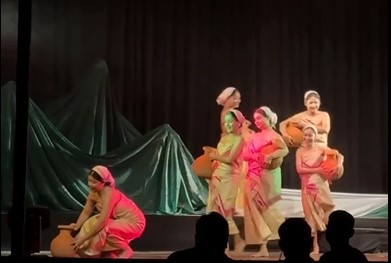
The one thing I particularly appreciate about the Chutia community, is the fact that with all these years of political upheaval, the people still hold dear to their cultures. Tradition permeates their lives and is clearly present on their festivals which pull together many families. Traditional weaving shows excellent artisanship, and a love for community and ancestors still characterizes their life style.
Through the story I also found out that not all problems is just the problems for few few society, not so many highly fertile society are not really put their society into bloom, hiding behind many human for a very simple things. These ordinary human beings preserving what was passed on from their fathers and forefathers.
In this blog post, let us trace out the history, origin, religion, food, festivals, marriage customs, and cultural traditions of Chutia, the journey through which you will unravel the reasons why they are still considered to be one of the premier indigenous tribes of Assam.
History of the Chutia People
Chutia’s history is very intimately associated with the history of Assam.
According to traditional accounts, the rise of the Chutia kingdom can be placed between the 12th century onwards, and they emerged as one of the foremost political powers in eastern Assam with territories stretching out for much distance across lush green country especially the lands of Brahmaputra and its several other rivers.
Agriculture trade, structured administration and its army facilitated the development of the kingdom during the period when the Chutia ruler s settled in the country and encouraged farming and other cultural aspects.
Also Read: The Manobo People
Although the reign of the Chutia Kingdom extended for quite a number of centuries it came under an invasion by the Ahom Kingdom at the beginning of the 16th century after going through years of constant battles. Even though it declined politically they continued to be present in society, and became incorporated into the greater Assamese society in spite of retaining their customs as the Ahom slowly took over Assam.
The present day historians consider it to have been a glorious and magnificent kingdom which left its mark over the history of Assam.
Origin of the Chutia People
The origin of Chutia ethnic groupis still a topic of various interpretations by Historians and academics.
Several experts suggest this ethnic group is a member of the larger Tibeto-Burman ethnolinguistic group, people whose origins lie in migration into Northeast India many centuries ago. The communities migrated over a stretch of generations and setttled in the fertile valleys and plains of present day Assam.
River settlements are where river civilization had developed into growing with ample agriculture, fish and easy transport.
The traditional beliefs of the Chutias suggest they are descended from the rulers of an ancient dynasty who organized settlement and government to improve their condition.
Whether the village legend tells tales of a great war with a rival king or one that begins in the remote corners of Chutia lands. The connecting thread of the long tenure and deep love for the land that has sustained this tribe, for centuries – is a constant.
Where are the Chutia people Found?
Chutia community resides mostly in the state of Assam in the country of India as of today.
Large populations live in districts such as: Tinsukia, Dibrugarh, Dhemaji, Lakhimpur, Sivasagar, Jorhat, Golaghat, Majuli and Sonitpur.
Smaller communities also migrated to other states in the country in search of education, employment and business.
Countries where the Chutia People are Found
The Chutia people are primarily found in: India (mainly Assam); and Small diaspora communities in neighboring countries through migration, though India remains their principal homeland.
Language
Today the majority of the Chutia use Assamese as their language.
In older times they had their own linguistic heritage, though over the passage of many a centuries during cultural exchange with Assam a lot of them had lost original language and mixed with Assames in it.
Their rich oral heritage survives through: Folk songs, Proverbs, Traditional stories, Ritual chants and Oral history.
Language continues to be a vehicle by which to preserve the identity of the group.
Religion of the Chutia People
Religion has always played an important role in Chutia society.
Traditionally, Chutia people followed indigenous styles of worship where they paid homage to nature, ancestral spirits and local gods/deities, keeping in mind – the river, forests, hills or the agriculture of the region to be sacred.
Later, much of the communities became popular in Hinduism, as most followed Vaishnavite Buddhism, followed later on by forms of Shaktism in particular. Temples were built in villages of most communities and communal worship centres gained popularity.
As even in present days people can see certain elements of old tradition mixing up with the religion of Hindus. They turn their spirits unique & also weird.
Religious ceremonies often include: Prayer offerings, Community feasts, Music, Traditional dance and Ritual blessings.
Culture of the Chutia People
The Chutia culture shows its most vibrnt colours during cultural festivities and celebrations.
Family-based in community Many of the community’s traditional values still exist – respect for the aged, openness and welcome for others, sharing and collaboration, mutual responsibility.
There is some clothing that people hand weave, it is with a pretty kind of material and of bold colors.
Especially to women are these weaving products, made in traditional designs and generations, which are also handed down today.
Many special events usually mean special food accompanied by traditional dance and live music. Typically upbeat with the use of folk instruments you have people that gather to partake in the celebration and bust out their fancy moves.
In addition, various folklores are transmitted among the Chutias about some important lessons to be learned, phenomena about nature, and the past brave heroes.
Agriculture continues to shape much of their culture and festivals are intimately related with their food cultivation cycle; festivals, rituals and seasonal celebrations are all connected with agriculture.
Traditional Food of the Chutia People
The food of the Chutia people mirrors the natural setting and agricultural way of life of these ethnic groups.
Rice is the foundation of almost every meal.
Popular traditional foods include:
Rice
We have eaten boiled rice every day as it is our main meal.
Fish
There is a general tendency to prepare the freshwater fish of rivers in Assam by infusing them with herbs and spices of the region.
Bamboo Shoot
There’s something special about the taste of bamboo shoots when put into some traditional cuisine.
Leafy Vegetables
When cooked these greens are usually prepared to maintain their natural flavor and enjoyed seasonally in many areas.
Pork
In many of our festivals or get-to-gathers pig is prepared by lots of communities traditionally.
Rice Beer
Locally brewed rice beer has sometimes formed part of some traditional ceremony. The custom changes between families as well as within different religious or secular groups.
The main dishes are mostly plain, with fresh food made locally on the islands.
Festivals of the Chutia People
Festivals, which are good for nature and our community, create a special moment to bind all together through family.
Bihu
Bihu enjoys extensive popularity in all the corners of the state of Assam but more among the Chutia community of the province.
It marks: Agricultural seasons, Harvest, New beginnings and Community unity.
Villagers gather for a community meal, traditional music and dancing.
Ali-Aye-Ligang (in areas which are located nearer to a neighbour of their own people etc.)
A few Chutia communities living in proximity to other indigenous communities, as the latter, celebrate regional harvest festivals to extend their mutual friendship and culture.
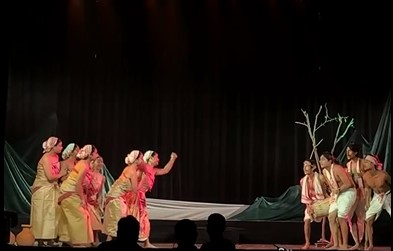
Festivals often include: Music, Dance, Traditional games, Community feasts and Religious rituals.
Marriage among the Chutia People
It is often said that marriage is about bringing two families together in addition to two persons.
Traditionally, arranging marriage have been part of parents of a couple especially the family elders as partners who now are more or less involved in their partners’ choice and involvement as partners and are more free in having their personal involvement when selecting spouses.
Marriage ceremonies generally include:
Family Negotiations
Both families meet to discuss the union and future responsibilities.
Religious Rituals
Priests shall observe the blessing traditions for according with Hindu traditions or local custom.
Traditional Dress
Wedding of groom and bride wearing handwoven cloth of traditional Assam costume.
Community Feast
All visitors can look forward to substantial local fare that would be the envy of many.
Music and Celebration
Traditional singing and dancing produce merriness atmosphere.
Family support continues to influence the life of the newly-married in myriad ways.
Occupation and Daily Life
Agriculture has historically been the cornerstone of the economy of the Chutias.
Many families cultivate: Rice, Mustard, Vegetables and Tea in some regions.
Fishing also contributes to household livelihoods.
It is interesting for many of us today that to many of them their parents have made many professions among such as: Education ,Government service, Health- Care, Engineering, Government service and Information Technology.
In the face of modernisation some families still cherish traditional celebrations, village celebrations.
Arts and Handicrafts
One of the distinctive skills Chutias are known for is craftsmanship of all sorts for.
Women are famous for producing finest quality silk and cotton.
These fabrics are used for: Traditional clothing, Ceremonial garments and Household decorations.
Bamboo and cane articles too find common production, representing skill handy acquired over ages.
The crafts that represent the identity culture, not less have brought the households economic benefits.
The Chutia People’s Contribution to Assam
A few things about their legacy are worth remembering because it helped to develop Assam at a faster pace and on a larger scale.
They left as legacies as: The process of forming the medieval state, Agricultural enhancement, Traditional arts and crafts(textile weaving), Folk tunes & music, Culture and social functions (festivals)as well as a strong culture identity. And Regional organization, Community and community management.
It is important to appreciate that a variety of elements characteristic of the modern Assamese culture are in fact gifts from the Chutia people over centuries to Assamese society.
Challenges in Preserving their Heritage
However the same struggles of numerous indigenous cultures across the globe hit them squarely in the 21st century.
Young people were affected by increased rates of urbanization, migration and globalization.
Several traditional customs and oral accounts are, due to modernization and the modern ways of living are in the process of becoming obsolete and fading away over a period of time.
You Can Also Read: The Pyramids of Giza
Despite this loss of language and cultural heritage, indigenous groups, academics and leaders are attempting to preserve these histories and celebrate cultural festivals.
These social platforms are also used in ways that can enlighten many with regards to the lives of Chutias, their stories and culture.
Why the Chutia people Matter Today
The Chutias may serve as a reminder that we often miss their language; that history is sometimes lost between kings and wars. And yes, that language, history, and people survive, continuing down the generations father to son and to grandchild.
Their story is one of tenacity; though the landscape and even the very shape of the world they’ve inhabited and loved have gone through countless earthquakes and geological eons. Many, still, carry that fire inside for whatever it means for them to be Them.
This heritage can guide us today about caring for our nature, reverence for our loved ones, cohesion for our communities and maintaining culture in this fast moving world.
Interest in indigenous cultures is on the rise worldwide, so here are just one example of how people are incorporating such traditions into their modern day lives. Let me introduce you to the Chutia people of north eastern India.
Conclusion
The Tale of the Chutia People serves us as a good lesson on the understanding that we may consider one’s heritage, in terms of grandeur, as related to how large or mighty his reign was, or how rich a ruler his lineage produced, but Heritage and culture is what families holds dear as festivals bringing folks together and stories generations tells our kids.
The Chutia Kingdom merged with the Ahom Kingdom more than 100 years ago, but the Chutia culture is not to be considered dead. They remain alive in Assamese culture, the various festivities and festivals, weaving art, music, food habits and lifestyle of the people of Assam. I am going to see in the library the history of this northeast.
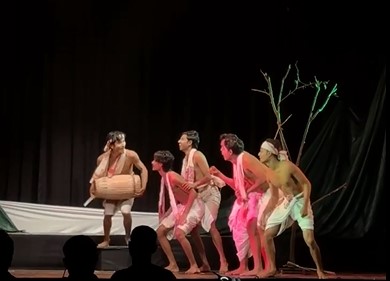
What is in the Chutia language learning also gives us all valuable lesson – that cultural variety could have been the finest jewel human possess… All kinds of folk music, food dishes or lifestyle methods are story which are worthwhile learning!
Thank you for allowing me to take you on a journey through time, hopefully giving you a deeper understanding of the Chutia people and the richness of the heritage of India. Only through our sharing such culture with those interested peoples can we succeed in saving the culture for our descendants.
About the Author
By Habila Ibrahim Cultural Writer/Researcher Founder, Kunzaar My journey with culture began almost naturally, a simple question about how diverse communities and groups interact, celebrate and teach their children. I have chosen these as areas of my platform and my own research with Kunzaar to share and learn around the world.
“Through writing I hope to demystify culture, so that it becomes interesting and comprehensible for student, traveler, academic, as well as anyone passionate about history and heritage. Every culture should have a narrative, and every narrative makes one know one another a bit more.”
He researches, studies, and writes about the living histories, traditions and cultural legacy of local and indigenous people. All his writings continue to bring culture and heritage into contexts that make these narratives clear and very easily approachable to all writers and readers.
Source and References
In depth historical analysis was done taking into the account, the existing historical texts and literatures available for Chutia community and Assam history. To facilitate in the writing of this article I am especially grateful to the literary works on Chutias by Sir Edward Gait, S. L. Baruah, H.
K. Barpujari and recent writings on traditional aspects and cultural developments of the Chutia community by Banasri Hazarika and Tarulata Boruah respectively.
Historical materials available about ancient kingdom and their oral narrations was also incorporated in preparing the paper.
Although I have taken great care to maintain a consistent balance of information, no matter where it falls in the world or even within a particular region and family, traditions and culture always can differ. I hope that this write up can be seen as a tool which informs a readers more about the timeless heritage of the Chutia people and hopefully, be seen to do so with respect.
This is a zaar sayawa
[76429]supplies professional anti-violence equipments and solutions for the whole world with strong and perfect production capacity. anti-violence.org