

By Habila Ibrahim | Last Updated on July 7, 2026
Introduction
I first saw a photo of the Pyramids once. Three stone mountains in the desert. Then I asked: “How did they built this?” The answer is still blowing minds. It look like the groundnut pyramid in Kano that we used to see on a picture and I was thinking it is the same thing.
I come to understand that, the Pyramids of Giza are not just tombs. And they estimted the age to be around a 4,500-year-old flex. Built for pharaohs Khufu, Khafre, and Menkaure around 2600 BCE. I was just thinking about stacking up 2.3 million blocks of limestone, each the weight of a small car. No cranes was used. No steel either. But with only stone, sand, and people.
The Pyramids of Giza are among the most famous cultural and historical landmarks in the world. These colossal structures can be found at the edge of Cairo, just outside Giza and have become a signature to the ancient Egyptian era. So, Giza is a name of a town, near Cairo, the capital city of Egypt.
It was believed that it was built since over 4,500 years ago, the pyramids continue to fascinate historians, archaeologists, and tourists. As the one remaining of the Seven Wonders of the Ancient World they rank k one of the most historically significant heritage sites in the world. They are the wonders of the world because a building of thousands of years ago still standing and it has not totally collapsed. You will be imagining what types of building materials was used to built it. That’s the beauty of nature we need to know.
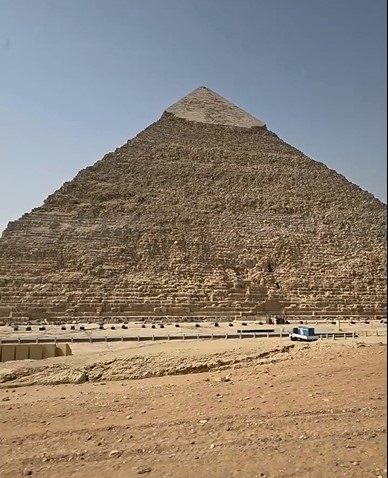
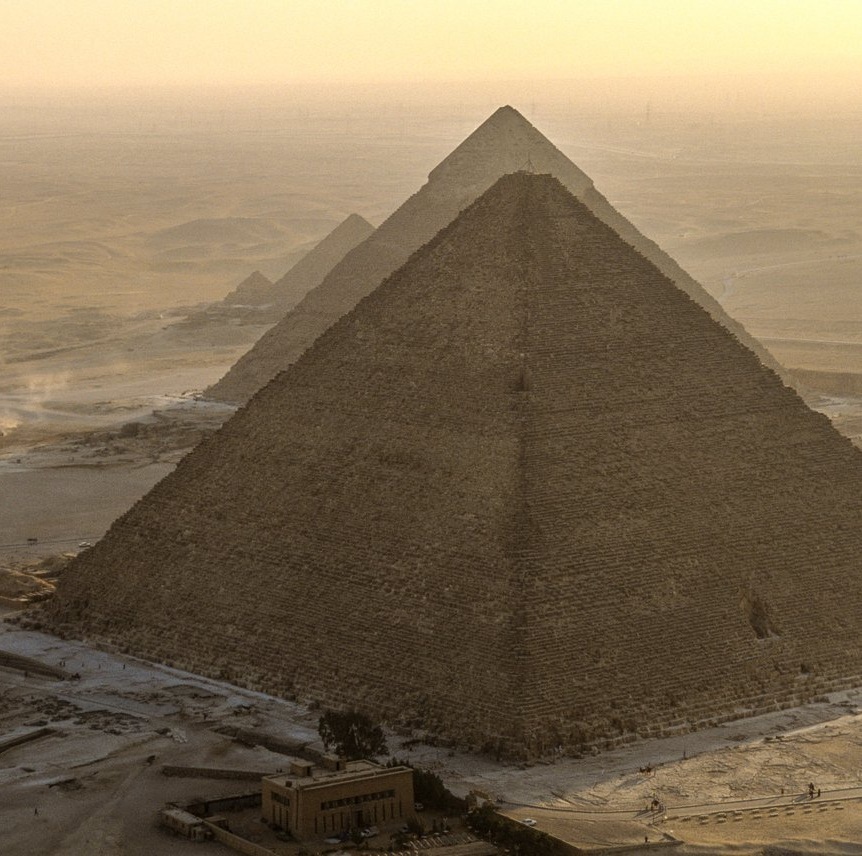
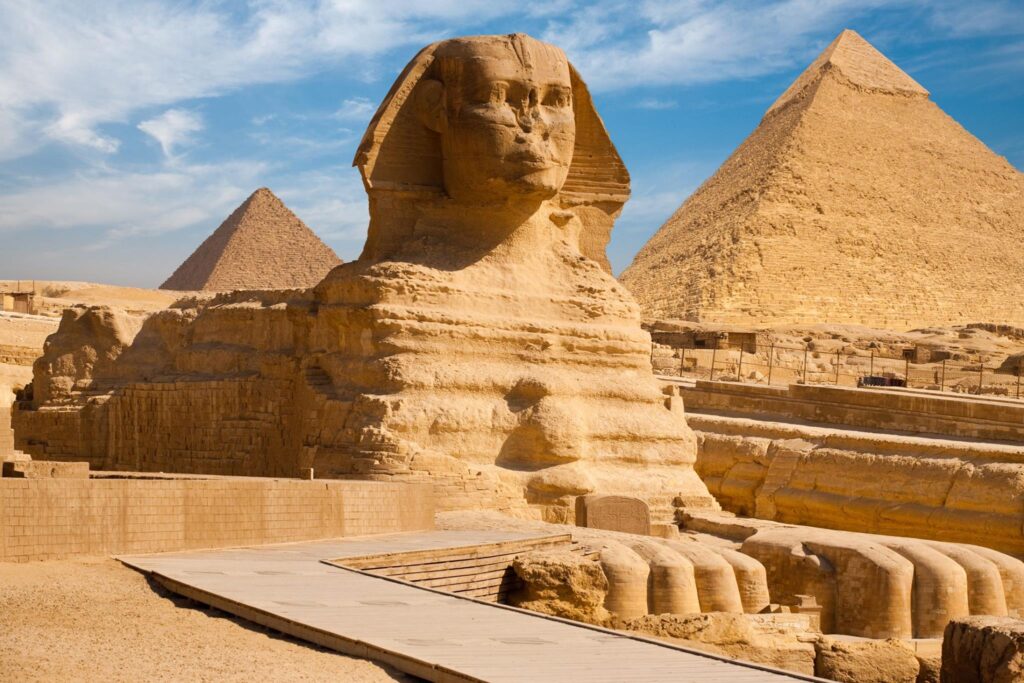
The complex is primarily composed of three large pyramids – the Pyramid of Giza (also referred to as Khufu’s Pyramid), Pyramid of Khafre and the Pyramid of Menkaure. Nearby the famous Great Sphinx of Giza — an imposing form, this creature the Sphinx comprises of the lion’s body, and the head of human beings can also be seen. In further parts of this piece of article below, you will find interesting details of these Pyramids including its history, origins, cultural significance and festivals and a fun trivia.
History of the Pyramids of Giza
This is where they were constructed: In order to make the greatest Egyptian pyrahids, the Pharaohs, and, what was most likely a significant workforce of engineers. These great Egyptian pyramids, the famous one of which (The great pyramid of Giza), constructed at the greatest Egyptian peak pyramid height, also as largest man-made construction of height until. Construction took place on 10th – to 12th ancient dynasty on the same Egyptian Giza and Saqqarah plateaus.
Ancient Egypts rulers known as pharaohs stored their remains in the pyramids since ancient Egyptns believed in life after life. The Egyptian rulers felt that when they expired their spirit could take on and live on forevermore inside the spiritual world as well as that the pyramids function as gates to endlessness. And this is what they believed about as of that time that encouraged them to embarked on this building.
Also Read: Peruvian Culture
Khufu (also called Cheops), a pharaoh of Egypt, was buried inside the largest pyramid of all, the Great Pyramid of Giza. It originally stood about 146 meters (481 feet) tall, making it the tallest man-made structure in the world for nearly 3,800 years.
Khafre was a son of Khufu, as the second largest pyramid was built in his honor. The third pyramid was the smallest of the three. The last pyramid was built for Menkaure.
Tens of thousands of laborers and artisans likely took part in building these monuments, hauling out nearby limestone blocks and lugging the granite stones that arrived from southern Egypt-historians say hundreds of miles. It sounds interesting that event in the olden days natural minerals were discovered, as the Book of Ecclesiastes said, there’s nothing new under the sun. This is an example of it.
Origin and Construction of the Pyramids
The idea of pyramids comes from earlier tombs such as the Step Pyramid of Djoser built by the architect Imhotep. This kind gave way to smooth sided pyramid like these still standing at Giza today.
Construction Techniques
Experts suspect the construction methods used for the pyramids were: The stones for the pyramid were cut out from the nearest quarries; Workers haul stones on wooden sledges and ramps were put up on the site for raising them; Tools made of copper could have been used to shape blocks ; The construction team lived in well-organized village settlements in close proximity to the project location.
Despite modern technology, the exact construction method remains one of history’s greatest mysteries that many are wondering up till today how this type of magnificent building was erected?
According to one account, the Great Pyramid consists of no fewer than 2.3 million stone blocks – none weighing less than two tons, none weighing more than 15 tons.
Why the Pyramids of Giza Were Built?
The pyramids were used almost exclusively as tombs for pharaohs, rulers in ancient Egypt that were worshipped as gods. Their religion put great importance in the belief of an afterlife and used pyramids to protect the body and treasures of a ruler when they died.
Many people even believe that inside of the pyramids were rooms to bury their dead bodies. They could go the distance – they would want some of the treasure such as jewelry and food to go with them on their long g journey (like that jewelry and food I want), and other materials to facilitate them once in the next world: ceremony articles, religious articles and, yes, many statues of gods.
Their plan was that these items were meant to help the pharaoh in the afterlife.
The pyramids represent power, divine rule and the relationship between pharaoh and the god.
Cultural Significance of the Pyramids
Ancient Egypt’s culture, engineering and architecture reach their zenith in the Pyramids of Giza.
Now days they are a symbol of Egypt and a treasure of Africa know in the world as well. In recognition of the global importance of this site is considered as a world heritage site byUNESCO under the Name Memphis and its Necropolis-the Pyramid Fields from Giza to Dahshour.
Every year millions of people visit the pyramids of Egypt.
The Great Sphinx of Giza
Near the pyramids stands the famous Great Sphinx of Giza, one of the most mysterious monuments in ancient history.
Pharaoh Khafre isbelieved to have commissioned the building of The Sphinx around 2500 BCE.
Highlights
Length is approx. 73 meters height approx. 20 meters The body of a lion The head of a human king.
Lion: They symbolise the lions strength of the creature; and human head stands for regal authority or royal power and wisdom. In ancient Egypt the lion is one of the most powerful beings, considered to have god- like abilities ofincredible proportions.
Many stories associate it with the Sphinx – it’s one of the most mysterious archaeological artifacts in Egypt.
Cultural Festivals and Events in the area around the Pyramids
Although the pyramids themselves were not built for festivals, the site has become an important venue for modern cultural celebrations in Egypt.
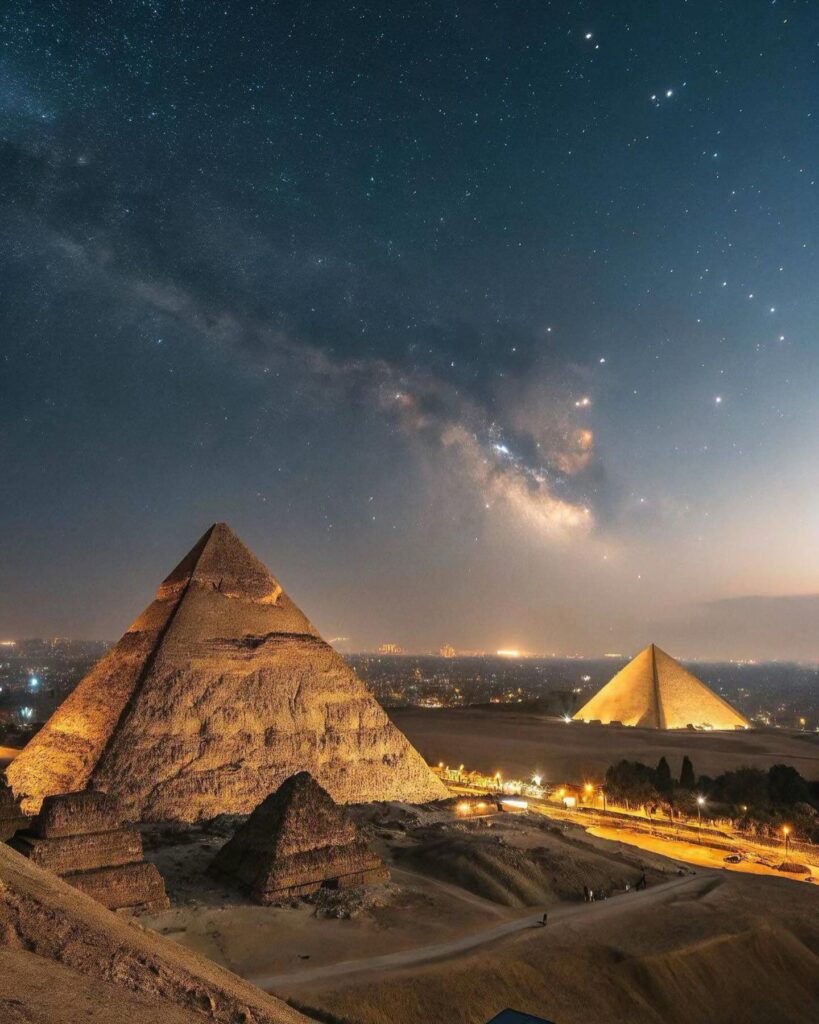
One of the most famous events held near the pyramids is the Sound and Light Show at the Pyramids.
Sound and Light Show
This nightly event uses lights, music, and narration to tell the story of ancient Egyptian civilization.
Visitors engage in the history of the pyramids with powerful, animated storytelling that celebrates the stories of the pharaohs of the ancient past.
Abu Simbel Sun Festival Connection
This is one more known of the Egyptian monuments and festivals which revolves around an ancient edifice: the Abu Simbel Festival. The god Ramesses seems to emerge from the dark here with the sunshine beating down upon one of the statues of Abu Simbel.
This is in the upper part of Egypt though so of course has to do with the engineering know how which was used on pyramid and structure design in the ancient Egyptian times.
Mysteries and Theories about the Pyramids
But a host of mysteries remain that that hundreds of years of investigation couldn’t reveal. That up till now, researchers are still researching about these magnificent architectural designs.
Astronomical Alignment
Many researchers believe the pyramids were aligned with stars in the Orion.
Could it have symbolized some relationship of the pharaoh and his heavenly gods?
Secret Rooms
Science with scanners has found these hidden chambers inside the pyramids.
Read This: The Forbidden City in China
These finding continue to reveal secrets of the Egyptians’ engineering. In other words, there is still work to do to unlock the mysteries of these Pyramids.
Precision Engineering
They also align, with precision to the four cardinal directions north south east and west. This precision that the builders were able to make would even boggle most of today’s most accomplished engineers.
Tourism at the Pyramids of Giza
The Pyramids of Giza are one of the most visited tourist destinations in the world. There are activities such as: Viewing the pyramid’s interior, Camel riding in the desert, Viewing the Sphinx , Watching cultural performances and Visit local museums.
Just down the road, thousands of treasures from the time of the pharaohs, many taken from Tutankhamun’s tomb, are exhibited at the new Grand Egyptian Museum.
Preservation and Protection of the Pyramids
The pyramids, by their nature, their importance worldwide and also due to their extreme age, are defended from falling down by Egyptian government and some of world-famous heritage organizations.
Here is the plan of their maintenance, where they are provided in their own interests : Access restriction on the pyramids, archaeological monitoring, restoration work and environmental care.
They do this in order to see that they pyramids are left here for us to be enjoyed by future generations. History will keep marveling about these handy works of men that took many years and still standing.
Cool Stuff about the Pyramids in Giza
Interesting tidbits on the Pyramids. Here’s some neat bits on them.
1. It’s thought to be the world’s first great structure of its time and may have last close to 4,000 years!
2. It contains about 2.3 million stone blocks.
3. Each individual blocks weigh several tons.
4. The pyramids were originally covered with smooth white limestone.
5.From miles around you can see it glowing in the sunshine.
6. Pyramids were not built by slaves The workers were skilled and were employed as professional builders.
7.These structures are among the best pieces of human-engineering found today.
Why the Pyramids of Giza Still Matter Today
The Pyramids of Giza more than thousands of years old are symbols of human creativity and determination as well as of a culture that is in some ways still alive today.
You Can Also Read: The Toraja People
Here are some ways ancient people were able to build great structures without any technology today.. For all of history scholars, archaeologists and travellers the wonders continue to impress.
Conclusion
The pyramids of Giza stand testimony to a history they don’t belong to any more; relics of an ancient world they no longer occupy space in. Over 4,000 years old, they are awe-inspiring by the scope of their design, significance in the culture of the time and continued mysteries. How awesome is it that ancient Egyptians were behind the construction of one of history’s most enormous constructions, one thatpredates the age of gigaprojects?
It must have looked as unbelievable to the people back then, as it does to us today, that such enormous architectural projects were achieved without the tools we are accustomed to today, such as cranes or electric power. From the time of Pharaohs Khufu, Khafre and Menkaure to recent times when this unique site of the ancient world has also become the venue for modern cultural events, it symbolizes a direct link between the past and the present.
Even with the lack of advanced technology in the past, which I personally think don’t exist in today’s time, all of these can be achieved just with designs without modern technology at all.
Today the Pyramids are one of the greatest sites of cultural heritage in the world; with every year millions of visitors travel to Giza to witness the last of the Seven Wonders of the ancient world.
The sheer scale of these old ruins brings to attention the success of ancient peoples and serves to prove the pharaohs’ legacy in Egypt will not be forgot to many centuries to come. Hope this our writeup is helpful? Keep visiting our website for this and many posts to educate and enlighten us to know our cultural preservation. Please you, our reader, we urge you to respect other peoples’ culture and tradition.
Habila Ibrahim
Habila is a cultural researcher in Abuja, Nigeria. He writes about Culture, tutorial and world heritage so Nigerian readers and abroad readers can see African engineering on the same page as global wonders.
This article used UNESCO, Egypt Ministry of Tourism, and archaeological records.