
Published By Habila Ibrahim, Abuja on September 3, 2026.
Introduction
There are some places in the world that seem to carry the memories of the people who lived there, even when the streets become quiet and many houses are no longer permanently occupied. For example, Galičnik, a beautiful mountain village in North Macedonia.
High on the slopes of Mount Bistra, Galičnik is more than a collection of old stone houses. It is a place where architecture, music, marriage traditions, clothing, religion and family history have come together for generations. The village is closely associated with the Mijak people, an ethnographic community of western North Macedonia known for its distinctive cultural traditions, craftsmanship and way of life.
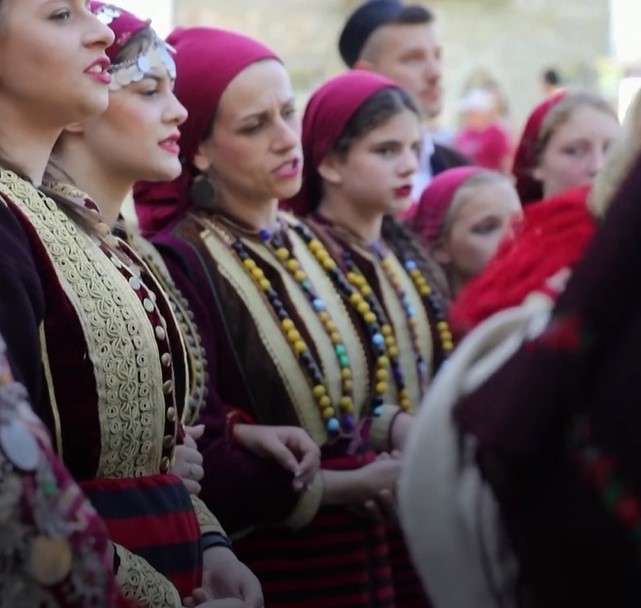
What makes Galičnik especially interesting is the way its traditions have survived despite migration and modernization. For much of the year, the village can be remarkably quiet. But when the famous Galičnik Wedding takes place in July, the mountain comes alive with drums, traditional music, colourful clothing, horses, dancing and visitors.
For me, the difference is one of the most interesting things about Galičnik. A place that could easily have become forgotten has instead become a powerful symbol of cultural memory. Its people and descendants have continued to return to their roots, keeping important customs alive for younger generations and visitors from around the world.
In this cultural journey, Kunzaar takes us to North Macedonia to discover the history, people, traditions, architecture, marriage customs, music and cultural identity of Galičnik.
Where is Galičnik Located?
Galičnik is a historic mountain village in western North Macedonia, in the municipality of Mavrovo and Rostuša. It is located on the slopes of Mount Bistra, at an altitude of about 1,400-1,500 meters above sea level.
Villlage is in the scope of the broader Mijačija / Mijak region cultural zone. The surrounding landscape is mountainous, green and rugged, helping to explain why pastoralism, sheep breeding and seasonal movement historically played an important role in the lives of the inhabitants.
Galičnik’s location is one of the things that makes it so visually distinctive. Traditional stone houses seem to climb up the mountainside and the surrounding landscape is very dramatic.
Today, Galičnik is also closely connected with Mavrovo National Park, an area known for its mountains, forests, rivers and natural beauty.
Who Are the Mijak People?
In mentioning Galičnik it is necessary to know something of the Mijaks, for the village has always been considered one of the principal Mijak settlements.
Mijak people is usually defined as an ethnographic group of Macedonians who traditionally inhabit the Lower Reka region in western North Macedonia. Their cultural identity has been expressed through language, traditional clothing, architecture, woodworking, religious art, music and pastoral traditions.
One of the settlements best-known in the culture associated with this ethnic group is the one called Galičnik.
The Mijak way of life was shaped by the mountains. Sheep breeding and seasonal movement were important parts of the traditional economy. Also the men of the area made reputations as masons, and another forms of skilled craft work.
This history helps us understand why Galičnik developed such a strong reputation for beautiful stone buildings and skilled artisans.
History of Galičnik
Galičnik has a long and complicated history.
References state that it has been included in the 1467 registration book on the administrative accounts in the Ottoman empire. Over the centuries, the village developed into an important mountain settlement whose inhabitants were involved in livestock raising, craftsmanship and trade.
There was once many more people living in Galičnik than there is at present. Historical accounts describe hundreds of houses and a substantial population.
However, life in the village was not always easy.
Also Read: The Gogo People of Tanzania
Due to restrictions on the availability of employment in the mountain region, men were often forced to seek work out of Galičnik or communities neighbouring Galičnik. Some became skilled builders and craftsmen and worked in different parts of the Balkans and beyond.
This pattern of migration eventually changed the population of the village dramatically.
Over the twentieth century, modernization, migration and urbanization led many families to leave permanently or spend only part of the year in Galičnik.
That is one reason the village today feels very different from the busy community it once was.
Yet the decline in permanent population did not mean the disappearance of Galičnik’s identity.
The great-grandchildren, many still live near the village today and visit it for festivals and for religious occasions, as well as for get-togethers.
Traditional Architecture of Galičnik
One of the first things a visitor is likely to notice in Galičnik is its architecture.
Traditional stone and timber houses which have steeply pitched roofs clad in stone slabs are dotted through the village. The structures were built to withstand the rough mountain weather.
The houses are not simply beautiful old buildings. They tell the story of how families lived.
In contrast the imposing stonework offered protection from cold highland winds, at the same time timbers feature significantly within the construction.
Several historic houses in Galičnik have been protected as cultural heritage.
In fact, the village itself was declared a protected cultural monument in 1975, reflecting the importance of its traditional built environment.
Walking through Galičnik therefore feels almost like walking through a living museum.
Unlike the average museum these have not been placed behind a glass panel though. They are houses, streets and buildings connected to the memories of real families.
Galičnik Culture and Traditional Way of Life
The traditional culture of Galičnik developed around family, religion, livestock, craftsmanship and community.
Life in the mountains encouraged people to depend on one another. Families and neighbours played important roles during weddings, religious celebrations, seasonal activities and other communal events.
Traditional craftsmanship also became an important part of the area’s identity.
The Mijaks became particularly associated with woodworking, construction and religious artistic traditions. Their skills could be seen in houses, churches, furniture and decorative works.
This respect for heritage is quite relevant because we think culture is everything related to the festival, parades and what people wear. Sometimes it can be seen in the way people build a house, carve wood or decorate a religious building.
Traditional Clothing of Galičnik
Traditional clothing is another important part of Galičnik’s cultural identity.
The traditional wedding costumes are especially famous for their detailed designs, colours and craftsmanship.
The bride and the groom are present at the Galičnik Wedding wearing attire which sets the ceremony apart from a regular modern-day wedding.
The clothes weren’t just to look nice. They represent family heritage, craftsmanship and the continuation of an older way of life.
From the National Park Mavrovo “The most significant part of cultural heritage saved through the wedding festival is the costume of Galičnik”.
This is one reason the wedding attracts photographers and cultural researchers. The combination of clothing, music, horses, stone houses and mountain scenery creates a remarkable picture of traditional life.
The Famous Galičnik Wedding
If there is one tradition that has placed Galičnik on the international cultural map, it is the Galičnik Wedding, locally known as Galička Svadba.
The traditionally performed wedding is related to the St. Peter’s Day (which orthodox Christians commemorate on 12th July).
Weddings in Galičnik historically were often several days in length and included a large number of varied customs and ceremonies. Coincidence it appeared, as Timing was closely linked with the Season of women returning from Work in men who had had to Leave work there.
This makes the wedding more than a celebration of two people.
It is also a celebration of community.
How the Galičnik Wedding Became a Cultural Festival
However, the current Galičnik Wedding festival itself only started in the twentieth century in an attempt to keep the tradition of wedding in Galičnik and to introduce wedding habits of Galičnik people to tourists.
The annual cultural event was established in 1963, at a time when migration was already changing village life.
Over the years it grew into one of the country’s most recognized celebrations, attracting large crowds.
So, today the traditions live on because a specific couple will join the festivities in the tradition, instead of living the past behind, as only part of a memory.
Alexandar Pendaroski and Martina Mihajlova have been chosen as the bride and groom at the official Galičnik website, also pointing out that 2026 will be exactly 35 years from the first modern wedding at the Galičnik in 1991.
This shows how the tradition continues to connect contemporary families with the history of the village.
Traditional Wedding Rituals
The Galičnik wedding itself, it has many rituals that show the way that this community lives and it’s beliefs.
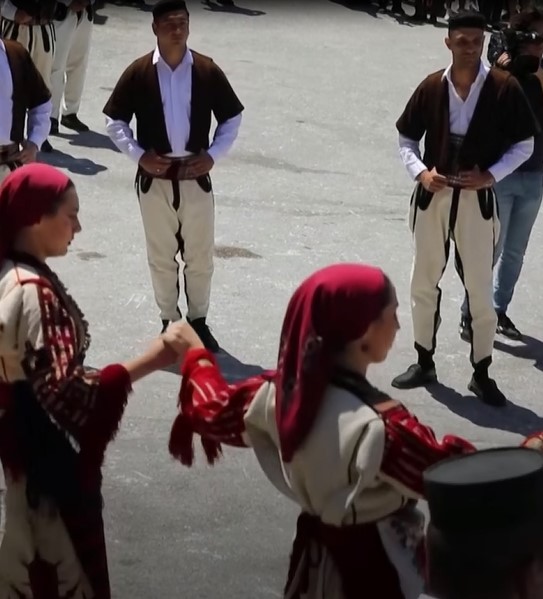
Traditionally some of the associated activities include: The musicians being greeted, Traditional dancing, Bride brings water, Planting the weeding flag, Groom is shaven, Making of traditional bread, The bride being brought in the grooms house, The remembering of the ancestor that passed on church and Wedding singing and dancing.
The National Park Mavrovo lists several of these customs as important features of the celebration.
And most beautifully, ancestral veneration is a component of even the broadest wedding practices.
It reminds us that, in many traditional societies, marriage is not regarded as the union of only two individuals. Is additionally felt as bridges over families with more than one generation.
The Bride, the Horse and the Wedding Procession
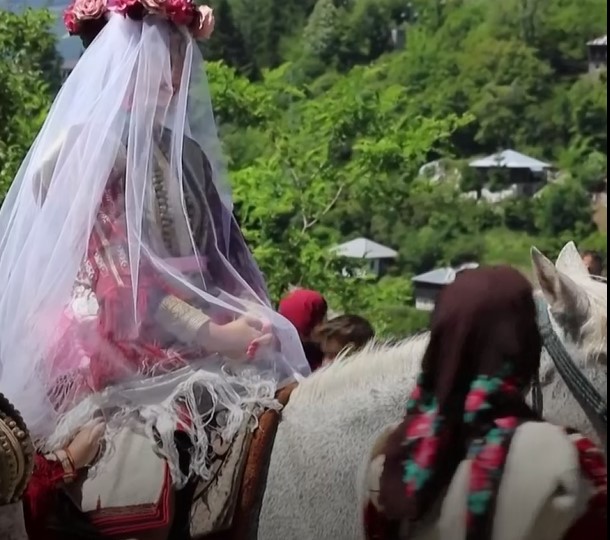
One particularly striking photograph comes to mind-the bride going to her husband by horse.
Musicians playing the ancient instruments walk in procession, bridging the modern wedding day to village life.
The horse is not just a mode of transport. Within the ceremony, it becomes part of the symbolism and spectacle of the traditional wedding.
During the Procession through the stone village the sound of traditional drums and brass filled the mountain air.
It is easy to understand why visitors are fascinated by the scene.
Teškoto: The Famous Traditional Dance
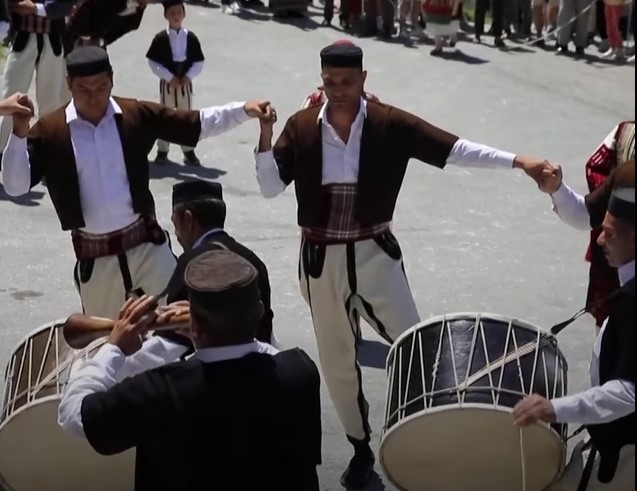
The last key elements of Galičnik culture are their music and their dance, among which the most representative is the traditional male dance Teškoto which is often danced during weddings.
This word usually takes on the meaning as being ‘weighty’ and troublesome.
The dance is quite slow and very strong; dancers move together more or less in sync.
Teškoto is more than entertainment. It has often been interpreted as expressing hardship, endurance, departure and the emotional experience of people whose lives were shaped by migration.
National Geographic reported the dance as one of the rememberable parts of the Galičnik Wedding.
When the dancers move together against the background of the mountain village, the performance becomes almost like a historical story being told without words.
Music and Musical Instruments
Music gives the Galičnik Wedding much of its atmosphere.
Different parts of the celebrations are punctuated by folk musicians accompanying the dances and also the main features of the occasion such as a range of drummers and the zurla playing.
The sound carries through the mountain landscape and helps announce the arrival of different parts of the wedding ceremony.
A music especially holds value in tradition because tradition, more than many writers, relies on music to maintain the historical memory.
A song remembered by grandparents can be taught to children. When a next-generation group learns the song/dance of a former group and duplicates it. A musical instrument can continue to sound long after the circumstances that created a tradition have changed.
That is exactly what makes Galičnik’s musical traditions so valuable.
Religion and Community Life
Galina’s cultural life has been heavily shaped by Christianity, and of which Eastern Orthodox Christianity in particular is one element which plays a significant role within Galičnik.
The Galičnik wedding is closely linked to the feasty of St. Paul’s and a Church ceremony is performed at the end of the Galičnik wedding ceremony.
Religion therefore forms part of the broader cultural structure of the village.
At the same time the wedding reveals how beliefs and social customs of different faiths can blend together.
The church ceremony is one part of a much larger celebration involving family, music, clothing, dancing, food and traditional rituals.
Food and Hospitality in Galičnik
Food is naturally part of any major traditional celebration.
In mountain settlements such as Galičnik traditional dishes traditionally depended on resources in the area and the pastoral existence in the area.
Dairy products, bread, meat and other locally available foods formed part of the traditional diet.
Also during weddings and festivals food represents hospitality.
Visitors are welcomed, families gather and meals become an opportunity for people to sit together and strengthen relationships.
This is another of the reasons why we really find it to be such an important concept cultural festivals. They do not only preserve ceremonies; they preserve social relationships.
Galičnik Today
Modern Galičnik presents an interesting picture.
The village has experienced significant population decline because of migration and changing economic circumstances. Yet its cultural importance has not disappeared.
Instead, Galičnik has become an important destination for cultural tourism.
Its historic houses, mountain environment, traditional wedding and Mijak heritage attract visitors interested in history and culture.
There is lots of people in the area this day from the annual wedding taking place in the area, causing the quiet village to become quite a lively, cultural hub. The National Park Mavrovo notes that thousands of people come for the celebration.
This creates an interesting question for the future:
What happens to a tradition, when its community of origin shrivels?
Galičnik provides a hopeful answer.
The fact that they do shows traditions may endure when they are kept alive by communities and transmitted through the generations and practiced rather than remaining on a shelf in the books.
Why Galičnik Matters to Cultural Heritage
Galičnik reminds us that cultural heritage is not always found in large cities, famous monuments or museums.
Sometimes it is found in a quiet mountain village.
A wedding can preserve history.
A traditional costume can preserve craftsmanship.
A dance can preserve the emotions of previous generations.
A stone house can preserve the story of a family.
So I hope that the song, hopefully it’ll stay and the memories may move from one generation to another.
That’s the way of talking which made Galičnik interesting.
North Macedonia has six elements currently listed by UNESCO under its Intangible Cultural Heritage framework, although the Galičnik Wedding itself is not currently a UNESCO-inscribed element. UNESCO’s North Macedonia listings include traditions such as Kopachkata, Glasoechko and traditional bagpipe making and performing.
That distinction is worth making because it prevents cultural articles from incorrectly claiming that every famous tradition in North Macedonia has UNESCO status.
Interesting Facts About Galičnik
Here are some interesting facts about Galičnik:
Galičnik is a historic mountain village in western North Macedonia.
This is conventionally associated with the Mijak ethnic group.
The village lies on the slopes of Mount Bistra.
Galičnik is known for its traditional stone architecture.
The village itself has been protected as a cultural monument since 1975.
You Can Also Read: Ultimate Guide on How To Migrate Your WordPress Website to Another Host 2024
A wedding of a type to which people refer as the Galičnik Wedding is held during the days of St. Peter.
That yearly wedding celebration has actually made its method into the 20th century since 1963.
One of the best known dances is Teškoto.
Traditional drums and zurla provide much of the musical atmosphere.
The wedding brings together culture, religion, family history, music, clothing and traditional rituals.
Migration greatly reduced the number of people living permanently in the village.
Having said this, however, Galičnik is one of the important figures in Mijak traditions.
Conclusion: Galičnik Is More Than a Village
Galičnik may look like a small mountain settlement on a map, but its cultural story is much larger than its physical size.
Its history tells us about migration, family, craftsmanship, religion and life in the mountains. Its traditional architecture shows the skills of earlier generations. Its clothing preserves the work of local craftsmen. Its music and dances keep old memories alive. And its famous wedding brings many of these traditions together in one extraordinary celebration.
It’s actually exciting about the history of Galičnik that story it tells is not from the past.
It is about remembering.
People may leave their villages in search of education, employment and better opportunities. Cities may grow and lifestyles may change. But leaving a place does not necessarily mean forgetting it.
There are several wonderful examples like: the Galičnik Wedding is a classic one! Every year they come back to the mountain to celebrate their love and to celebrate their history.
That is perhaps the greatest lesson Galičnik offers us: culture survives when people are willing to remember it, practise it and pass it on.
For readers of Kunzaar, Galičnik is therefore not just another cultural destination in Europe. It is a reminder that every community has stories worth preserving—and sometimes the smallest villages carry some of the biggest stories.
About the Author
Habila Ibrahim is a Nigerian writer and cultural enthusiast with a strong interest in the traditions, histories, festivals, peoples and cultural identities of communities around the world.
Habila Ibrahim, at Kunzaar.com.ng focuses on cultures across Africa and beyond the continents, on the principle to enlighten ordinary people into understanding cultural history better.
What he tries to do is more than just an enumeration of historical facts. He tries to look at the people behind the traditions—their families, celebrations, beliefs, clothing, food, music and everyday experiences.
For this article, the aim was to introduce readers to Galičnik and the Mijak cultural heritage in a simple, engaging and human way, while respecting the historical and cultural information available from reliable sources.
Sources and Research
This work is researched and developed information from many authentic cultural tourism websites rather than copy information from a piece.
Key sources include:
National Park Mavrovo, North Macedonia — information on the Galičnik Wedding, traditional rituals, costumes and cultural events.
Official Galičnik website — current information about the village and the 2026 Galičnik Wedding couple.
Tourism Macedonia — information on the history and development of the Galičnik Wedding festival.
UNESCO Intangible Cultural Heritage – Wider intangible heritage information framework in North Macedonia.
National Geographic — background and photographic reporting on the Galičnik Wedding and its rituals.
NORTH MACEDONIAN CULTURAL HERITAGE – Data on the Protection of Galičnik as cultural heritage Monument Galičnik a protected Monument.