
By Habila Ibrahim
Introduction
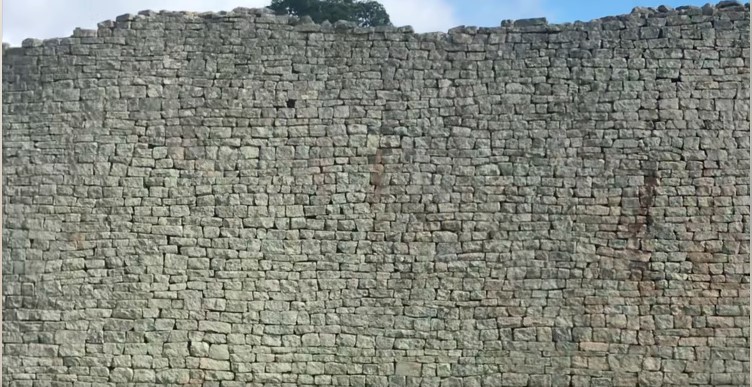
When I first saw a picture of Great Zimbabwe, I just stopped and stared. It was not only the size of the stone walls that draw my attention. It was how they fit together without a bit of mortar.
I wondered what made this huge curvilinear of stone lie blocks which are piled on ground with perfection as if it was meant to be!
I said to myself, who could have made this”. For a long time, people outside Africa refused to believe that such a remarkable city could have been built by Africans. There were theories about Solomon or Phoenicians. But, through archaeology, history, and the traditions of local people, there is now no doubt.
Great Zimbabwe was built by Africans.
To be more precise, it was built by ancestors of today’s Shona people-and the engineers, political leaders, and traders of the kingdom they established created one of the greatest medieval African civilizations. And in the same vein you stand in these amazing ruins and you come to know this place is nothing less than a declaration that it is only Africans and African people that can produce such things. A Stone City Unlike Any Other Great Zimbabwe is located in southeastern Zimbabwe and was the capital of the Kingdom of Zimbabwe from the 11th to the 15th centuries.
When at its height, the city covered hundreds of acres, housed between 10,000 and 20,000 inhabitants and served as a major power center for one of the largest kingdoms in sub-Saharan Africa. Even with its World Heritage Status this place isn’t one where you can truly capture it in photographs though how great the walls look is deceiving to. Looks like it is a place that has its own soul and each rock you step on each one of those have put its time into it.
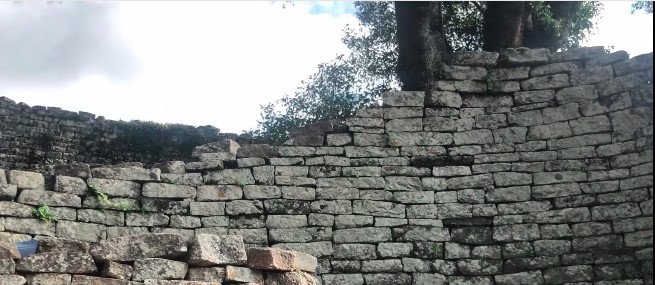
It wasn’t just rocks here – these formed the capital city of a kingdom. Great Zimbabwe’s three distinct parts When it comes to ancient structures, few are as intriguing as the three parts of Great Zimbabwe: Hill Complex Sitting on the highest ground, the Hill Complex is thought to be the oldest part of the ancient settlement, and perhaps where its rulers lived or held important ceremonies or even policy making meetings. From the top of the hill you can almost imagine kings looking down at their empire or perhaps a shaman chatting to spirits. The Great Enclosure Perhaps the most obvious and impressive is the Great Enclosure – the largest ancient building in the sub-Saharan continent.
Also Read: The Colosseum in Rome
The wall around it-in places nearly five feet thick and over 35 feet high-was built without a single drop of mortar.
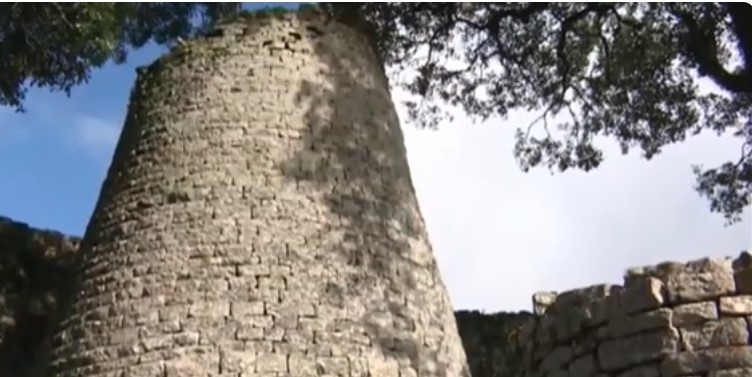
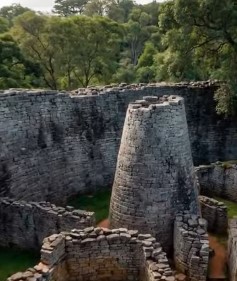
Stones were so precisely cut, fitted and balanced that they’ve withstood the elements for centuries. Within this enclosure looms the remarkable Conical Tower whose use remains controversial, but is seen as a testament to the wealth of the king and fertility of the kingdom. The Valley Ruins These lower ruins are believed to have been the living areas and working space for the majority of Great Zimbabwe’s residents, including farmers, craftsmen, merchants and their families.
Here you can appreciate that nothing would have been done without the dedicated work of individuals. The Stones and their Builders That the Shona people of today-in Zimbabwe-are the descendants of those who constructed Great Zimbabwe is not in question. These people were skilled farmers, stock breeders and iron workers before the arrival of Europeans in the region.
They raised cattle for wealth and status and were able to produce sufficient food to support a growing population that led to the development of urban centres.
The construction of such gigantic buildings in this manner and as is visible today without mortar, needed not only a lot of technical skills and planning, but also an abundant labor and awareness of topography. A Kingdom connected to the World Not all that is Great Zimbabwe was disconnected though – trade added stimulus to its economy.
Its wealth came primarily from the gold and ivory extracted from the surrounding lands, which merchants traded for goods in cities along the Indian Ocean coast and eventually transported to the Arabian Peninsula, India and China. Archaeologists have discovered imported beads, cloth, pottery and glass in the ruins, demonstrating that Great Zimbabwe was an active player in global commerce long before the Age of Exploration.
That contradicts the colonial thinking that medieval Africa was a world unto itself.
Stones that became Memory
While these stones are the most visible reminders of Great Zimbabwe’s history, the story was not erased. The praise poems, ancestral stories and songs of the Shona have continued to sustain memory, passing on the memory of Great Zimbabwe. Certainly the name ‘Zimbabwe’ comes from a Shona term thought by some to mean ‘houses of stone’ or ‘houses of revered stone’s. For the local people, these walls were not abandoned stones but represented lineage, authority and identity.
These oral traditions tell us the meaning of the sacred city areas and give tales of past rulers and rituals; it shows that history of Africa lives not only in stone. Nigeria’s famous Nok terracottas and the bronze casting traditions of the ancient Yoruba kingdom of Ife serve similar functions.
Why was Great Zimbabwe Abandoned?
No one is quite sure why it was eventually abandoned between the 15th and 16th centuries. They may also be related to changing trade routes and the disappearance of some building materials. Like many areas, ecological and/or political disruptions can drive people away from their homes, even when they are in enormous numbers.
Whatever the cause, eventually the people abandoned these monuments to do the talking. The Name Became a Nation Of perhaps all of the contributions of Great Zimbabwe, its most important one is that this same name would become attached to the name of a nation centuries later.
Conclusion
This is not just a bunch of rocks stacked up. The remains of the Great Zimbabwe are a monument to Africa’s brilliance, tenacity and strength. The very stones on which you tread – even the story which they tell – there is here to be learned a whole magnificent kingdom, successfully turned an entire world, into a trading empire, a civilization – not helped by a single machine!
This is a history for Shona people; it’s in their identity, in their traditions, and even in the name of their nation, Zimbabwe, meaning “stone houses.”
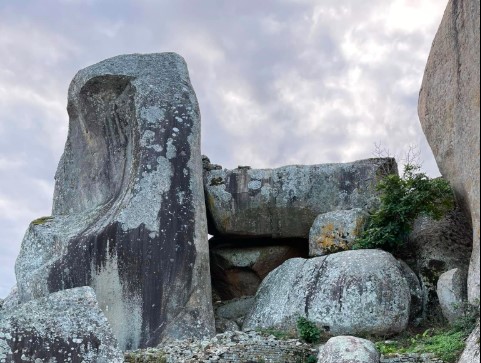
From the point of entry on to the site you can’t help but be reflective on Africa’s very early, rich history as most of us think Africa’s involvement and input belongs to our present age when in fact it isn’t. It really bursts many of our pre conceived ideas and views of Africa. We need more of these stories to be told, to ensure more people appreciate and get to know the continent and its legacy in the true light of history.
You Can Also Read: Marma People of Bangladesh
For lovers of history, curious minds and people who’ve come for the aesthetics – you’ll take away so many lessons on genuine magnificence – not from those built by the modern day machines, but that which is transmitted through generations of oral traditions and learned by knowledge and spirit alone.
Habila Ibrahim
Habila is a cultural researcher in Abuja, Nigeria. He writes about world heritage because Nigerian readers should see African engineering on the same page as global wonders.
This article used UNESCO, National Museums and Monuments of Zimbabwe, and Shona oral sources.