
By Habila Ibrahim, Abuja | Last Updated on October 1, 2026.
Introduction
There are some names in history that can easily make us stop and ask a simple question: Are these people related?
The name Jarawa is one of them.
There are Jarawa people in Nigeria and there are also Jarawa people in the Andaman Islands of India. When I first came across the two names, I could not help but wonder if they had common ancestry. After all, the name is the same. However, a closer examination of the languages, histories, geography, and cultural experiences of the people concerned suggests another picture.
The Jarawa of Nigeria and the Jarawa of the Andaman Islands are two distinct peoples. The Nigerian Jarawa is widely known as the Afizere, and their language is Izere. The name Jarawa has long been used for them, especially by Hausa people and historical writings. While the Andaman Jarawa of India, on the other hand, are an Indigenous people of the Andaman Islands, where they have maintained a distinctive hunter-gatherer way of life.
So, this article does not try to merge the two separate histories of the Jarawas just because they have the same name. Instead, it is an attempt to place the two stories side by side and explain what is known, what is uncertain, and why the name Jarawa appears in two very different parts of the world.
That is why the subject is interesting to me. History becomes more meaningful when we are willing to look beyond a familiar name and ask what the people themselves say about their identity.
Who Are the Jarawa People of Nigeria?
In Nigeria, the people commonly referred to as the Jarawa are more properly identified as the Afizere, also written as Afizarek, Fizere or related forms in different sources.
The Afizere are an Indigenous people of central Nigeria, particularly associated with Plateau State, with communities also found in parts of neighbouring Bauchi State. Historical and linguistic sources associate them with areas around Jos and other parts of the Jos Plateau, while related settlements extend into surrounding areas.

Their language is called Izere. This is an important point because the name Jarawa can create confusion even though the Izere are also called Jarawa. The word is not a reliable indication that the Nigerian Afizere and the Andaman Jarawa are one people.
The Nigerian Afizere have their own history, language, social institutions, religious traditions and cultural practices. A major ethnographic work, The Afizere (Jarawa) People of Nigeria, was published by Abok Musa Nyam through the National Commission for Museums and Monuments in Jos in 1988. The book remains an important reference for anyone interested in the people and their traditional life.
Where are the Afizere People Found?
The traditional homeland of the Afizere is largely related with the Jos, Plateau State and neighbouring states of central Nigeria.
Today, Afizere communities can be found in parts of Plateau State and Bauchi State, while migration and urban settlement have also taken members of the community to other parts of Nigeria.
The landscape has played an important role in their history.
The Jos Plateau and neighbouring highland areas contain rocky hills, valleys and farming lands. Just like other communities around, the Afizere community developed their settlements and agricultural practices within this environment.
Historical accounts also describe the importance of hills and elevated settlements during periods of insecurity in the pre-colonial and colonial eras. It would therefore be too simple to say that the people lived in the hills for only one reason. Settlement patterns were influenced by farming, kinship, security, movement and relationships with neighbouring communities.
The Origin of the Afizere: What Do Historical Accounts Say?
This is one of the areas where care is needed.
There is not one explanation for every aspect of Afizere history. Like many African societies whose histories were transmitted through oral traditions before being recorded in writing, different accounts preserve different details.
Some Afizere traditions connect important stages of their movement and settlement with Chawai in present-day Kaduna State and with subsequent movements into areas that became their present homeland.
The Afizere cultural organisation also preserves traditions concerning different ancestral groups, settlements and migration routes. Historians like Harold Gunn have written about Afizere traditions in relation to their settlement and migrations in the Plateau area, whereas other writers, such as Abok Musa Nyam, have written about Afizere history and culture.
There are also oral traditions about leaders and ancestral figures, including Yalam, which appear in accounts of the people’s migration history. Such stories are valuable because they preserve the community’s memory of its past. At the same time, they should be described as oral traditions where documentary evidence cannot independently confirm every detail.
That distinction matters.
A cultural story does not become less valuable simply because historians cannot verify every part of it. Oral history is itself an important part of how communities remember their past.
Why Are They Called Jarawa?
The name Jarawa can be confusing because it has been applied to different peoples in different parts of West Africa.
In the case of the Nigerian Jarawa, the language is called Izere, whereas the people are called Afizere. Jarawa is a name used for them in Hausa and in historical literature.
Older records sometimes used similar names for other groups as well. This means that anyone researching the history of the Jarawa name needs to be careful about assuming that every historical reference to “Jarawa” refers to the Afizere.

This is one of the reason I believe the use of Afizere (Jarawa) is often clearer when discussing about the Nigerian Jarawa people.
The Language of the Nigerian Jarawa: Izere
Language is one of the clearest ways of understanding cultural identity.
The Afizere people speak Izere language, which is part of the Central Plateau language family in the Niger-Congo language family.
Izere has different varieties and dialects, reflecting the geographical spread and historical development of the people. The language has remained an important part of Afizere identity even as English, Hausa and other Nigerian languages have become widely used.
Names, greetings, expressions, songs and traditional stories all help preserve the connection between language and culture.
This is also where the Nigerian and Indian Jarawa stories become clearly different. The language of the Andaman Jarawa is not Izere. The linguistic studies classify the Andaman Jarawa language along with the Onge language under Ongan family.
So the similarity of the name does not establish a linguistic relationship.
Traditional Religion Among the Afizere
There is a traditional belief in the Afizere religion in a supreme being or creator called Adakunom. Afizere cultural sources explain the name in connection with the sun and the idea of a supreme divine power.
Traditional religious life also included priests, elders, ancestral relationships and spiritual beliefs.
The Agwom Kuwop held an important religious and political position in traditional Afizere society. Historical accounts describe a system in which the chief and religious authority were closely connected, while elders played an important role in community affairs.
Christianity and Islam were the religion adopted by the Afizere people.
Christian missions played an important role in the spread of Christianity in the region, while Islam reached different parts of the Plateau through wider historical contacts, including the expansion of Muslim political authorities in northern Nigeria.
In the modern world, religion in Afizere societies shows all these transformations. Traditional beliefs remain an important part of the study of their heritage, even where many people now identify with Christianity or Islam.
Afizere Culture and Community Life
Some of the elements that are outstanding in regard to Afizere culture include the importance of community.
Traditional society depended heavily on families, villages, elders and established customs. Elders were not simply old members of the community; they were important custodians of knowledge and social order.
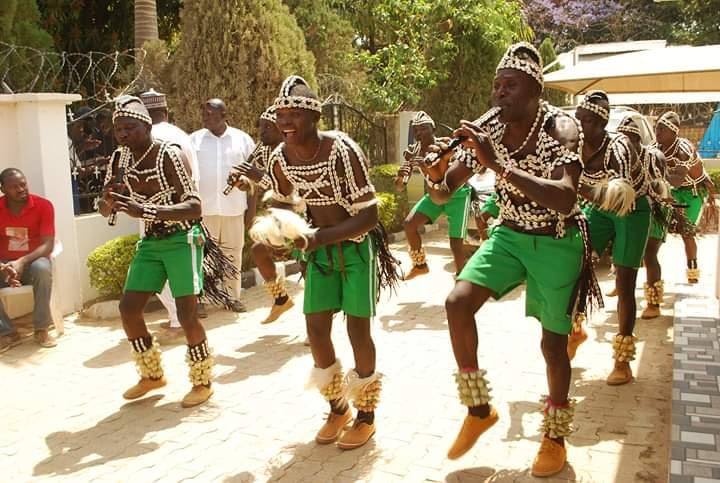
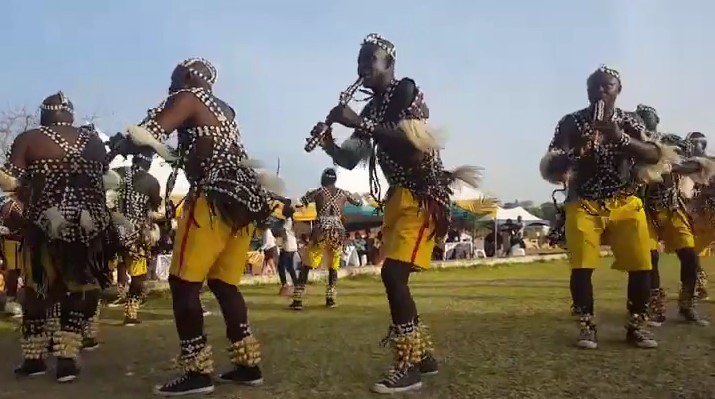
Music and dance have also remained visible expressions of Afizere identity.
Traditional dances can tell stories, celebrate important occasions and bring people together. Cultural performances are significant in that they enable younger people to see elements of their culture which they might not always see in daily life.
Craftsmanship, farming and other traditional occupations have also formed part of the community’s historical life.
Rather than thinking of culture as something frozen in the past, I think it is better to see Afizere culture as something that has continued to change while retaining important links with older traditions.
Food and Farming Among the Afizere
Agriculture has always been important to the Afizere communities.
The crops and foods associated with the people reflect the wider food traditions of the Middle Belt and the Plateau region. Maize, guinea corn and other crops have been important in local food production.
The dishes can also have food that is made using grains, along with vegetable soups and sauces.
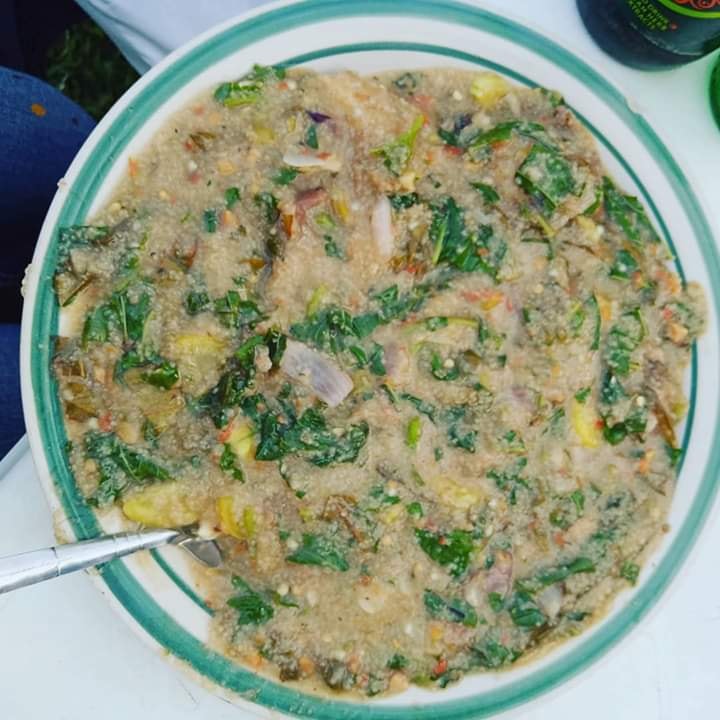
Food is not just what is put on the plate. In traditional societies, farming, food preparation and communal eating are closely connected with family life, seasons and celebrations.
Traditionally prepared food of Afizere tribe and their names could be found in the community, although the spelling could be different when written in English.
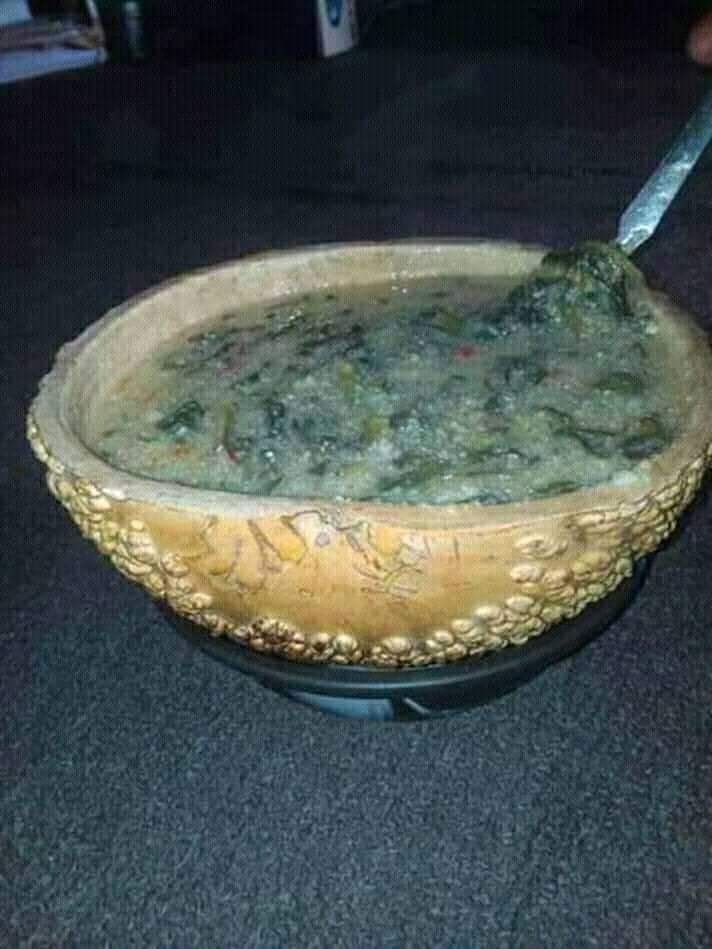
For this very reason, I strongly recommend to any author creating a list of Izere names of foods to check their spelling and translation with fluent speakers and not to copy it from some website.
Marriage and Family Traditions
Marriage traditionally related not only two individuals but also their families.
Family involvement, respect for elders and discussions between the families of the bride and groom have been important elements of traditional marriage customs.
As with many Nigerian communities, marriage practices have changed over time. Christianity, Islam, education, urban life and modern legal practices have all influenced how marriages are arranged and celebrated.
It would then be more prudent not to describe one single ritual as if all Afizere families perform it in the same way at present.
What remains important is the wider principle of family relationship and community recognition.
Jarawa (Afizere) Character
The Jarawa people of Nigeria are known for their: Hospitality, Respect for elders, Strong farming skills, Rich cultural heritage.
Here are some little names and their meaning in Jarawa people of Nigeria also known as Afizere.
1. Abok = Physician
2. Adar = Star
3. Afan = Rest
4. Agwom = Ruler of people
5. Ajang/Azhang = Defender
6. Itse = A strong man
7. Atsen = A visitor
8. Arum = A prosperous man
9. Atu = A black Smith
10. Atsi = A priest
11. Abi= Long awaited female child
12. Igbarak= A tower
13. Azong = I ask
14. Ayisa = Born during isaah festival
15. Ayong = What have been expected
16. Akare = clean
17. Akuben =Good seed
18. Akutse = Blessing of God
19. Ikok = A protector or unite together
20. Ayom = Born during Mourning period
21. Isha = A player or dancer
22. Adang = Patience
23. Sati = Person that sees spirituality
24. Azhik = Handsome
25. Kaze = The only one
26. Arin = Not to miss again
27. Igyem = A person with wisdom
28. Azok = A unique
29. Agok/Itsegok = Double fruitful
30. Inyam = Good for fortune
31. Akassa = Sharing equally.
32. Atang = The best shooter
33. Izang = Victorious
34. Afe = To say something
35. Azhi or Aizhi = 1st born or my heart desire
36. Azi = Un-ended/uncountable
37. Ido = Miracle or surprise
38. Adubok = An expert on future issue
39. Ashom = Prophesy
40. Anap = Born after male child or festival renap
41. Atong = Born after many male children
42. Anya = Born with identification mark
43. Abi = Long awaited female child
44. Akutsang = Good company out with strength
46. Atako = To have strong faith as rock
47. Adizha = Good seed choose
48. Asang = I was barren or I have no body
49. Ado/Adado = Gradually reducing naturally
50. Amaji = First born of the famil
Jarawa (Afizere) Expressions For This Week That Can Pass On For Names.
Aroriyẹ – The merciful; The merciful God.
Kuyiik – Glory; Honour; Might, Exaltation; Glorification.
Tiyiik – Glorify; Exalt.
Tiyiikkunom – Glorify or Exalt God.
Kuzarap – Prophecy (M)
Kuzarapkunom – Prophecy of God (M)
Minsẹgap – (pronounce Minseigap) I have found strength.
Minsẹkushim – I have found love.
Who Are the Jarawa of the Andaman Islands?
Now we come to the second Jarawa.
The Jarawa of the Andaman Islands live in the Andaman Islands, part of India’s Andaman and Nicobar Islands.
They are one of the Indigenous peoples of the islands, alongside communities such as the Great Andamanese, Onge and Sentinelese.
The Andaman Jarawa have traditionally depended heavily on hunting, gathering and fishing. Their knowledge of the forest and coastal environment has been central to their survival.
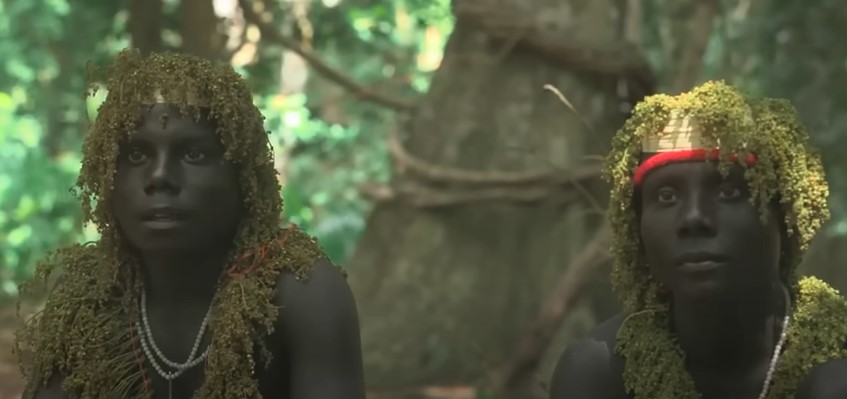
The Indian Government through its Andaman and Nicobar administration considers the Jarawa to be an Indigenous tribe and has a protected reserve for them.
Their history has been deeply affected by outside settlement, colonialism, roads, tourism and contact with outsiders.
Are the Nigerian and Andaman Jarawa Related?
This is probably the most important question in this article.
There is no established evidence that the Nigerian Afizere and the Andaman Jarawa are the same people or that one group descended from the other simply because both are called Jarawa.
Their languages are different.
Their geographical histories are different.
Their documented cultural histories are different.
The Nigerian group belongs to the cultural and linguistic landscape of central Nigeria, while the Andaman Jarawa belong to the Indigenous peoples of the Andaman Islands.
Also Read: THE HISTORY OF GBAGYI PEOPLE
There have been theories about the ancient population history of the Andaman peoples and their very deep ancestry, including discussions of early human migrations out of Africa. Such research is important, but it should not be turned into a claim that the modern Nigerian Afizere migrated to India or that the two groups are historically one people.
That conclusion would go beyond the evidence.
The Language of the Andaman Jarawa
The Andaman Jarawa people language is quite interesting.
According to linguistics, Jarawa and Onge languages are part of Ongan language group. It is not the resemblance in their names but the linguistic proof which establishes this connection between them.
The Andaman Jarawa language is therefore completely different from Izere, the language of the Nigerian Afizere.
This provides one of the clearest reminders that a shared name does not necessarily mean shared ancestry.
People across the globe can come up with similar names, get similar names from adjacent people or have their names documented in a different way.
Traditional Life of the Andaman Jarawa
The traditional life of the Andaman Jarawa has been strongly connected to the forest and sea.
Hunting, gathering, fishing and knowledge of the natural environment have traditionally provided food and materials.
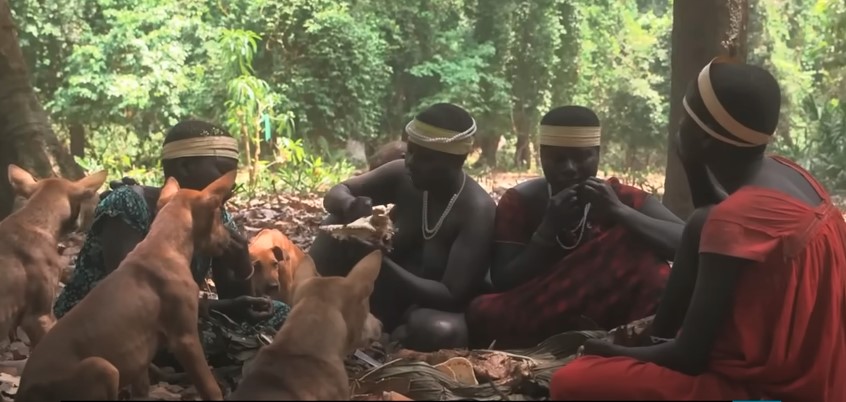
Their society has also been shaped by a long history of limited and often difficult contact with outsiders.
The history of contact is important because outside contact has not always been harmless. Disease, land pressure, encroachment and unwanted interaction have created serious challenges for Indigenous communities across the Andaman Islands.
Thus the Indian authorities have put in place legal protections for the Jarawa and their reserve.
Why the Andaman Jarawa Should Not Be Treated as a Tourist Attraction
One thing I would definitely change from the original Kunzaar article is the language of just telling people to go to the Jarawa.
The Jarawa are not a tourist attraction.
Indian authorities have established protections around their reserve, and unauthorised photography, filming and entry into protected areas can result in legal consequences.
The reason is not to hide the people from the world. It is connected to protecting their health, privacy, cultural life and right to live according to their own choices.
This is an important lesson for anyone writing about Indigenous peoples: curiosity should never become an excuse for intrusion.
We can know about people without having to turn their lives and homes into an act.
The Andaman Jarawa and Their Long Struggle for Protection
The history of the Jarawa in the Andaman Islands includes periods of hostility toward outsiders, but describing their history only in those terms would leave out an important part of the story.
Their resistance was connected to encounters with people entering or occupying their traditional environment.
Over time, government policy changed. It also created legal structures to protect the Indigenous communities in India such as: The Andaman and Nicobar Islands (Protection of Aboriginal Tribes) Regulation, and the Jarawa Tribal Reserve.
The Indian government has also recognised the need to protect the Jarawa from harmful outside contact and to preserve their traditional way of life.
This history is complicated, and there have been debates among scholars and Indigenous-rights advocates about whether government policies have always achieved their intended purpose.
What is clear is that the Jarawa have faced enormous pressure from the outside world.
Two Jarawas, Two Histories
When both stories are put together, one can see the distinction between the two.
The Afizere of Nigeria, sometimes called Jarawa, belong to the cultural landscape of central Nigeria. Their language is Izere, their historical homeland is associated with the Jos Plateau and neighbouring areas, and their traditions have developed through centuries of relationships with neighbouring Nigerian peoples.
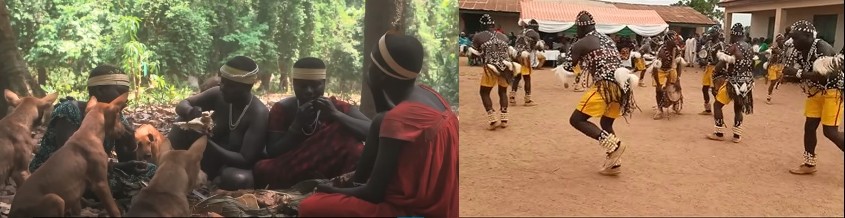
The Jarawa of the Andaman Islands belong to an Indigenous population of the Andaman Islands. Their language is part of the Ongan family, and their traditional life has been closely connected to hunting, gathering, fishing and the forests and coastal environment of the islands.
The same name connects the two stories in a curious way, but it does not by itself connect their ancestry.
And perhaps that is the most interesting part of this history.
A name can travel through languages. A name can be given by outsiders. A name can be recorded differently by colonial officials, missionaries, travellers and later writers. But behind every name is a real community with its own memories.
What We Can Learn From the Jarawa Story
The story of the two Jarawa communities teaches us something about the way cultural history should be written.
We should not rush to connect two peoples simply because their names look alike.
We should look at language.
We should examine geography.
We should listen to oral traditions.
We should compare historical records.
And, perhaps most importantly, we should admit when something is uncertain.
The approach produces more honest writing about culture.
The history of Africa and Asia is full of names that have been changed, translated, shortened or misunderstood by outsiders. Sometimes the name a community uses for itself is different from the name used by its neighbours.
The Nigerian Afizere story is a good example of this.
The Andaman Jarawa story provides another example, particularly because their history has been heavily influenced by outside descriptions and colonial records.
Conclusion
The history of the Jarawa People of Nigeria and India is not the story of one tribe divided between two continents. It is the story of two distinct Indigenous communities that happen to share a name in English-language and historical usage.
In Nigeria, the people commonly called Jarawa are the Afizere people, whose language is Izere and whose history is deeply related with the Plateau State region and neighbouring parts of central states of Nigeria.
In India, the Jarawa are an Indigenous people of the Andaman Islands with their own language, traditions and long relationship with the forests and coastal environment of the islands.
The difference is important.
When I look at the subject again, I think the most valuable part of the story is not trying to force an ancient connection where there is no established evidence. This is about learning to value each community on its own merits.
The Afizere have a history worth telling.
The Andaman Jarawa have a history worth protecting.
And both remind us that culture is not simply a collection of old customs written in a book. It is carried in language, family, memory, food, music, land and everyday life.
You Can Also Read: The History Of Idoma
That is why cultural history deserves patience. On occasion, the simple truth that “the evidence is inconclusive” reveals much more than the enthralling story that one creates from the assumption.
About the Author
Habila Ibrahim is a Nigerian cultural writer and the author behind Kunzaar, a platform dedicated to sharing stories about African peoples, traditions, history, culture and heritage.
By means of his literary works, Habila Ibrahim strives to bring culture knowledge closer to the people and gives attention to groups that are marginalized during history making.
His method for narrative is one which uses history and culture as part of his narrative method. Assuming that the conventional narrative is deemed to be an important one, then it will be presented as part of the history of the group, but quite separately from those narratives that have been established.
For Habila, writing about culture is not only about looking into the past. It also involves educating young people on how the community came into existence and why their practices are relevant to date.
Sources and Research
This article was rewritten after reviewing the original Kunzaar article and comparing its claims with published ethnographic, linguistic and institutional sources.
Abok Musa Nyam, The Afizere (Jarawa) People of Nigeria, National Commission for Museums and Monuments, National Museum Press, Jos, 1988.
Harold D. Gunn, Peoples of the Plateau Area of Northern Nigeria, which contains historical and ethnographic material concerning peoples of the Plateau region.
The Andaman and Nicobar Administration, including its official information on the Jarawa and other Indigenous communities of the islands.
Government of India, Ministry of Tribal Affairs, including material concerning protection of the Jarawa Tribal Reserve and legal measures for the protection of Indigenous communities.
Research done on Andamanese languages, especially on how the Jarawa and Onge languages fall into the Ongan group of languages.
Note: Where the article discusses oral traditions concerning Afizere migration and ancestral history, those traditions should be understood as part of community historical memory rather than as proven dates in every case.
Design tools are evolving fast, and Lovart AI Agent shows how AI can streamline creative workflows without losing the human touch. Exciting times for designers! Lovart AI Agent