
By Habila Ibrahim, Abuja | Last Updated on September 28, 2026.
Introduction
When people hear the name Abuja, the first things that may come to mind are government offices, wide roads, modern buildings, and the busy life of Nigeria’s capital city. But before Abuja became the Federal Capital Territory, the land already had people, villages, farms, hills, streams, traditions and stories.
The Gbagyi people, also known as Gbari, are one of the indigenous people whose history is deeply intertwined with this part of central Nigeria. Their communities extend beyond the Federal Capital Territory into parts of Niger, Kaduna, Kogi, Nasarawa and other neighbouring areas.
I find the story of the Gbagyi people to be very fascinating because it is not just a story of an ethnic community in central Nigeria. It is also a story about land, movement, farming, family, craftsmanship and the difficult changes that came with the development of Abuja.
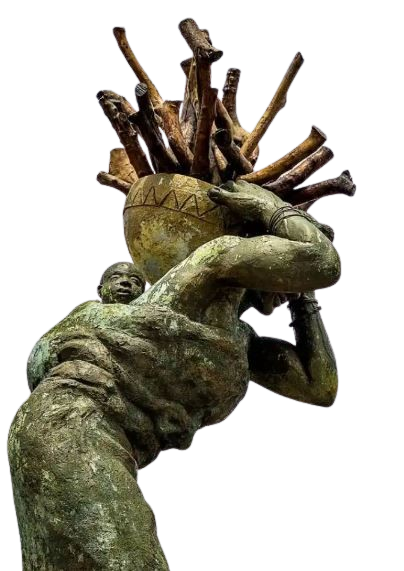
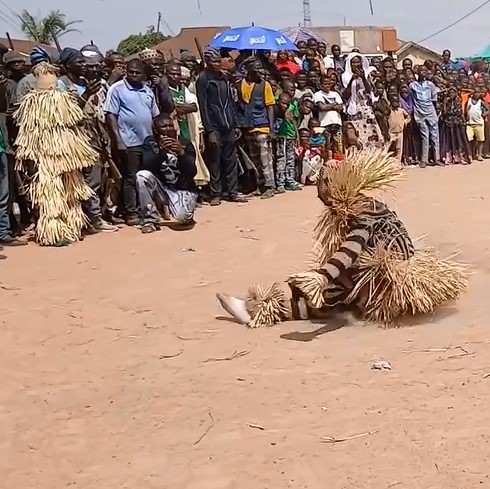
Some images of the Gbagyi can be seen. Farmers at work in their fields, women carrying burdens on their heads, clever potters molding clay, and communities remaining steadfastly traditional as cities spring up rapidly around them.
In this article, I want to look at the Gbagyi story in a more personal way — where they are found, what is known and not known about their origins, how they traditionally lived, their language, religion, farming, pottery, marriage customs, leadership and the changes that have affected their communities.
Who Are the Gbagyi People?
The Gbagyi, or Gbari, are an indigenous people of central Nigeria. Their communities are particularly associated with the Federal Capital Territory, Niger State and Kaduna State, with Gbagyi populations also found in Nasarawa and other parts of the region.
The name Gbagyi is the preferred name by many members of the community , but the name Gwari is often used in older historical literature and records. The terminology there deserves some care because names used by outsiders do not always reflect how a people describe it themselves.

The Gbagyi are not a people whose history can be reduced to one town or one modern administrative boundary. Their settlements developed across a broad part of central Nigeria, and modern state and local government boundaries do not necessarily correspond with the older cultural landscape.
That is one reason why understanding Gbagyi history requires looking beyond present-day maps.
The Origin of the Gbagyi People
The origin of the Gbagyi is one of those areas where oral history and written scholarship do not always provide one simple answer.
The Gbagyi originated from the 7 Kwararafa Kingdom but there’s no strong evidence of this as there are several other lands with Gbagyi dialects. They were reported to have migrated from the Kwararafa Kingdom which spreaded to reaches of the northern Nigerian states. Although this is the case, there is no strong evidence to this historical fact.
What we can say with greater confidence is that Gbagyi communities have a long-established presence in central Nigeria, particularly around the area that later became Abuja and neighbouring regions.
Some Gbagyi oral traditions describe movements of early ancestors, hunters and settlers through the landscape. Early settlement traditions, for instance, are linked to hunting and the hills around Abuja. Oral traditions like these are valuable; they preserve memories that may not be found in written colonial records. At the same time, oral accounts can differ from one community to another, so they are better presented as traditions rather than as unquestionable dates and facts.
This is important when writing about African history. Sometimes we are too quick to force an exact date onto a story that was preserved orally for generations.
The Gbagyi story is better understood as a long history of settlement, movement and interaction with neighbouring peoples.
Where Are the Gbagyi People Found?
Today, Gbagyi communities are found mainly in the Federal Capital Territory, Niger State and Kaduna State, with communities also present in parts of Nasarawa and other areas of central Nigeria.
Within the Federal Capital Territory, Gbagyi communities have a particularly important historical connection with places such as Abuja, Bwari, Gwagwalada, Kuje, Kwali, Abaji and surrounding settlements.
The spread of Abuja has also seen major changes to some rural settlements.
This is where geography and history meet.
A village that once stood among farms and hills could gradually find itself surrounded by roads, estates, government facilities and expanding urban communities. For the people who lived there before those changes, this was not simply urban development. It meant that the physical landscape of their childhood and ancestry was changing.
Gbagyi History and the Development of Abuja
The establishment of the Federal Capital Territory in Nigeria is perhaps no other event that has had such an influence on the Gbagyi tribe.
Nigeria decided in the 1970s to move the federal capital from Lagos to a new location in the centre of the country. The Federal Capital Territory was created in 1976, and Abuja then developed into Nigeria’s new capital.
But the land chosen for this enormous project was not empty.
But the Gbagyi communities were among the indigenous people living in the area. The development of the capital therefore brought relocation and major social and cultural changes for many families. Research on Gbagyi identity has examined how the creation of the FCT and the arrival of people from different parts of Nigeria changed the linguistic and cultural environment around Gbagyi communities.
For some families, relocation meant leaving ancestral settlements and adjusting to new communities.
Also Read: Tarok Language: Where Did Tarok In Nigeria Migrate From?
The change was not only about houses.
It was also about farmland, community relationships, sacred places, memories and the familiar environment in which traditions had been passed from one generation to another.
Modern Abuja has become a meeting place for Nigerians from virtually every part of the country. That diversity is one of the city’s defining characteristics. But it has also meant that the older Gbagyi cultural landscape is now surrounded by a much larger and more diverse urban society. In the same light, recent studies have found that urbanization and economic changes can influence the practice of indigenous culture in Abuja.
Gbagyi Language
The Gbagyi people speak Gbagyi/Gbari, a language related with the Nupoid group within the wider Niger-Congo language family.
There are linguistic differences among Gbagyi-speaking communities, and older sources describe different varieties and dialects. A 1961 study of the Gwari communities around the old Abuja Emirate, for example, documented differences between groups identified at the time as Gwarin-Genge and Gwarin-Yamma.
Language is more than communication.
It carries names, jokes, greetings, proverbs, songs and memories. When a language becomes less commonly spoken by younger generations, something more than vocabulary can disappear.
Research into Gbagyi naming practices has found evidence of language change associated with factors such as westernisation, Christianity, urbanisation and globalisation.
This makes the preservation of the Gbagyi language an important part of preserving the wider culture.
Traditional Gbagyi Way of Life
Gbagyi societies had traditionally been greatly linked to agriculture.
Agriculture provided food and supported family life, while hunting, craft production and local trade also formed part of the economic life of different communities.
Older records describe Gwari communities around the Abuja area producing crops such as yam, cotton, benniseed and other agricultural products.
Farming was not merely an occupation. It also played an important role in settlement locations, family cooperation, and seasonal understanding.
The relationship between people and land can still be seen in many Gbagyi areas today, even as modern employment, education and urban development have changed the economic lives of many families.
Gbagyi Farming and Food
The traditional Gbagyi economy was closely tied to agriculture.
Crops grown by Gbagyi farmers have included yam, maize, millet, guinea corn and groundnuts, although the exact crops vary from one community and environment to another.
Older agricultural communities depended heavily on seasonal knowledge. Farmers needed to understand when to clear the land, when to plant, when the rains were likely to arrive and when crops were ready for harvest.
Food therefore became part of culture.
What people plant, how they prepare it and how they share it with family members often tells us something about the environment and the history of the people themselves.
Today, many Gbagyi people have moved into different occupations, especially in and around urban centres. Still, farming remains important in many rural communities.
The Gbagyi and Pottery
When discussing about Gbagyi people culture, it is difficult to leave out pottery.
Gbagyi pottery has a long history, particularly in communities around places such as Kwali. Traditional pottery was used for practical household purposes, including water storage, cooking and other domestic needs.
The story of Ladi Kwali helped bring this tradition to international attention.
Ladi Kwali was known as a renowned Nigerian potter and she is from the Gbagyi area. She learned traditional pottery techniques as a young woman and later combined indigenous methods with studio pottery techniques at the Abuja pottery centre established under the British ceramicist Michael Cardew. Her work became known internationally.
What makes her story especially important is that she did not simply abandon traditional pottery when she encountered new techniques. Instead, her work became a meeting point between Gbagyi pottery traditions and modern ceramic practice.
She is honored on the Nigerian twenty naira note, thus being one of the best known personalities who contributed to Nigerian pottery.
For me, this is the most clear-cut case I have seen of how local traditions can go way beyond their place of origin.
Why Do Gbagyi Women Carry Loads on Their Shoulders?
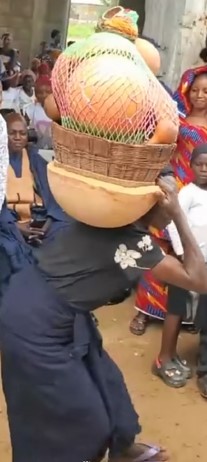
One of the most recognisable cultural practices related with Gbagyi women is the traditional carrying of loads on the shoulder rather than the head.
Those who are seeing this process for the very first time would naturally want to know the reason behind it.
Gbagyi oral explanations often attach the practice with the high value placed on the head. The head is regarded as an important part of the body related with thought and reasoning, and therefore should not unnecessarily be burdened with heavy loads.
The shoulders, known by the name of Bwapa in conversations about the practice, became the favorite point of carriage of farm products and other loads.
There is also a practical explanation.
There have been some individuals who have pointed out that load may be transferred to the two shoulders, and when carried on one shoulder, it makes movement easy in certain cases.
This practice has garnered a lot of attention because of the way it is visibly different from the common practice of head-loading prevalent across Africa.
But it is worth remembering that a cultural practice is usually more complicated than the simple explanation outsiders sometimes give it.
Gbagyi Traditional Leadership
Historically, Gbagyi communities had local systems of authority involving family heads, elders and traditional leaders.
It may not have been similar in all the Gbagyi communities. Older records show that different communities interacted with wider political authorities in different ways, especially during the period of the Abuja Emirate and later colonial administration.
For this reason, I would be careful about presenting titles such as Esu, Etsu, Sarkin, Maiyaki and Dakachi as if they form one universal hierarchy governing every Gbagyi community.
The idea of traditional authority within the Gbagyi people should rather be contextualized through specific communities and times.
Families and communities had an essential part to play, as did their elders who helped in resolving conflicts and maintaining traditions.
Gbagyi Religion and Spiritual Beliefs
Religion among the Gbagyi has changed over time, just as it has among many Nigerian ethnic groups.
Christianity and Islam are now practiced among Gbagyi communities, while elements of older indigenous religious traditions remain part of the cultural memory of the people.
Historical and ethnographic writings document traditional beliefs, customs and ideas about the spiritual world among Gbagyi communities. The National Library of Nigeria’s catalogue, for instance, records a 1961 work dealing with Gwari religious beliefs and customs alongside subjects such as birth, marriage, death, hunting and traditional administration.
Some studies of Gbagyi culture also discuss concepts such as Knunu, a term associated in Gbagyi scholarship with tradition, culture and the wider way of life.
What I find important here is that religion should not be separated completely from culture. In traditional societies, beliefs about ancestors, family, land, morality and community responsibilities often overlap.
Gbagyi Marriage Traditions
Marriage has traditionally been an important institution among Gbagyi communities.
Earlier descriptions as well as oral traditions show that marriage included not just the couple but their families as well. For others, the would-be husband proved his commitment by helping out the family of the bride.
There are some accounts that talk about prolonged labor on the bride’s family farm before marriage. However, these practices were not necessarily identical in every Gbagyi community, and many have changed considerably with Christianity, Islam, education, urbanisation and modern marriage practices.
That distinction matters.
It is tempting when writing about African cultures to present an old custom as though every person still follows it exactly. The reality is usually different. Culture changes, and the Gbagyi are no exception.
Gbagyi Storytelling and Proverbs
Storytelling has traditionally played an important role in transmitting values.
Research on Gbagyi storytelling has found that folktales can communicate ideas about compassion, honesty, hard work, cooperation, perseverance and resourcefulness.
This tells us something interesting about the role of stories.
A story told by an elder to children is not necessarily just entertainment. It can quietly teach a child how to behave, how to understand other people and how to respond to difficulties.
In that sense, the storyteller becomes a teacher without standing in front of a classroom.
Gbagyi Culture in a Changing World
The Gbagyi people today live in a world very different from that of their grandparents.
Abuja has grown into one of Africa’s major urban centres. Roads, schools, businesses, estates, government institutions and new communities have transformed the landscape.
Young Gbagyi people are now involved in education, civil service, business, politics, media, professional careers, arts and many other occupations.
At the same time, some traditional practices are becoming less common.
Research on Gbagyi cultural identity has identified urbanisation, interaction with other ethnic groups and language change as important forces affecting cultural continuity.
But cultural change does not always mean cultural disappearance.
A tradition may change its form and still remain meaningful.
A young Gbagyi person may live in Abuja, attend a modern school, use a smartphone every day and still learn the language, attend a cultural gathering, listen to family stories or take pride in the pottery traditions of the community.
That is also part of the story.
Gbagyi People and Cultural Identity
One of the strongest things I take from the Gbagyi story is the importance of identity.
The Gbagyi people have seen many things change in their native land especially after the establishment of Abuja as the Federal Capital Territory. Yet the name, language, traditions and memories of the people continue to appear in the cultural landscape of central Nigeria.
Their history also reminds us that modern cities do not begin when construction starts.
You Can Also Read: Ultimate Guide on How To Migrate Your WordPress Website to Another Host 2024
There were people living on the land before the roads and government buildings arrived.
There were farms before the estates.
There were footpaths before the highways.
And there were stories before the official maps.
For Abuja in particular, remembering the Gbagyi history adds another layer to the story of Nigeria’s capital.
What Makes Gbagyi Culture Special?
There is no need to exaggerate Gbagyi culture to make it interesting. Its ordinary details are already powerful.
Their connection to agriculture.
The knowledge of pottery.
The respect given to the head.
The shoulder-loading tradition.
The importance of storytelling.
The connection between family, land and community.
The survival of a language in a rapidly changing city.
And the memory of communities affected by the creation of the Federal Capital Territory.
These are the details that make the Gbagyi story worth telling.
Conclusion
The history of the Gbagyi people is much larger than the familiar picture of an ethnic group living around Abuja.
It is a story that stretches through generations of settlement, farming, family life, craftsmanship, language and cultural change.
The Gbagyi have lived in central part of Nigeria for years, particularly in areas now covered by the Federal Capital Territory and neighbouring states. Their traditions developed in close relationship with the land, and their pottery, agriculture, storytelling and distinctive customs became important parts of their cultural identity.
The development of Abuja changed that landscape dramatically. Many communities had to adjust to relocation, urban expansion and the arrival of people from different parts of Nigeria. Research continues to document how those changes affected Gbagyi identity, language and cultural practices.
Yet the story does not end with displacement or modernisation.
The Gbagyi remain part of the living cultural history of Nigeria.

When I think about their story, I do not see only an ancient past. I see a people trying to carry their identity into a changing world — sometimes through language, sometimes through pottery, sometimes through family stories and sometimes simply through remembering where they came from.
That, perhaps, is what makes cultural history meaningful.
It is not only about looking backward.
It is all about knowing the people who are still here.
About the Author
Habila Ibrahim is a Nigerian writer and cultural storyteller interested in documenting African peoples, traditions, history and heritage. Through Kunzaar, he writes about Nigerian and African cultures with the aim of making traditional knowledge easier for readers to discover, understand and appreciate.
His approach is to combine available historical materials, cultural research, oral traditions and other reliable references while recognising that some aspects of African history remain dependent on community memory and may have different versions.
Sources and Research
This article was rewritten from the earlier “The History of Gbagyi People” article published on Kunzaar, while correcting, reorganising and expanding the material. The research was also informed by historical and academic sources, including the National Library of Nigeria’s record of The Gwari Tribe in Abuja Emirate by Shuaibu Na’ibi and Hassan Makama, research on the impact of the Federal Capital Territory on Gbagyi identity, studies of Gbagyi storytelling and language change, and research on Gbagyi pottery and Ladi Kwali.
Please Note: In light of the fact that certain events in Gbagyi history are passed down by means of oral traditions, this paper makes a distinction between historical facts which can be proved and those which cannot. This becomes especially important in talking about the actual origins of the Gbagyi tribe.
Good