

By Habila Ibrahim, Abuja | Last Updated on September 21, 2026.
Introduction
When the history of Southern Kaduna is discussed, the story is rarely complete without mentioning the Bajju people.
The Bajju, who call themselves Ba̠jju, are one of the indigenous peoples of Southern Kaduna, Nigeria. Their homeland, Ka̠jju, is closely connected with the Jju language, their traditional institutions, farming life, festivals and the stories handed down from one generation to another.
What’s really fascinating about Bajju history is that it doesn’t survive in just one form. Some parts are found in written historical accounts, while other parts live mainly in oral traditions. Elders have continued to tell stories about migration, hunting, settlement and the ancestors who eventually established Bajju communities in what is now Kaduna State.
That distinction is important. Not everything in an origin story comes with a date attached. And that’s fine. Oral history, it’s still got a whole lot of relevance and this shows us how a people, basically, wrap their heads around their roots, where they’re coming from.
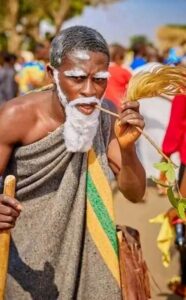
As I went through the available accounts about the Bajju, one thing became clear to me: their story is not simply about where they came from. It is about how Bajju built their communities, held onto who they were, adapted when things changed, and kept passing their culture down from one generation to another.
So who are the Bajju people, really? Where did they come from, and what is it that sets their culture apart?
Let us take the story step by step.
Who Are the Bajju People?
The Bajju are an indigenous ethnic group mainly associated with Southern Kaduna in central Nigeria. Their ancestral stomping ground, Ka̠jju, to be precise, has been home sweet home for, well, forever. And they’ve got their own lingo, Jju, which is pretty cool. Now, about that name, Ba̠jju… apparently, it’s just a snappy shorthand for Ba̠nyet Jju, which roughly translates to “people of Jju”, makes sense, right?
The people are found principally in parts of Zangon Kataf, Kachia, Jema’a and Kaduna South areas. Their communities also extend into other parts of Nigeria as families have moved for education, employment, business and other reasons.
Bajju life pretty much revolved around farming, traditionally speaking. Hunting, blacksmithing and petty trading were also important occupations. Agriculture was not merely an economic activity; it was closely connected to family life, food, marriage, community celebrations and the traditional calendar.
The name Kaje, which has historically been used for the Bajju, is not the preferred self-name of the people. Modern discussions of Bajju identity therefore generally use Bajju and Jju, the names associated with the people and their language.
The Origin of the Bajju People
The origin of the Bajju is one of the most fascinating parts of their history.
There are different accounts, and this is where we need to be careful. Instead of taking one version as gospel, I mean, an absolute historical truth, it’s way more interesting to think of the story as this mix of oral tradition, you know, the stuff that’s been passed down through the years, and actual historical research, which gives it a bit more depth, a bit more credibility.
So there’s this pretty well-known story – it links the Bajju ancestors to some of the older settlements scattered around the Jos Plateau, and a few other areas nearby too. In one account, two brothers, Zampara and Awai, moved away from an earlier settlement. Awai somehow got linked to the ancestors of the Atsam, or Chawai, depending on who’s telling the story, meanwhile, Zampara just kept on going, ending up in this other settlement, supposedly called Hurruang, which is roughly where Ungwan Tabo stands today.
Zampara is said to have had two sons, Baranzan and Akad.
Also Read: Ultimate Guide on How To Migrate Your WordPress Website to Another Host 2024
The traditional account then follows the two brothers in different directions. Akad somehow got linked to the ancestors of the Atakat people – don’t ask me how, it just did. Meanwhile, Baranzan wandered off towards this other area that, as it turns out, would eventually become tied to the Bajju.
Another account, by the way, suggests the early stages of this migration actually happened farther east – we’re talking areas around Bauchi, and those hill settlements in the Middle Belt, if you can picture it.
These stories – they just don’t neatly slot into our modern timeline. Historical material from Ahmadu Bello University also records several versions of the Bajju origin tradition, including the story of Zamfara, Awai, Baranzan and Akad.
This is where the Bajju story really starts to get under my skin – it’s one of those moments that makes the whole thing utterly fascinating. The different versions do not necessarily make the tradition meaningless. Instead, they show how migration memories can survive for generations through storytelling.
What can be said with greater confidence is that the Bajju were established in their present part of Southern Kaduna by the nineteenth century, while oral traditions preserve memories of earlier movements through the Jos Plateau and other parts of the Middle Belt. Historical research also records Bajju settlements in areas such as Zonkwa, Kurmin-Bi, Madakiya and surrounding communities.
Baranzan and the Bajju Migration Story
The name Baranzan occupies an important place in Bajju oral history.
He is like the founding father of the Bajju people – and get this, he’s also the one who supposedly got the whole Bajju settlement thing off the ground, way back when. It is said that Baranzan finally settled in the riverside area associated with Kajju after leaving the earlier settlements.
This story is also connected to the relationship between the Bajju and neighbouring peoples.
Associations between the Bajju, Afizere, Irigwe and other Middle Belt peoples are mentioned in historical accounts, including traditions of common origin and migration.
It is worth remembering that these are traditions rather than a modern birth certificate for an entire ethnic group. There is no reliable reason to attach an exact year to the earliest part of the story.
That is why I prefer to tell it as the Bajju themselves have preserved it, while also making clear where written evidence becomes uncertain.
Where Do the Bajju People Live?
The traditional home of the Bajju is Ka̠jju in Southern Kaduna.
Zonkwa is particularly important because it is associated with the traditional institution and the seat of the Bajju paramount ruler. Bajju communities are also found across parts of Zangon Kataf, Kachia and Jema’a Local Government Areas.
The Bajju people have over the years established communities outside their ancestral homeland. Education and employment have taken many young people to Kaduna, Abuja, Jos, Lagos and other Nigerian cities. There is also a growing Bajju diaspora outside Nigeria.

So there’s this movement – and it’s led to a pretty intriguing state of affairs, if you ask me. A person can live far away from Ka̠jju and still remain strongly connected to Bajju identity through language, family, festivals, food and community associations.
The Jju Language
The language of the Bajju people is Jju.
Jju is a Plateau language of the Niger-Congo language family and is closely connected historically and linguistically with languages spoken by neighbouring peoples in Southern Kaduna. Jju’s linguistic roots are pretty firmly planted in the Central Plateau area, apparently.
Language is more than communication. It carries names, songs, jokes, greetings, family relationships and memories.
This is why preserving Jju remains important to Bajju identity, particularly as younger people increasingly use English and Hausa in schools, workplaces and urban communities.
Traditional Leadership Among the Bajju
Traditional leadership has played an important role in Bajju society.
So, nowadays, the big cheese – or rather, the paramount ruler – goes by the name of Agwam Bajju, which, by the way, is also sometimes called Agwam Kajju.
The first paramount ruler of the modern Bajju Chiefdom was Agwam Nuhu Bature Achi, also known as Agwam Bajju I. He became the first paramount ruler of the Bajju after the creation of the Bajju Chiefdom in 1995 and remained on the throne until his death in December 2021.
After the death of Agwam Bature Achi, Agwam Luka Kogi Yabwat succeeded him and he became the Agwam Bajju II, who emerged as the second paramount ruler in 2022. In 2026 he was identify as the head of the Bajju traditional institution.
The development of the Bajju traditional institution did not happen overnight. It followed a much longer history of interaction with the Zaria Emirate, colonial administration and the efforts of Southern Kaduna communities to establish their own traditional institutions.
The recent history of Bajju resistance against British conquest and the political history of the indigenous people in the Zangon Kataf region in the early colonial period have also been described.
Bajju Culture and Traditional Values
Bajju culture has traditionally placed considerable importance on community life.
Respect for elders, farming, family relationships, hospitality and participation in communal activities have all been important parts of life.
The elderly also employed stories and practices of the past to instruct children about good behavior. Some of these beliefs may seem unusual to people today, but they are valuable to historians because they reveal how earlier Bajju communities understood family, health, spirituality and social responsibility.
At the same time, it is important not to describe every traditional belief as something that every Bajju person still follows today.
Culture changes.
Christianity, formal education, urbanisation, modern medicine and changing lifestyles have all influenced Bajju society. Some old customs have disappeared, while others survive as cultural memories are observed in modified forms.
Traditional Religion and Christianity
Before the spread of Christianity, the Bajju practised an indigenous religious system that included belief in a supreme creator, spirits, ancestors and traditional spiritual authorities.
One important figure in traditional Bajju religious life was Abvoi. It is said that the gado abvoi of the shrine was also mentioned in history and culture, along with the magajin abvoi, who used to interpret the messages related to the shrine.
Beliefs surrounding ancestors, reincarnation, spiritual protection and traditional medicine were also part of the older religious worldview.
Christianity is being accepted by the Bajju people. Today, many Bajju people are Christians, although elements of older cultural traditions continue to appear in songs, stories, festivals and family customs.
This is an important distinction: adopting Christianity did not automatically erase every aspect of Bajju culture.
Bajju Festivals and Cultural Celebrations
Festivals provide one of the clearest ways of seeing Bajju culture in public.
Another important celebration of the Bajju people is Nom Bajju. This is an annual Bajju cultural festival.
The festival has included traditional performances, cultural displays, music, dancing and community gatherings. What makes its recent history is that the festival was revived in December 2023 after an 18-year interruption. Reports has it that the last been held was in May 2005 before insecurity and other circumstances disrupted it.
That revival tells us something important that cultural festivals are not simply entertainment. But they can become a way for a community to reconnect with its history after a difficult period.
Another significant traditional festival which must be taken into consideration in the bajju calendar is the swa nakan or yanakan festival at the end of harvest season. Traditional accounts describe communal contributions of food and locally prepared drinks as part of the celebration.
These agriculture-related customs remind us how close Bajju culture was to agriculture.
Traditional Bajju Food
Food is another doorway into the Bajju way of life.
Traditional Bajju meals are strongly influenced by farming and the crops are been cultivated in the area.
One familiar food is detuk, a thick grain-based meal similar to what is widely known in northern Nigeria as tuwo. It can be prepared from grains such as guinea corn, millet or maize and eaten with soup.
Local vegetables and other farm produce are also important. Foods made from beans, yam, maize and other crops form part of the wider food culture.
The original article mentions foods such as jok, jajju and other locally recognised preparations. These names are worth preserving because food names themselves are part of the cultural vocabulary.
During weddings, festivals and family gatherings, food takes on an even greater social meaning. People do not simply eat; they gather, talk, remember family members and welcome visitors.
Bajju Traditional Dressing
Traditional clothing has also changed over time.
Earlier bajju men’s garments had utilized the available materials of the environment whereas women had made use of local materials and ornaments.
For ceremonial occasions, beads and colourful fabrics remain important symbols of cultural identity.
The colour and bead combination for Bajju bride’s dress is very unique. White, green and yellow are particularly mentioned in descriptions of traditional bridal attire.
Today, many Bajju people combine modern Nigerian clothing with traditional designs, especially during cultural festivals, weddings and community celebrations.
That mixture of old and new is itself part of the story of contemporary Bajju culture.
Bajju Marriage Traditions
In earlier times, marriage was much more than just the union of two people. It connected families and communities.
Accounts of Bajju traditional marriage describe several stages, including Hwun, the reservation or early arrangement, the presentation of gifts, formal family recognition and the final movement of the bride to her husband’s family.
A ceremonial hoe is particularly significant in some descriptions because of the agricultural background of the community. Gifts can also be given to the bride’s family.

Some older accounts describe forms of symbolic or staged bride-taking. These practices should be understood historically rather than presented as acceptable expectations for marriage today. Modern Bajju marriages are influenced by Christianity, Nigerian law and contemporary social values.
The larger cultural point remains important: marriage traditionally created relationships between families, not merely between two people.
Bajju Traditional Beliefs and Folklore
The Bajju have a rich body of traditional beliefs.
Some older beliefs concerned pregnancy, food, hunting, childbirth and spiritual protection. For example, historical accounts describe beliefs about women eating eggs, restrictions following childbirth and particular behaviours associated with hunters.
There were also traditional beliefs about reincarnation. One of the beliefs that has been documented in cultural accounts is that seeing a shooting star signals the passing and possible rebirth of an important individual.
These are old fashioned beliefs and should be stated as such, not science.
This distinction is important for a modern cultural website. The reason for collecting folklore is not to tell readers how scientists have proved the supernatural explanations but to capture the cultural memory and help readers understand how our ancestors viewed the world.
Traditional Farming and Economic Life
Agriculture has long been central to Bajju life.
Traditional farmers cultivated grains, yam, beans and other crops. Farming was closely connected with the seasons, family labour and communal celebrations.
Hunting also played an important historical role. Oral traditions that are themselves from the Bajju community describe their ancestors as hunters looking for proper hunting grounds.
Blacksmithing and petty trading provided additional livelihoods.
In modern times, agriculture remains important, while education, professional employment, business and migration have expanded the economic opportunities available to Bajju people.
What Happened to Some Older Bajju Customs?
There is one thing that definitely cannot be forgotten, that culture is alive.
Some Bajju customs described in older accounts are no longer widely practised. Many have undergone significant change.
Traditional funeral practices, marriage arrangements, religious rituals and restrictions around food should therefore be presented as historical or traditional practices, rather than suggesting that every Bajju person follows them today.
This is particularly important when writing about a living ethnic group. The Bajju people of today are not frozen in the past.
They are students, teachers, farmers, civil servants, entrepreneurs, professionals, artists, parents and young people living in a modern Nigeria.
Yet they can still carry an old cultural identity with them.
The Bajju People Today
The Bajju story continues.
Young Bajju people are increasingly found in Nigerian cities and in diaspora communities. Education has created new chances; whereas community organizations and cultural festivals remain as avenues through which people may come to terms with their heritage.
The revival of Nom Bajju after an 18-year interruption shows how cultural events can regain importance after periods of disruption.
There is also evidence of a growing diaspora connection. In 2026, reporting on Agwam Bajju II’s engagement with the Bajju community in the United Kingdom highlighted education, development, agriculture, investment, youth development and stronger connections between the diaspora and communities at home.
This is perhaps one of the most interesting parts of the Bajju story today: the culture is not disappearing simply because people are moving away. Instead, the community is finding new ways to carry its identity with it.
Why Bajju History Matters
The history of the Bajju matters because it forms part of the larger history of Nigeria’s Middle Belt.
For many years, Nigerian history was often presented mainly through large kingdoms, empires and colonial administrative structures. But communities such as the Bajju remind us that history also exists in village traditions, family stories, languages, farming systems, festivals and oral accounts.
You Can Also Read: The Origin and History of Mada Tribe
The Bajju story also helps us understand the complexity of Southern Kaduna, a region with many ethnic communities and long histories of interaction.
Their story is therefore not only a Bajju story.
It is also part of the wider story of how different communities moved, settled, interacted, resisted outside control, adapted to Christianity and colonialism, and continue to negotiate identity in modern Nigeria.
Conclusion
The history of the Bajju people is a story of migration, settlement, farming, family, tradition and cultural survival.
They have traditions about their forefathers like Baranzan who had moved from their previous settlements to this particular land which is called Ka̠jju. Written sources provide additional evidence about their settlements, language, political history and relationship with neighbouring peoples, although some details of the earliest migrations remain matters of oral tradition rather than firmly dated history.
Today the bajju continue to speak jju, celebrate their cultural identity and maintain connections with their ancestral homeland. Traditional institution of theirs is run by Agwam Luka Kogi Yabwat, Agwam Bajju II, but cultural activities like Nom Bajju allow them to unite in celebrating their culture.
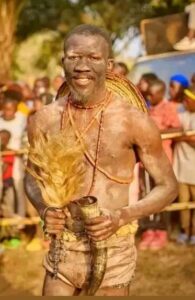
I find particularly valuable about the bajju story is that their culture does not have to remain locked in the past in order to be valued.
A young Bajju person can study in a university, work in a Nigerian city or live abroad and still ask about the history of Baranzan, learn Jju, attend a cultural festival or return home for a family ceremony.
That is how culture survives.
Not by refusing change, but by remembering where the journey began.
About the Author
Habila Ibrahim is a Nigerian writer and cultural storyteller and the author of articles published on Kunzaar, a platform focused on African cultures, histories, traditions and people.
He wants to tell cultural stories simply and accessibly, especially those that deserve to reach wider audiences than their local communities.
Through Kunzaar, Habila Ibrahim writes about Nigerian ethnic groups, African traditions, festivals, languages, food, history and cultural identity, with the aim of making these subjects easier for younger generations and international readers to understand.
Sources and Research
This article was rewritten from the original Bajju article published on Kunzaar and cross-checked against additional cultural, historical, linguistic and contemporary sources.
Particular attention was given to Bajju cultural information concerning the meaning of Bajju/Jju, traditional location, history and origin traditions, language, traditional leadership, festivals and contemporary developments.
Sources consulted include:
Bajju cultural information from the Kajju/Bajju community website, particularly its sections on the identity, language, location and history of the people.
The history material hosted by Ahmadu Bello University, including accounts of Bajju origin, traditions and settlement history.
Research on indigenous resistance in the Zangon Kataf area, published in the Jalingo Journal of Multi-Disciplinary Research and Innovations in 2026.
Contemporary reporting on the Nom Bajju Cultural Festival, including its revival after an 18-year interruption.
Recent reporting on Agwam Bajju II, Luka Kogi Yabwat, and the contemporary Bajju traditional institution.
Some parts of Bajju history, in particular the oldest migration stories, remain oral traditions. Where the dating or authenticity of a historical statement cannot be independently corroborated, this paper consciously classifies such a statement as an oral tradition and not a fact.
This approach is important because documenting culture should preserve people’s memories while also respecting the difference between oral history, written history and modern research.
Lovart sounds like a game-changer for creative workflows-automating design while keeping the human touch. Excited to see how AI and tools like Photoshop integrate! Lovart
Thanks for this
Amazing story
The Jju culture is really a blessing to Kaduna state
Wow. I am learning my culture everyday and proud of it.
Type here..WE ARE GOOD TO GO. BAJJU
Kazah aza brang😊