Last Updated on 11 June, 2026.
Introduction
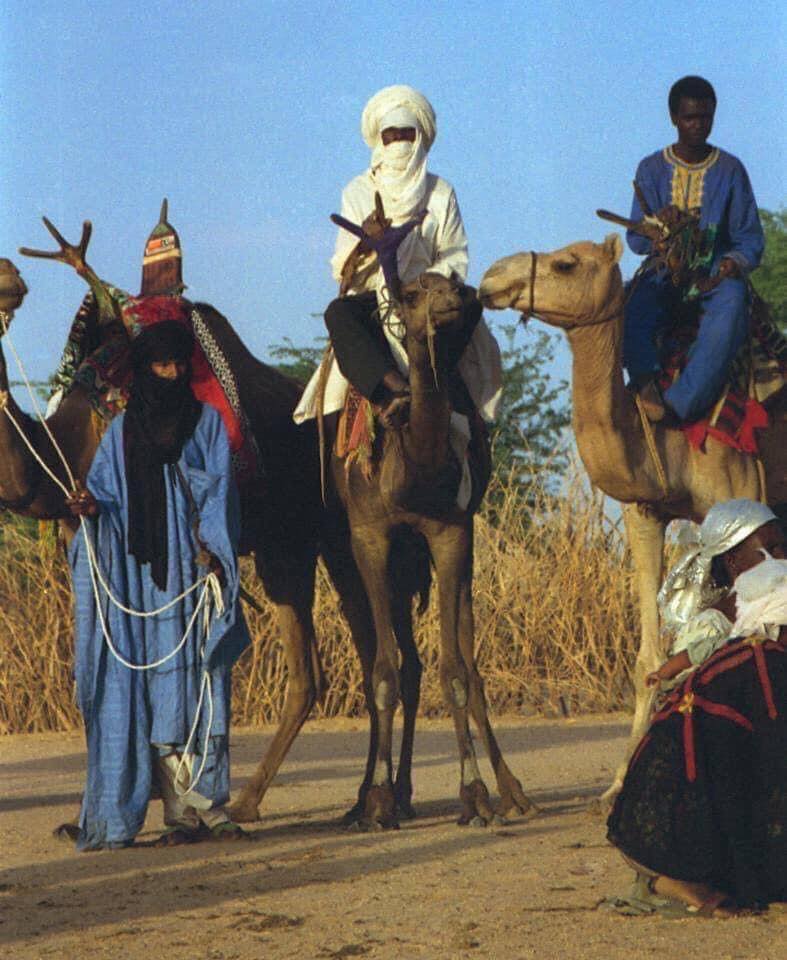
The Tuareg are a historic nomadic people of the Sahara Desert, widely known for their deep cultural identity, desert survival skills, and long-distance caravan trade. They are part of the larger Berber (Amazigh) ethnic family of North Africa and are traditionally referred to as the “Blue People” because of the indigo-dyed clothing they wear, which often stains their skin.
The Tuareg people, often called the “Blue People” of the Sahara, are a unique and resilient ethnic group known for their rich cultural heritage, striking indigo garments, and nomadic lifestyle. Tuareg are spread across several countries in North and West Africa, the Tuareg have preserved their ancient traditions while adapting to modern challenges. Because of their nomadic lifestyle, they move from one country to another for pasturing.
Also Read: History and Origin of Swahili Language
Tuareg were given different names by travelers, orientalists, and historians, some of whom began using the term “blue men” because of the blue clothing worn by the Tuareg people, along with the special fabric dyeing methods they used that transmitted color to the skin. Also, the Tuareg, however, refer to themselves as “Imuhagh.” But the Tuareg name is what has been know by many and that’s what many know them with.
Origin and History of the Tuareg Tribe
The Tuareg people Tuareg people are believed to have originated from the ancient Berber populations of North Africa once ruled parts of North Africa. Their roots can be traced way back thousands of years ago to the indigenous inhabitants of the Sahara region before it became a harsh desert landscape. As the Sahara gradually dried up (around 3000–2000 BCE), many early communities were forced to migrate and adapt to desert life.
The Tuareg are also a branch of the larger Berber ethnic group and have lived in the central and western Sahara for over a millennium. Which means, Tuareg is also the language of the Tuareg people, but there are a number of dialects that vary from tribe to tribe, including Tamasheq, Tamajaq, and Tamahaq.
Historically, they were skilled traders, controlling trans-Saharan caravan routes that linked West Africa with the Mediterranean world. Their language, Tamasheq, is written in the ancient Tifinagh script.
The Tuareg emerged as one of the groups that mastered survival in this extreme environment, developing a unique nomadic lifestyle centered on herding livestock such as camels, goats, and sheep.
Historical Development
Historically, the Tuareg became important actors in trans-Saharan trade routes. They controlled key caravan paths that linked West Africa region to North Africa region and the Mediterranean world. Through these routes, they traded goods such as:
- Gold from West Africa
- Salt from Saharan mines
- Dates, textiles, and crafted goods
- Slaves during certain historical periods
Their strategic control of desert routes made them influential in the economic history of the Sahara for centuries.
Culture and Social Structure
Tuareg society is traditionally organized into clans and confederations, often led by nobles and warrior classes. One unique feature of Tuareg culture is its relatively high status for women compared to many neighboring societies. Women often own property and play important roles in cultural preservation.
They also use the Tifinagh script, one of the oldest writing systems in North Africa, still preserved in modern Tuareg identity. Despite modernization, they still keep such writing systems and is also a history for others that have never seeing it before.
The Tuareg as Desert Nomads
The Sahara Desert is the heart of Tuareg life. As true desert nomads, they move seasonally in search of pasture and water. Their traditional lifestyle includes:
- Camel caravans for transport and trade
- Portable tents made from animal skins or woven mats
- Deep knowledge of desert navigation using stars and landmarks
- Strong oral traditions, poetry, and music
Modern Changes
Today, many Tuareg have shifted from full nomadism to semi-nomadic or settled lifestyles due to national borders, climate change, and modernization in countries such as Mali, Niger, Algeria, Libya, and Burkina Faso. However, many still preserve their cultural identity and traditions.
Where Are the Tuareg Found?
The Tuareg people are dispersed across five major countries due to their nomadic lifestyle and where to find pasture for their cattle. They are: Niger, Mali, Algeria, Burkina Faso and Libya at approximately 1.2 million. The Tuareg community in Libya, which is culturally distinctive from Tuareg in other countries, is estimated to range from 60,000 to 250,000, yet a lack of clear records makes precise figures hard to come by. It is clear, however, that the Tuareg are a minority group in Libya. They are primarily inhabited in the Sahara Desert, living in small nomadic or semi-nomadic communities.
Tuareg Religion and Beliefs
The Tuareg are predominantly Sunni Muslims, but their practice of Islam incorporates pre-Islamic Berber traditions. They observe Islamic practices while also honoring ancestral customs, like spiritual poetry and ritual chanting with some practicing Christianity.
Tuareg Culture and Traditions
Tuareg culture is deeply symbolic and guided by oral tradition, poetry, and a code of honor called “Asshak.” Key elements include: Indigo-dyed clothing (which stains their skin blue), Nomadic herding and camel rearing, Rich oral literature and storytelling, Men famously wear tagelmusts (face veils), while women have more social freedom and influence in decision-making, unlike many neighboring tribes.
Economy
The Tuareg have traditionally been semi-nomadic herders, living in small tribal groups made up of about 30 to 100 families. Their way of life centers on raising animals such as camels, goats, cattle, and chickens. Their economy depends largely on livestock, farming, and trade. Although they come from a nomadic background, the Tuareg have adjusted to different environments while preserving their cultural heritage.
Tuareg Food and Cuisine
Due to the harsh desert environment, Tuareg cuisine is simple and based on availability. Common foods among the Tuareg include: Millet and dates, Goat and camel meat, Lamb stew (Taguella) served with flatbread baked under hot sand, Mint tea, often served ceremoniously. Food is not only sustenance but also part of their hospitality and communal lifestyle.
Tuareg Festivals and Celebrations
The Tuareg celebrate several seasonal and cultural festivals, often centered on music, storytelling, and camel racing. Notable festivals among the Tuareg include: Festival au Désert in Timbuktu, Mali – a global music event, Cure Salée Festival in Niger – celebrating the end of the rainy season. Traditional instruments like the imzad and tende drums are used during festivals.
Tuareg Marriage and Family Life
Marriage among the Tuareg is marked by intricate rituals and a strong matrilineal structure. The key customs of Tuareg are: Marriage tents set up by the bride’s family, Poetry exchange between lovers, Matrilocal living – husbands often move into the wife’s family compound. Women play a central role in the family, and daughters often inherit tents and livestock.
You Can Also Read: The History of Jukun In Nigeria
Conclusion
Tuareg people stand as one of the most enduring and culturally rich communities of the Sahara Desert. Because, for centuries, they have survived in one of the harshest environments on earth, shaping a unique identity built on nomadic tradition, trade, and deep knowledge of the desert.
From their ancient Berber origins to their role as powerful caravan traders across the Sahara Desert, the Tuareg have preserved a way of life that reflects strength, resilience, and cultural pride. Even today, despite modernization and changing borders, they continue to maintain important aspects of their heritage such as language, traditional leadership, and nomadic customs.
In essence, the Tuareg are not just desert dwellers; they are a living symbol of Sahara history and survival, carrying forward a legacy that continues to inspire respect and admiration across Africa and beyond.
Preserving a Noble Heritage
Despite modern pressures on the continued existence of culture, the Tuareg people remain a symbol of resilience, pride, and cultural richness. Their traditions, wrapped in layers of blue cloth and sand-swept poetry, continue to inspire anthropologists, historians, and travelers alike. Let keep promoting cultures and try to separate culture from modernization. Modernization is good, cultures are good too.
Action
Which African culture inspires you in culture generally? You can share and also comment below so as to keep our culture alive!