
By Habila Ibrahim | Last Updated on 7th July, 2026.
Introduction
I first saw the Taj Mahal monument in a Bollywood film in Abuja, Nigeria. And what stuck me was not the white dome but the story behind it; the story is about an emperor who spent 22 years building a tomb because he promised his wife the most beautiful monument in the world.
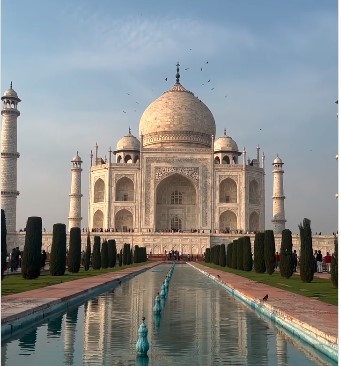
The Taj Mahal is one of the most famous monuments in the world and a powerful symbol of love, history, and artistic excellence. It is situated in the city of Agra, the Taj Mahal draws millions of tourists to to India who are eager to see the marvelous architecture of this beautiful structure.
As part of the Mughal Era architecture, the Taj Mahal is considered one of the finest examples of this form of art work. The construction of this building was ordered by Emperor Shah Jahan in in honor of his wife Mumtaz Mahal. In a way to keep remembering his late wife, he built that monument. His love for his wife is incomparable.
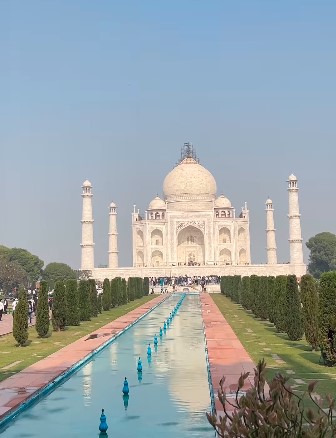
Now, the Taj Mahal has attained its global recognition as one of the architectural marvel and is classified by UNESCO as a World Heritage Site.
In this article, we will discuss the origin, history, culture, architecture, and festivals of the Taj Mahal; in short, all that one needs to know about the Taj Mahal.
The Origin of the Taj Mahal Building
The Taj Mahal was built as a mausoleum to honor Mumtaz Mahal, the beloved wife of Emperor Shah Jahan. Mumtaz Mahal died in 1631 while giving birth to their 14th child during a military campaign.
Shah Jahan was devastated by her death. According to historical records, he promised to build the most beautiful monument the world had ever seen to preserve her memory forever. And we are here reading about it. Which means, his aim for building the monument has been achieved.
As earlier stated, the construction of the Taj Mahal began in 1632 and took about 22 years to complete it. Thousands of artisans, architects, and laborers worked on the project, creating one of the most extraordinary architectural wonders in human history.
The monument stands on the banks of the Yamuna River, adding to its beauty and serene atmosphere.
Why Is It Called the Taj Mahal?
The name “Taj Mahal” is believed to come from the name of Mumtaz Mahal. Her name means “Chosen One of the Palace.”
This theory is strongly supported by many scholars, who claim that the name “Taj Mahal” originated from Mumtaz Mahal, which got shortend to Taj Mahal with usage. The word “Taj” also means “crown” in Persian, so Taj Mahal can be interpreted as “Crown Palace.”
Also Read: The Forbidden City In China
Unlike the Forbidden City in China, the Taj Mahal was never an imperial residence. Instead, it was designed as a royal tomb and memorial dedicated to love and remembrance because anytime, they see the building, they will remember the purpose at why the building was built and they will remember that there was a queen named Mumtaz Mahal.
The History of the Taj Mahal
The Taj Mahal’s history is closely connected to the golden age of the Mughal Empire.
Construction Period
Below are the estimated time consuming from start to finish of the Taj Mahal monument such as:
– Construction began: 1632
– Main mausoleum completed: 1643
– Entire complex completed: 1653
More than 20,000 workers were involved in building the monument and the materials used in the construction came from different parts of Asia:
– White marble from Rajasthan
– Jade and crystal from China
– Turquoise from Tibet
– Sapphire from Sri Lanka
– Lapis lazuli from Afghanistan
The pieces of these stones were put together precisely to form the designs for which the monument is so renowned. Post Mughal Period Following the fall of the Mughals, the Taj Mahal went through a time of abandonment and decay. By the time it was the British rule, many of the Taj Mahal garden plots were reshaped in part by landscaping changes and restoration measures were initiated.
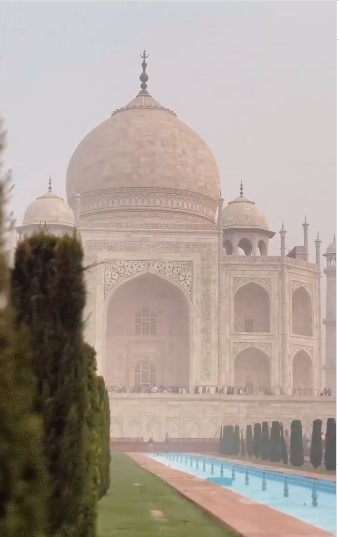
Today, the Taj Mahal is protected by the Indian government and international heritage organizations so that the place will keep maintaining it good shape.
The Architecture of the Taj Mahal: The Taj Mahal stands as the epitome of the finest of Mughal Architecture that merged the styles of Persians, Indians and Islamic.
The Main Tomb
The central building is made up of white marble and features a a large dome that rises about 73 meters (240 feet) above the ground and the structure includes:
– Four elegant minarets
– A large central dome
– Symmetrical arches
– Marble inlay designs
The tombs of Shah Jahan and Mumtaz Mahal are located inside the mausoleum.
The Charbagh Garden
The Taj Mahal complex includes a beautiful charbagh-style garden, which is based on the Persian concept of paradise gardens.
The garden is divided into four parts by water channels and walkways. These symbolize the four rivers of paradise mentioned in Islamic tradition.
The visitors to to the site often admire the famous reflection of the Taj Mahal in the central pool.
Marble Decoration and Calligraphy
One of the most impressive features of the Taj Mahal is its detailed decoration.
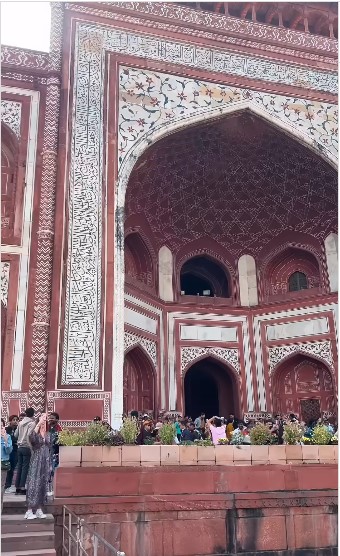
When they were building the tomb, the artisans used a special technique called pietra dura, which mean embedding precious stones into marble to create e intricate patterns of flowers and vines there.
Verses from the Qur’an are also beautifully inscribed around the monument’s entrances using black marble calligraphy.
Cultural Significance of the Taj Mahal
The Taj Mahal is is more than just a building and its represents several cultural meanings.
Symbol of Love
The Taj Mahal is often called the greatest symbol of eternal love because it was built by Shah Jahan in memory of Mumtaz Mahal.
Their love story has inspired poets, writers, and artists around the world.
Symbol of Mughal Power and Art
The monument reflects the wealth and artistic sophistication of the Mughal Empire.
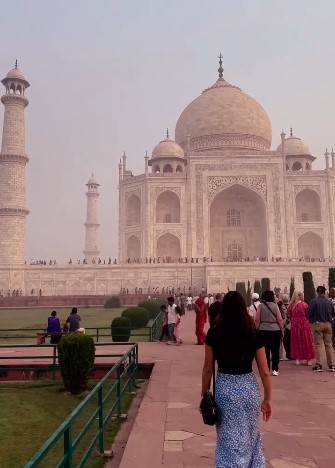
The design of the tomb shows the empire’s cultural connections with Persia, Central Asia, and India.
Global Cultural Heritage
Today, the Taj Mahal is one of the most visited monuments on earth and represents India’s cultural heritage because of this, UNESCO declared it a World Heritage Site in 1983, recognizing its universal value.
Taj Mahotsav Festival
One of the most famous cultural events associated with the Taj Mahal is the Taj Mahotsav.
What Is Taj Mahotsav?
Taj Mahotsav is a 10-day cultural festival held annually in Agra to celebrate Indian art, culture, and traditions.
The festival usually takes place in February.
SOme of the Activities at the Festival
There’s another thing that happens during the festival, i.e. visitors coming, they see these entertaining activities such as:
– The traditional Indian music and dance performances
– The handicraft exhibitions
– The local art displays
– The cultural shows and
– The traditional food stalls
Artists from across India participate in the event.
Cultural Importance of the Festival
The Taj Mahotsav festival helps promote traditional Indian crafts and cultural heritage.
It also attracts thousands of tourists from around the world, boosting tourism in Agra.
Visiting the Taj Mahal
The Taj Mahal is one of the most popular tourist attractions in the world.
Best Time to Visit
The best time to visit the Taj Mahal is:
– October to March (cooler weather)
Sunrise is considered the most magical time to see the monument because the marble reflects soft golden light.
Visitor Experience
Visitors can explore several areas of the Taj Mahal complex:
– The main mausoleum
– The mosque
– The guest house
– The gardens
– The museum
Guided tours help visitors understand the monument’s history and architecture.
Preservation and Conservation
Due to pollution and environmental concerns, preservation of the Taj Mahal has become very important.
These are some of the measures taken for the safety of the visitors such as:
– Limiting vehicle traffic near the monument
– Using pollution-control zones
You Can Also Read: History, Culture, Food, and Marriage of the Zuru People
– Regular restoration work
– Monitoring marble discoloration
These efforts help protect the the monument for future generations.
Facts To Know About the Taj Mahal
Here are some exciting facts about the Taj Mahal:
– It took 22 years to build.
– Over 20,000 workers participated in its construction.
– The marble changes color depending on the time of day.
– The monument appears pink in the morning, white in the afternoon, and golden at sunset.
– It is one of the New Seven Wonders of the World.
Why the Taj Mahal Remains a Global Wonder?
The Taj Mahal have continues to capture the imagination of people worldwide for many reasons like:
1. Its extraordinary beauty
2. Its romantic history
3. Its architectural perfection
4. Its cultural importance
Few monuments combine emotional meaning and artistic brilliance as perfectly as the Taj Mahal.
In watching it, I was reminded of how some Northern Nigerian emirs build tombs and palaces with the similar idea of legacy, just with marble instead of mud and stone. Like Hausa Durbar, the Taj Mahal is still gathering millions of visitors yearly not only for history along but to feel the human creativity.
Conclusion
In conclusion, the Taj Mahal is is one of the most amazing buildings ever constructed. The Taj Mahal is a symbol of love and an architectural marvel of the Mughal era built by Shah Jahan in memory of his wife, Mumtaz Mahal.
Positioned in Agra on the banks of the River Yamuna, the building is a symbol of centuries of history, culture and artistic excellence. One of the most treasured landmarks in the world, the Taj Mahal is famous for its magnificent design, rich c cultural heritage and celebrations like Taj Mahotsav.
Habila Ibrahim
Habila is a cultural researcher in Abuja, Nigeria. He writes about world heritage which is part of culture so that Nigerian and other readers can see global stories.
This article used UNESCO, Indian Ministry of Culture, and Mughal records.