
By Habila Ibrahim, Abuja | Last Updated on August 8, 2026.
Introduction
🇲🇽 Mexican Traditions: Day of the Dead Explained
Most of the people when they first hear the word death, they assume they will experience sadness, tears, and painful farewells. Other cultures around the world have quiet and intimate funerals where a family faces their grief.
In Mexico there is one such tradition that offers a profoundly contrasting outlook.
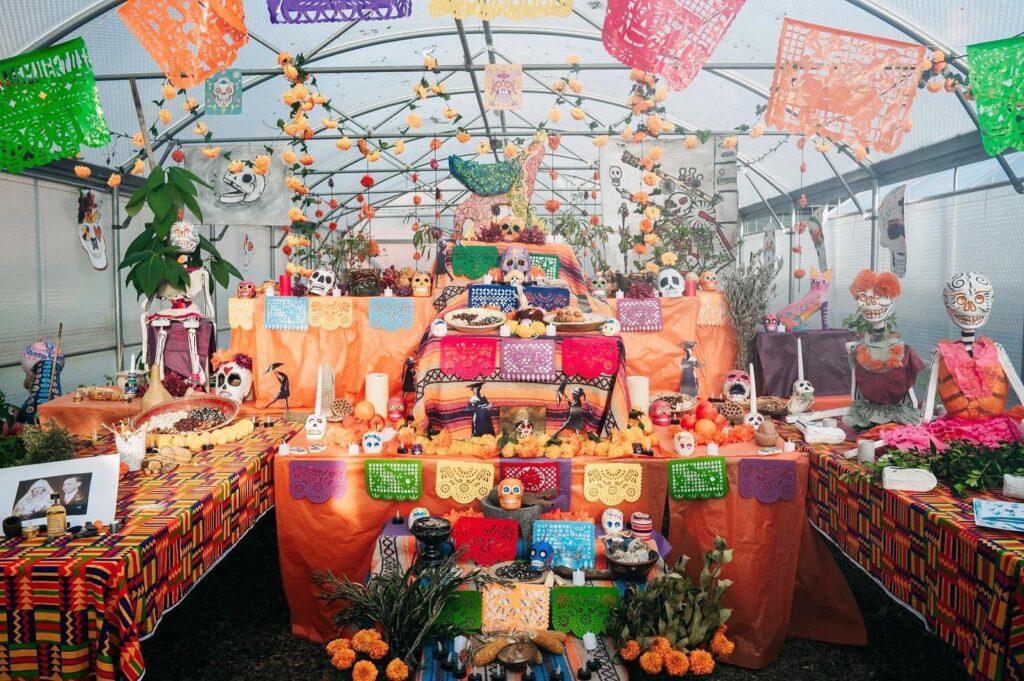
Many families come to celebrate all those who have been lost in addition to mourners. Homes turn into flowers, candles, fantastic cuisine in addition to churches go into singing, fun and heartfelt memorials. It is a time when families believe they can honour those who came before them in a joyful and meaningful way.
It is called the Da de los Muertos or the Day of the Dead.
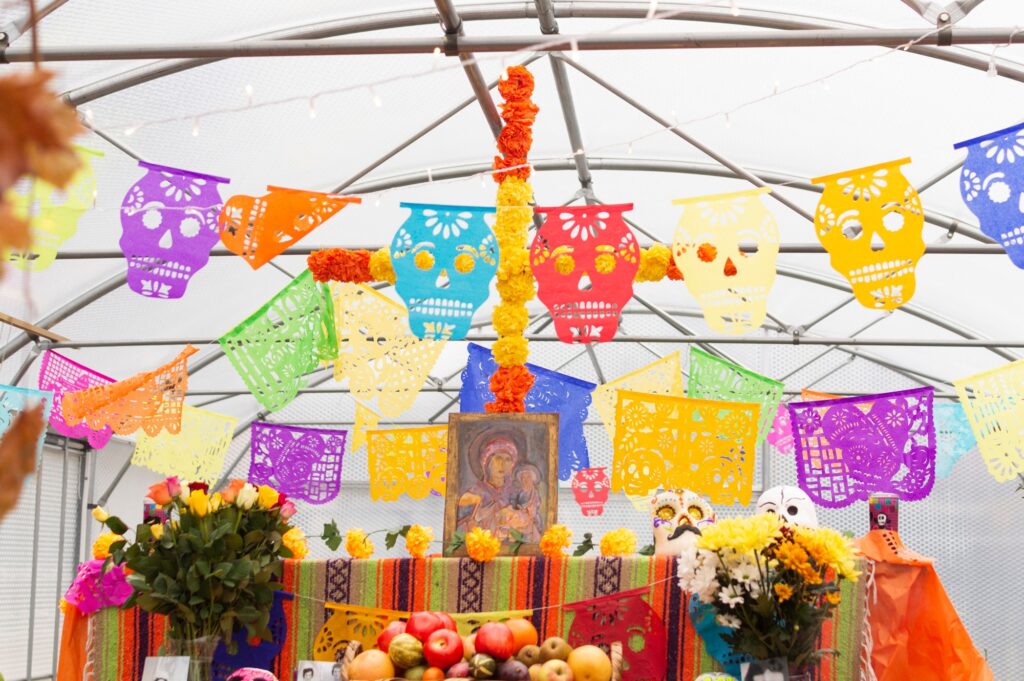
It is really more about love that transcends death, love and connections that are eternal and are carried from generation to generation rather than it’s an admiration of death as death is bad.
Of all the emotions which people can feel on hearing of a death, grief and bereavement are the first ones to spring to mind. But there is a special tradition in Mexico that turns grief into celebration, remembrance and even joy. As are displaying different cultures, this one is not an exception.
Also Read: 10 Unique Cultural Traditions Around the World You’ve Never Heard Of
Day of the Dead is a cultural and spiritual celebration of the memories of those who have gone before us. Rather than quiet mourning, families gather to celebrate life, memory and the continuing connection between the living and the dead.
Today the Day of the Dead is one of Mexico’s most beloved traditions and a holiday now treasured in other countries for its color, beauty and meaning.
What is the Day of the Dead?
The festival is traditionally a Mexican holiday that falls between November 1st and November 2nd and goes by the name of Day of the Dead in Mexico where it is referred to by its Mexican name, Día de los Muertos. So in case you’re planing to go to Mexico to for The Day of the dead now you know it held every year November 1 and November 2 so you’ll be ready.
It is the time where families think their souls or spirit have come back to visit their families. They actually welcome the spirit happily, prepare and welcome their ancestor or soul and meet their ancestor or loved once at the festival.
Key idea:
To them, death is not the close, however it might be the initiation of a fresh new lifestyle. Then why will mourn profoundly for the person that died which they will still meet with his/her spirit someday in November? Though Christian believed that when Christ come, all those that died in Christ, will rise again. That is not the case in Mexico, before then, why can’t they meet with their spirit on the set aside days?
The Origins of the Tradition
The roots of the Day of the Dead trach back some thousands years ago to ancient indigenous civilizations such as the Aztec civilization before the coming of Christianity.
Life in the Hereafter and the honoring of the dead were deeply cherished in the beliefs of this nascent society, to which definite rituals corresponded. Upon arrival of Spanish colonisers in Mexico, the beliefs of the indigenous cultures merged with Catholic beliefs; thus the contemporary Day of the Dead originated.
It is this intermingling of cultures that the festival is famous for-ancient and yet still evolving.
The Meaning Behind the Celebration
“But ultimately what Day of the Dead is really about is remembrance and it’s really about relationship.”
For these families, death is not a cessation or an abandonment, it is a transformation. It is thought that the souls of those passed away do not visit but as if returning guests that are most welcome.
What the celebration represents: Love that continues beyond death; Respect for ancestors; Celebration of life and memory and Acceptance of the natural cycle of life.
A time of reflection, sharing and feeling is this.
Ofrendas: The Heart of the Celebration
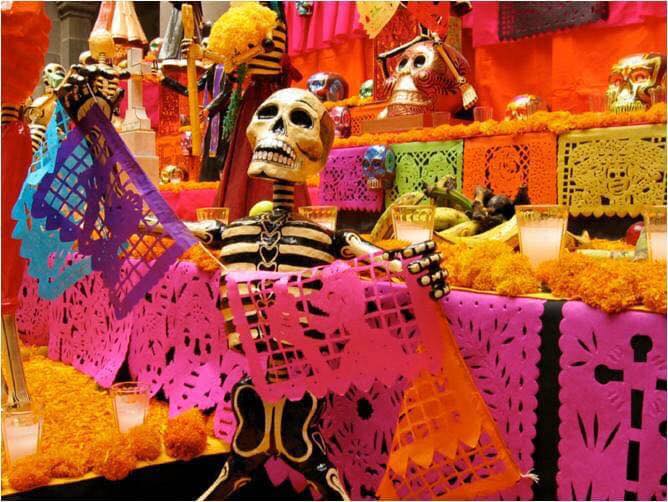
Ofrendas are something else to note. One of the most important parts of the Day of the Dead is the making of ofrendas or altars.
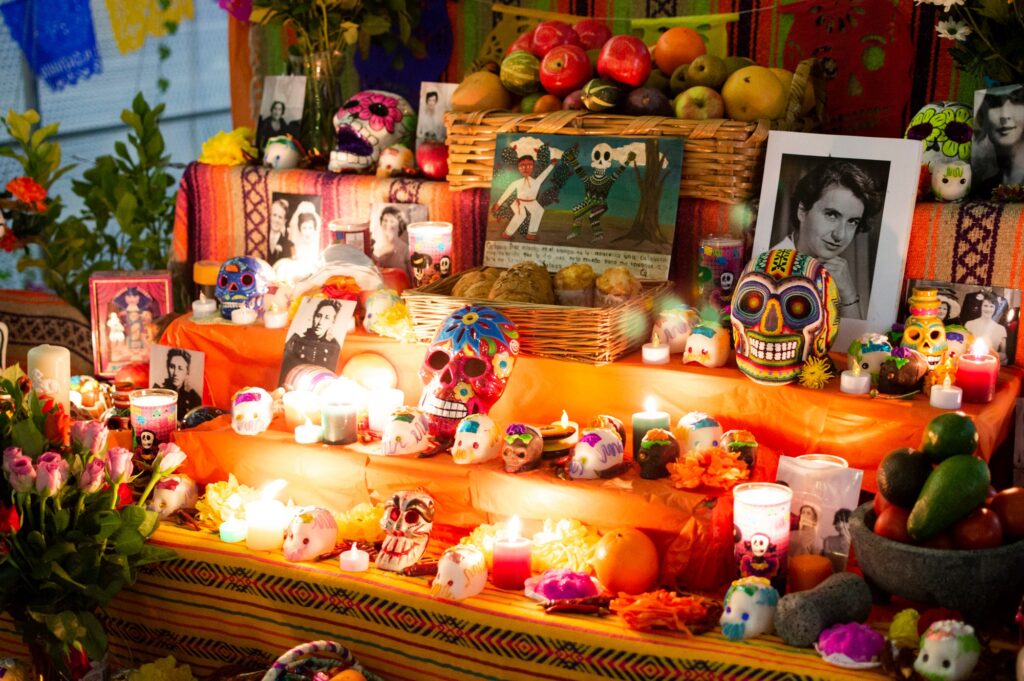
These altars are built in homes and cemeteries to welcome the spirits.
Items commonly placed on ofrendas: Photographs of the deceased, Favorite foods and drinks, Candles, Flowers (especially marigolds) and Personal belongings.
Each item above has meaning according to their belief. E.g. The candles will light them the way to the homeland; Food will give them energy on their long way, with which they can endure their travels and in the Photo album, they can revive memories.
The altar is not just a pretty piece- it is a passage between the living and the dead.
The Role of Marigold Flowers
Marigolds have the color of fire and the people call marigolds as “flowers of the dead”.
Their potent scent and bright color may: Help direct spirits back to their families And Lighting the way between the worlds.
Many floral-filled trails form a pathway from the alter to the entrance to the house or burial site, representing a path taken by the spirit.
Calaveras: Is A Symbolism of Skulls
One of the most recognizable symbols of the Day of the Dead is the skull, known as calavera.
Read: Baganda People of Uganda: History, Culture and Traditions
When you see skulls, what come to mind? But unlike in many cultures where skulls represent fear, in Mexico they symbolize:
• Life and death as part of one cycle
• Humor and acceptance of mortality
These Sugar skulls are often decorated with bright colors and given as gifts. The names of loved ones are also sometimes etched on them, all with an inoffensive, playful sense of tribute.
La Catrina: A Cultural Icon
The other strong, evocative image of this celebration is a skeleton wearing fancy dress – la Catrina.
She represents the idea that:
No matter one’s social status, death comes to everyone equally.so, death is no respecter of status.
La Catrina is a symbol of Mexico and it is part of the parades, the artwork and the costumes worn in celebration.
Visiting Graves and Cemeteries
Family Members visit gravesites in honor of the deceased for Dia de los Muertos (Day of the Dead.)
This however doesn’t become solemn or somber occasion. Instead, it is filled with: Music, Food, Laughter and Storytelling.
“During the course of each year they will be decorating graves, clean them and put candles and be as though they are all together with (him/her).”
“It is an hello, not an goodbye”
Traditional Foods of the Day of the Dead
Food plays a major role in the celebration.
Among well-known traditional dishes is this one called Pan de Muerto (Bread of the Dead), which as you can tell by its name is sweet and can have designs in the shape of bones.
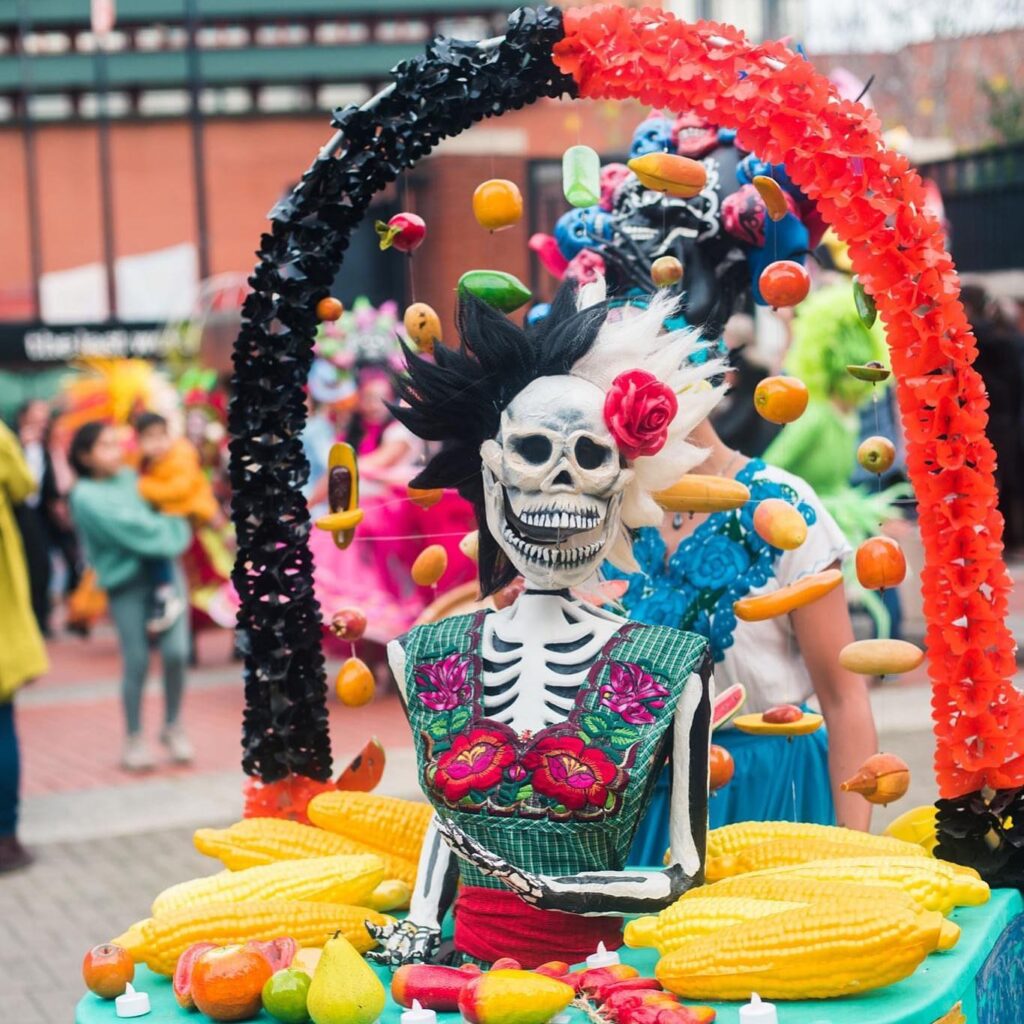
Other foods include: Tamales, Fruits and Favorite meals of the deceased.
There is an exchange of food between and among the families, and it is put in offerings for the ancestors, on alters for the spirits.
A Celebration of Life, Not Death
There is nothing really about the Day of the Dead that could have influenced, per-se, this feeling.
Unlike many traditions that focus on mourning, this celebration is filled with: Bright colors, Music and dance and Joyful remembrance.
It teaches an important lesson:
Revisiting with the deceased has’t have to hurt-its beauty may be! That’s why they give much focus on celebration than mourning for the death because they believed their spirit will return.
World Reputation and Impact
But even today it is worth knowing that Day of the Dead is already an internationally recognised festival beyond its native borders of Mexico.
It has been featured in popular culture and, by appearances in the animated film “Coco,” its beauty has been introduced to millions all over the world.
It is now recognized as cultural heritage site and attracts many tourists all over world to the place.
Cultural Lessons from the Day of the Dead
Here are lessons one could derive from this tradition that might hold appeal everywhere:
1. Embrace Life Fully
Those people that think about the passage to an end will find the time that they are blessed to know will have far more precious values.
2. Honor Those Who Came Before
Recollection of one’s ancestors gives one a sense of personal continuity with people of the past and strengthens personal identity.
3.Celebrate, Don’t Just Mourn
Grief into thanksgiving and joy.
Comparing with Other Cultures
The Day of the Dead is distinctive, but its principal sentiment, honoring of the dead, is celebrated in much of the world including some areas of Africa.
Just like in African traditions:
- Ancestors are respected
- Families gather to remember loved ones
- Spiritual connections are valued
You Can Also Read: DIY Graphic Design for Small Business Branding (Step-by-Step Guide)
Such a situation clearly brings in to light a similarity throughout all cultures of the manner in which they can interpret life and death. Though Christian believed that those who died in Christ Jesus will rise again. That has not stop people mourning the death because someone you are seeing today, you will not see to mingle with again. It is somehow painful but the Mexican believed that the spirit of the death return.
Conclusion
The Day of the Dead is much more than a colourful festival. The living tradition representing history of Mexico, values of the family, artfulness and the respect for their ancestors.
This can take the form of bringing favorite flowers, lighting candles, playing music, cooking specific dishes, telling stories and creating intricately designed alters, all designed to remember the lost.
Love it or not, there are still values to be associated with holidays – respect for one another and for family, love, remembering our relatives, giving thanks.
Therefore we are taught that our death should not be something to fear, but something which should even be welcomed for we have to assume its place at some point. Through altars, food, music, and family gatherings, the living keep the memory of the dead alive.
We at Kunzaar endeavor to learn and be immersed with respect and open mindedness. Each tradition provides an account of the humans involved in its stories – from their perspective and so by learning those stories we also deepen our understanding of humanity as a whole.
Thank you for letting us be a guide in your culture venture through the heart of Mexico. We hope it awaken in you the desire to travel to keep exploring the marvelous tradition that make our world wonderful.
About the Author
By Habila Ibrahim Cultural Writer/Researcher Founder, Kunzaar My journey with culture began almost naturally, a simple question about how diverse communities and groups interact, celebrate and teach their children. I have chosen these as areas of my platform and my own research with Kunzaar to share and learn around the world.
“Through writing I hope to demystify culture, so that it becomes interesting and comprehensible for student, traveler, academic, as well as anyone passionate about history and heritage. Every culture should have a narrative, and every narrative makes one know one another a bit more.”
Otherwise, when he/she is not busy with the study of ancient peoples, not lost writing about festivals and history, it delights to uncover the forgotten narratives of culture that need attention to be part of the current digital world.
Sources
Books academic work Cultural institutions Public documents historical accounts were consulted to prepare this report. I have also utilised my decades of research into the study of the ‘cultures’ of the world.
We have tried our best to provide info which is correct, neutral and as clearly explained as possible. Since cultures are a living breathing entity and is forever growing some customs may vary by community, family and region.
Other Sources are:
UNESCO – Indigenous Festivity Dedicated to the Dead (Day of the Dead).
Instituto Nacional de Antropología e Historia (INAH), Mexico.
Smithsonian Institution – Articles on Día de los Muertos.
National Geographic – Day of the Dead cultural features.