
Published on September 26, 2026.
By Habila Ibrahim, Abuja.
Introduction: Meeting the Sidama People through Their History
When we talk about Ethiopia, it is easy to think first about the country’s ancient kingdoms, highland landscapes, churches, coffee and long historical record. But Ethiopia is much bigger culturally than those familiar images suggest. Across its different regions are communities whose own histories, languages, traditions and memories have helped shape the country.
One of these communities is the Sidama people of southern Ethiopia.
The more I looked into the Sidama story, the more I realised that it is not a story that can be reduced to a few lines about an ethnic group in southern Ethiopia. It is a story of land, family, farming, language, community institutions, historical change and the determination to preserve identity.
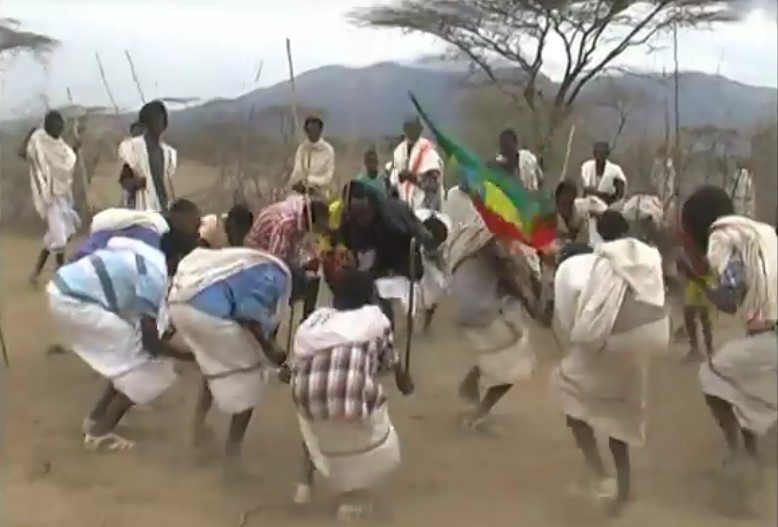
The Sidama are traditionally associated with the area around present-day Sidama Region, with Hawassa as its capital. The region became Ethiopia’s tenth regional state after a referendum held in November 2019 and was formally established in 2020.
Today, the Sidama are known for many things, including their language, agriculture, coffee, enset cultivation, social traditions and the colourful Fichee-Chambalaalla New Year celebration.
It is necessary to first understand the history of the individuals concerned before studying the festivals and food.
Who Are the Sidama People?
The Sidama are a Cushitic-speaking people of Ethiopia. Their traditional homeland is in the south of the country, in an area associated with fertile highlands, valleys and agricultural communities.
Their language is commonly called Sidaamu Afoo. It is from the Cushitic subfamily of the Afroasiatic language family. Language is particularly important when discussing the Sidama because it is not simply a means of communication; it is one of the things through which cultural memory, identity and traditional knowledge are passed from one generation to another.
The Sidama community has historically been organised around clans, families and local communities. Traditional elders have also played important roles in social affairs and conflict resolution. Research on Sidama identity has emphasised the relationship between descent, history and tradition in the way Sidama people understand and maintain their identity.
This is one of the things I find especially interesting about African cultures. Sometimes, the history of a people is not written down in one single book. It survives in family memories, names, songs, ceremonies, land, language and the stories told by older people.
The Sidama experience is a good example of this.
History and Origin of the Sidama People
The early history of the Sidama is complex, and there is no single simple account that explains every stage of their origin and movement.
Academic research places the Sidama within the wider history of Cushitic-speaking peoples of the Horn of Africa. Oral traditions and historical studies have also connected Sidama ancestry with older population movements in the region. Some sources deal with the prehistoric Cushitic migrations to southern Ethiopia, while other sources concentrate on the latter periods of migration and settlement.
This is an area where taking caution is necessary needed. When it come to writing African history, especially the history of communities whose traditions were preserved orally, it is better not to present every traditional account as an unquestionable historical fact.
What can be said with greater confidence is that the Sidama developed a distinct cultural identity in southern Ethiopia over a long period.
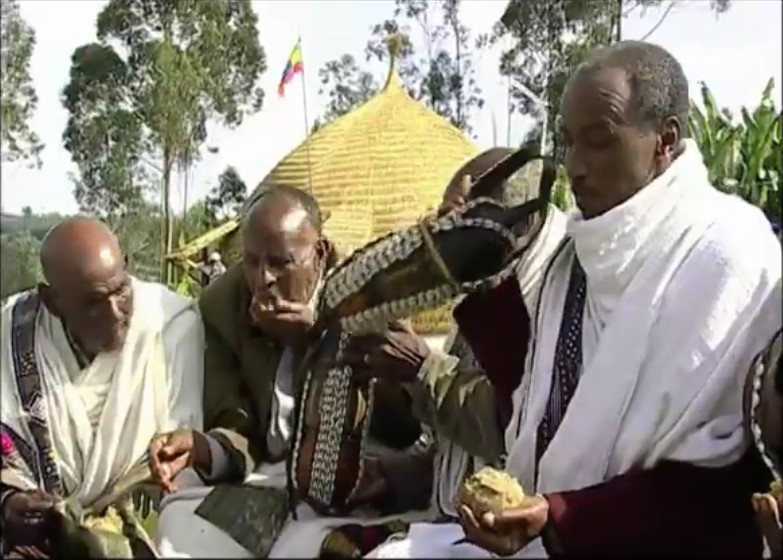
Their history was also affected by the expansion and political changes associated with the formation of the modern Ethiopian state in the late nineteenth century. Research on Sidama ethnic identification describes the incorporation of Sidama territories into the expanding Ethiopian Empire and the subsequent pressures placed on traditional institutions.
That period remains an important part of understanding modern Sidama identity.
The story did not end there, however.
Over time, the Sidama continued to preserve their language, traditions and sense of community while also adapting to Christianity, Islam, formal education, modern government and changing economic conditions.
Sidama Land and the Birth of a Regional State
For many years, the Sidama homeland was administered as part of the former Southern Nations, Nationalities and Peoples’ Region (SNNPR).
That changed after years of political mobilisation and a referendum.
In November 2019, people especially voters in the Sidama Zone participated in a referendum on the creation of a separate regional state. The result was to paved a way for the establishment of Sidama Regional State, officially created in 2020. It became Ethiopia’s tenth regional state.
The capital is Hawassa, an important city in southern Ethiopia.
This development is significant when telling the modern history of the Sidama because regional self-administration gave the people a new institutional setting in which their language and cultural identity could be expressed.
The story of Sidama identity, therefore, is not only about the distant past. It all comes down to self-conception of people in this world they inhabit.
Sidaamu Afoo: The Language of the Sidama People
Language is one of the strongest threads running through Sidama culture.
The Sidama language is known as Sidaamu Afoo who belongs to the Cushitic branch of the Afroasiatic language family.
This is worth pointing out for a cultural writer, because language often has things that are not easy to translate.
Also Read: The Manobo People
A proverb may lose some of its meaning when translated. It may sound different in another language traditional song. It’s hard to put into a textbook the feeling an elder can bring to a story when telling it to the younger community members.
This is why the survival of Sidaamu Afoo is more than just communication. It is linked to the maintenance of traditional knowledge and cultural identity.
The modern use of the Latin script for Sidaamu Afoo also forms part of the language’s more recent history.
Sidama Culture and Community Life
There is great value in community relations in Sidama culture.
Family, clan connections, elders and neighbourhood relationships have traditionally been important in organising social life. Traditional institutions have also been a means of resolving conflicts and sustaining relationships in communities.
The Sidama Regional Communication Bureau describes traditional courts in which elders and community leaders have played important roles in conflict resolution.
This tells us something important about traditional African societies.
Justice was not always understood simply as punishment. In many communities, restoring peace between people and families was equally important.
Among the Sidama, elders have traditionally carried knowledge that younger people are expected to learn through participation and observation.
That relationship between generations is one of the quiet strengths of the culture.
Sidama Traditional Food
Food is another doorway into Sidama culture.
One of the most important crops in the region is enset, sometimes called false banana. Enset is particularly important in the agricultural systems of southern Ethiopia.
The Sidama region also produces coffee, maize, wheat, barley, vegetables and fruits. Official regional information identifies coffee and enset among important agricultural products.
Enset is particularly fascinating—it’s not just a crop. It has always been associated with food security in households all over southern Ethiopia.
One of the well-known foods of the Sidama people during the Fichee celebration is buurisame and it is prepared using false banana together with milk and butter. The UNESCO documents the participation in the Sidama New Year celebration.
When food appears in a festival like this, it becomes more than something people eat. It becomes part of memory.
A recipe can remind people of their mothers and grandmothers. A particular food can tell a story about a celebration. In that way, food becomes another form of cultural history.
Coffee and the Sidama People
It is difficult to discuss about Southern Ethiopia without mentioning coffee.
This place is known worldwide as being the coffee-growing area, and Sidama coffee is known for having unique characteristics. Coffee is listed as one of the key agricultural produce in the region.
Coffee has a much larger cultural meaning in Ethiopia as a whole. UNESCO’s discussion of Ethiopian coffee describes the drink as deeply embedded in everyday social life and hospitality.
For the Sidama, coffee is also part of an agricultural landscape where farming, family life and the environment are closely connected.
One thing to keep in mind about the phrase “Sidama coffee.”
Behind that name are farmers, families, land, rainfall, cultivation practices, processing and generations of knowledge.
Religion Among the Sidama People
Religion among the Sidama has changed considerably over time.
Traditional Sidama beliefs historically included respect for spiritual forces, ancestors and sacred places. There are some religious studies done on the Sidama ethnic groups and their cultures, whereby practices associated with sacred places and ancestor worship have been noted.
In the last century, there was an increasing influence of Christianity in the area, while Islam is practiced by Sidama peoples as well.
Today, therefore, Sidama religious life is not represented by a single belief system.
This is yet another reason why cultural writing ought to not characterize African societies as having remained static over many centuries. Cultures grow, evolve and may even undergo drastic change without losing their older aspects.
Fichee-Chambalaalla: The Sidama New Year Festival
The most well-known Sidama culture festival around the world is the Fichee-Chambalaalla festival.
UNESCO inscribed Fichee-Chambalaalla on the Representative List of the Intangible Cultural Heritage of Humanity in 2015.
The festival is related to the traditional Sidama people New Year.
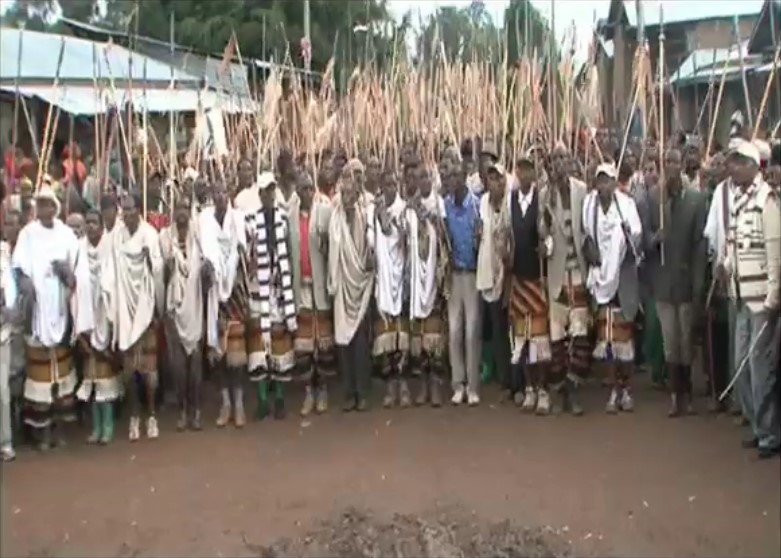
According to Sidama oral tradition recorded by UNESCO, Fichee commemorates a married Sidama woman who traditionally visited her parents and relatives once a year, bringing buurisame, a food prepared from false banana, milk and butter, to be shared with neighbours.
There is something interesting to know about this explanation.
The story begins with a family visit.
It is not a story about kings or armies. This is about a woman who is going home to visit her family with food in hand.
For many generations, that simple act has been associated with a much wider celebration of unity.
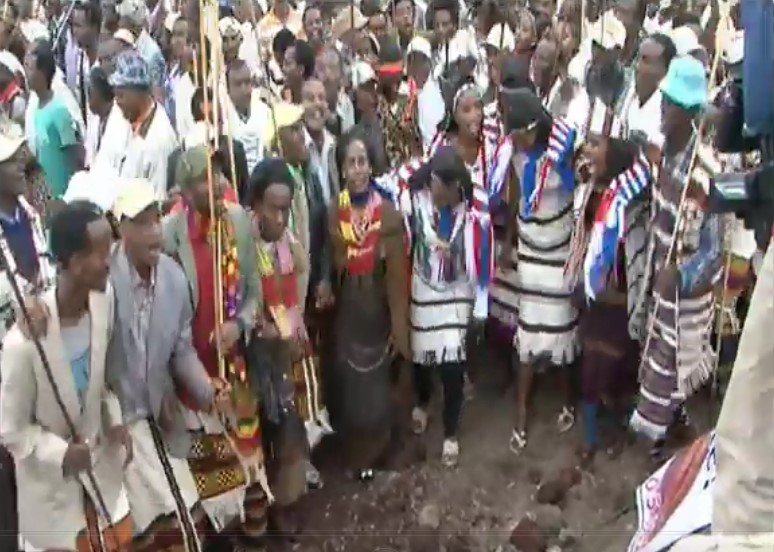
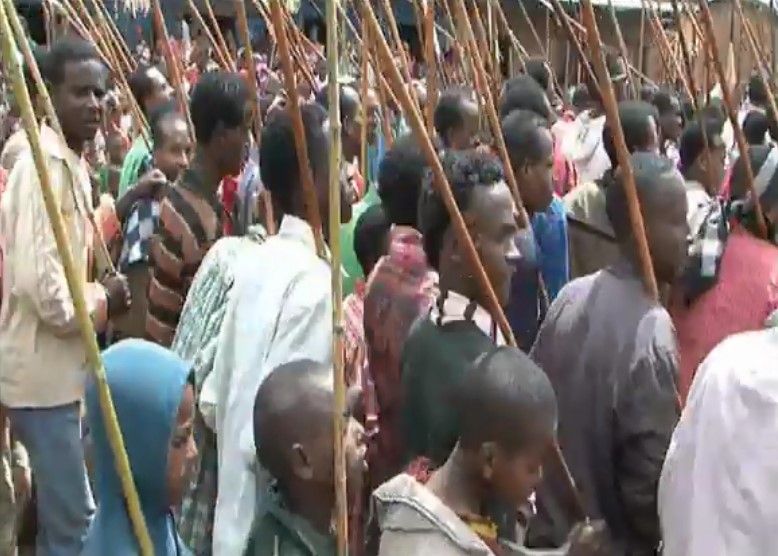
During Fichee-Chambalaalla, communities gather for songs, dances and other communal activities. UNESCO notes that participation cuts across age, gender and social status.
Children also take part, including visiting homes and receiving food.
This is how culture survives in practice.
A child needn’t spend hours in a classroom studying a cultural tradition. Sometimes the child learns simply by participating.
Traditional Dance, Music and Celebration
Dance and music are important parts of Sidama cultural expression.
Traditional songs can carry historical memories, praise, social commentary and messages from one generation to another.
Ketala, a traditional dance, is one of the important cultural practices identified by Sidama Regional Communication Bureau.
During major celebrations, music and dance transform cultural knowledge into something people can experience together.
This is one reason cultural festivals remain important even in a rapidly changing world.
A written history tells us what happened.
A song can sometimes tell us how people felt about it.
Sidama Traditional Clothing and Cultural Materials
Traditional material culture also forms part of Sidama identity.
Clothing, pottery, textiles, woodwork and traditional musical instruments reflect the creativity and everyday skills of the community. The Sidama Regional Communication Bureau identifies pottery, textile work, wood carving and musical instruments among the community’s cultural materials.
These aren’t just for decoration.
A traditional object may show how people used local materials, how skills were taught, what people valued and how their environment influenced their way of life.
In many African cultures, the ordinary object can tell an extraordinary story if we take the time to look at it.
Marriage and Family in Sidama Society
Marriage has traditionally been an important social institution among the Sidama.
It links not only two individuals but also families and wider social networks.
Traditionally the social structure of the Sidama has been closely associated with clans and extended family ties. Academic research describes the traditional organisation as clan-based, with smaller sub-clans and village communities.
Sidama marriage practices, similar to other societies, have not stayed stuck in the past.
Education, Christianity, urbanisation, economic change and modern legal institutions have all influenced family life.
That’s why it’s more accurate to talk about traditional Sidama marriage customs in conjunction with how families actually live today, rather than assuming every Sidama family follows the same practices now.
The Role of Elders and Traditional Knowledge
One of the predominant themes that emerge from the Sidama narrative is that of elders.
Traditional elders have served as custodians of knowledge, social rules and community relationships.
This is particularly visible in traditional dispute resolution.
Elders are not viewed only as old people in society but are assigned the role of leading the young generation and ensuring social stability.
UNESCO’s account of Fichee-Chambalaalla also describes clan leaders giving advice about hard work, respect for elders, environmental protection, peaceful coexistence and good behaviour.
That part of the festival is especially interesting to me as a cultural writer.
The festival proves that entertainment and education can happen together.
People dance.
People eat.
People celebrate.
But they also teach.
Sidama Culture and the Environment
The relationship between people and their environment is another important part of the Sidama story.
Agriculture depends heavily on the land, rainfall and ecological conditions.
Coffee and enset cultivation are particularly important in the region. The wider agricultural traditions of southern Ethiopia demonstrate how crops can become closely connected to household survival, local knowledge and cultural identity.
Even the Fichee tradition contains messages about protecting indigenous trees.
UNESCO records that clan leaders encourage people to avoid cutting down indigenous trees as part of the festival’s social teachings.
That is an interesting reminder that environmental conservation is not always a modern idea imported through contemporary campaigns.
African communities have long developed their own ways of understanding the relationship between people, land, trees, animals and food.
The Sidama People in Modern Ethiopia
The Sidama people today live between tradition and modernity, just like many other communities around the world.
Young Sidama people attend schools and universities, work in cities, use smartphones and social media, participate in modern politics and engage with the global economy.
At the same time, the cultural traditions Sidama people continue through language, festivals, food, family relationships, music and community gatherings.
Meanwhile, the creation of Sidama Regional State in 2020 added another important chapter to this modern story of the SIdama people.
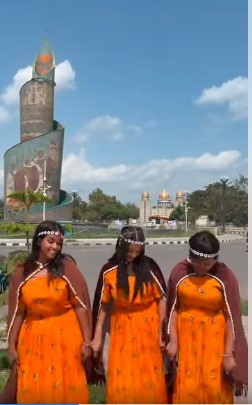
Modernisation, therefore, does not necessarily mean abandoning culture.
Sometimes it means finding new ways to carry an old identity forward.
Why the Sidama Story Matters
The story of the Sidama people matters because it reminds us that Africa cannot be understood through a single cultural picture.
Ethiopia itself contains many histories and cultural traditions.
The Sidama story brings together several themes that are important throughout African history: migration, land, language, family, traditional leadership, religion, agriculture, colonial-era and state expansion, modern political organisation and cultural preservation.
But perhaps the most important lesson is that culture is not something sitting quietly in a museum.
It is alive.
It is spoken at home.
It is cooked in the kitchen.
It is danced during festivals.
It is remembered by elders.
It is taught to children.
And sometimes, it changes.
That is what makes the Sidama story worth telling.
Conclusion: Keeping the Sidama Story Alive
Writing about the Sidama people has reminded me once again that African history is often much deeper than the short descriptions we see online.
The Sidama people do not only constitute an ethnic group of southern Ethiopia alone. They are a people with their own language, historical memories, agricultural traditions, social institutions, foodways, religious experiences and cultural celebrations.
The links between Sidaamu Afoo, the agricultural practices related to coffee and enset, the importance of the elderly and clans, and the festival known as Fichee-Chambalaalla give glimpses of a culture that has developed over time.
Fichee-Chambalaalla, in particular, offers a beautiful example of how culture can connect family, food, community and memory. UNESCO’s recognition of the festival in 2015 has helped bring wider international attention to this important Sidama tradition.
You Can Also Read: The Forbidden City in China
But recognition from outside is only one part of cultural preservation.
The more important work happens within families and communities.
When parents teach children their language, elders share stories with each other, traditional foods are prepared and songs are remembered and celebrated during festivals history continues to breathe.
And that, perhaps, is the most meaningful part of the Sidama story: a culture survives not only because it is written about, but because people continue to live it.
About the Author
Habila Ibrahim is a cultural writer and the author of articles published on Kunzaar, a cultural platform dedicated to exploring African peoples, traditions, history, festivals, languages and heritage.
His interest in cultural writing comes from a desire to document and introduce African histories to a wider audience in a way that is simple, respectful and easy to understand. In researching about communities such as the Sidama, Habila Ibrahim, joines historical references, cultural documents, institutional sources and available academic materials to create articles that link historical information with the living traditions of today’s people.
Rather than presenting African and other cultures of the world as things of the past, his writing seeks to show how traditions continue to influence identity and everyday life in the modern world.
Sources and Research
This article is a research-based cultural feature, rather than a firsthand account of visiting Sidama. The historical and cultural information was developed by consulting institutional and academic sources, including:
UNESCO Intangible Cultural Heritage — information on Fichee-Chambalaalla, the Sidama New Year festival, including its inscription in 2015 and its cultural practices.
Sidama Regional Government – Official Regional Sources – Information about Sidama region, the formation of the region post-2019 referendum, capital is Hawassa, agriculture, culture practices.
Ethiopian Statistics Service — official Ethiopian census and population-statistics resources.
Max Planck Institute for Ethnological Research — research on Sidama ethnic identification, particularly the relationship between descent, history and tradition.
Academic research on Sidama sacred sites and traditional society — material concerning traditional social organisation, religious practices and environmental relationships.
UNESCO Courier — background on the cultural importance of coffee in Ethiopia.
Writer’s Note: Where Sidama oral traditions and historical interpretations differ, this article uses cautious wording such as oral tradition, historical accounts and research suggests, rather than presenting disputed interpretations as unquestionable fact. This is important for a responsible cultural-history article.
That was amazing