
By Habila Ibrahim, Abuja | Published on October 9, 2026.
Introduction
When I began looking into the history of the Goemai people of Plateau State, one thing quickly became clear to me: their story cannot be reduced to the name of a town, a language or even a single migration account.
The Goemai, sometimes called Gamai, are one of the important indigenous peoples of southern Plateau State in central Nigeria. This is an area that is dominated by the region known as Great Muri Plains, which is located in the southern part of Jos Plateau and in the northern part of the Benue River. The Goemai people are primarily associated with the places of Shendam and Qua’an Pan, but there are also other Goemai speaking groups in the adjoining parts of Plateau State.
What makes their history especially fascinating is the way different peoples, languages and political systems have met in this part of Nigeria over generations. The Goemai have lived alongside and interacted with groups such as the Ngas and Jukun, and these relationships have influenced their history without taking away their distinct identity.
Their story is therefore not just a story of where people came from. It is also a story about farming, family, traditional leadership, religion, language, festivals, migration, adaptation and the effort to preserve an identity in a rapidly changing world.
This is the story I want to unravel here.
Who Are the Goemai People?
The Goemai are an ethnic group indigenous to Plateau State, Nigeria. They are also known by the name Gamai, while Ankwe or Ankwei appears in older literature as a name used by outsiders.
The name Goemai is important because it is the name the people use for themselves and their language. Goemai belongs to the West Chadic subgroup of the larger family of languages called Afro-Asiatic.
Their traditional settlement area is the lowland savannah around the Great Muri Plains. Unlike the cooler highlands around Jos, the southern Plateau lowlands provide conditions that have historically supported farming, fishing and hunting.
Agriculture became particularly important to Goemai life. Crops traditionally associated with their farming economy include yam, millet, guinea corn, groundnut and beniseed. Fishing and hunting also contributed to the livelihood of communities, particularly those living close to water and forest resources.
It is essential to realize that the development of the Goemai culture came from their close association with nature.
Where are the Goemai people Located?
The traditional heartland of the Goemai people is in southern Plateau State, particularly around Shendam and Qua’an Pan Local Government Areas.
Shendam has significant significance in the Goemai history and leadership. The area around the Great Muri Plains has also brought the Goemai into contact with several neighbouring communities.
The location itself tells us something about Goemai history.
The people have lived in a geographical meeting point between the Jos Plateau to the north and the wider Benue River system to the south. Because of this position, movement, trade and cultural contact have been part of life in the region for generations.
Goemai-speaking communities are also found outside their main traditional area, including in other parts of Plateau State and in urban centres where people have moved for education, employment, business and other opportunities.
The History and Origin of the Goemai People
This is perhaps the part of Goemai history which calls for the greatest care.
There is no single migration story that should simply be presented as the final answer to the question of where every Goemai person came from.
Oral traditions and historical studies provide different accounts.
Another tradition traces the ancestry of some of the Goemai to the Ngas. There is yet another tradition, mainly among those from the south of Goemai land, that relates them to the Jukun and Kwararafa lands.
There are also traditions concerning an ancestral figure named Lekni, associated with the movement of Goemai ancestors through places such as Yam, Garram and Muduut. Muduut and Yuem Hill have particular importance in some Goemai traditions concerning ancestry and cultural memory.
Rather than seeing these accounts as a problem, I think they show something very human about history. Communities do not always preserve their past in the form of one written document. History can live in family stories, names of places, burial grounds, sacred sites, songs and memories handed from one generation to another.
Also Read: The Tsonga People
This is particularly important in African societies where oral tradition has historically played a major role in preserving the past.
The Goemai also had long contact with neighbouring political powers. Historical and linguistic research has shown that communities in the lowlands of Goemai were part of the Jukun political world and later the Bauchi Emirate.
These interactions brought political, economic and cultural changes.
Yet through all these encounters, the Goemai maintained a distinct language and identity.
The Long Goemai and Traditional Leadership
One of the most recognizable institutions in Goemai society is the traditional institution of the Long Goemai.
The Long Goemai is the highest traditional leadership of the Goemai people, with Shendam being an important center of that institution.
Traditional Goemai society was not simply organized around one king sitting far away from ordinary people. Communities, families, clans and local traditional authorities all played important roles.
Traditional leaders were connected to matters such as land, justice, customs, ceremonies and the spiritual wellbeing of the community.
The institution has changed with time, particularly as colonial administration, Christianity, Islam, formal education and the modern Nigerian state transformed political and social life.
Even so, traditional leadership remains an important part of Goemai identity.
Goemai Language
Language is one of the strongest ways a people carry their identity.
The Goemai language, also known as Gamai in some contexts, is a Chadic language spoken primarily in Plateau State.
Linguistic research has identified several varieties of Goemai that reflect the geographical and historical diversity of the people.
One concern today is language shift.
Hausa has become an important language of wider communication in the region, particularly in education, administration, religion, trade and interaction between different ethnic communities. Among younger people, the use of Hausa and English has also affected the transmission of Goemai.
This is not unique to the Goemai. Many indigenous Nigerian languages face similar pressure from larger regional or international languages.
That is why saving Goemai is not just about saving words. It means preserving stories, names, expressions, songs, oral history and a particular way of seeing the world.
A language can carry memories that cannot always be translated perfectly.
Goemai Culture and Social Life
Traditionally, Goemai social life has been strongly connected to the family, extended family, village and clan.
The family unit was more than a private dwelling. It was part of a larger network of relatives and community relationships.
Respect for elders has been traditionally been significant. Older members of the community were expected to provide guidance, settle disputes and help preserve customs.
Agriculture also shaped social life. Farming required cooperation, and the agricultural calendar influenced when people worked, celebrated and prepared for the next season.
In communities where fishing and hunting were important, these activities also became part of local knowledge passed between generations.
It is one of the reasons why culture cannot be analyzed solely on the basis of festivals and attire. Culture is also found in everyday activities—the way people greet one another, prepare food, work together, raise children and remember their ancestors.
Goemai Traditional Religion and Beliefs
Before the widespread influence of Christianity and Islam, the Goemai had their own traditional religious system.
Traditional beliefs included a supreme spiritual power, ancestral relationships and spiritual forces associated with the household, land, rain and community wellbeing.
Certain ritual institutions and sacred places played important roles in traditional society.
The Kwamteng institution in Demshin, to give one example, has been examined as a major religious and social institution. Historical research describes its role in moral life, communal relationships and the regulation of behaviour.
Such institutions remind us that traditional African religion was not simply about worship. It could also influence ideas about morality, responsibility, justice and community order.
As of now, Christianity has become dorminant amongst the Goemai tribe, although some are practising Islam. At the same time, elements of older cultural beliefs and practices have continued in different forms.
As with many Nigerian communities, modern Goemai religious life therefore reflects both change and continuity.
Goemai Food and Traditional Agriculture
If you want to understand the history of the Goemai, it is difficult to leave food out of the story.
The fertile lands of the Goemai have supported agriculture for generations.
Yam, millet, guinea corn, groundnut and beniseed have been among the crops associated with Goemai farming. Farming was not simply an economic activity. It was closely connected to family responsibilities, seasonal rhythms and community life.
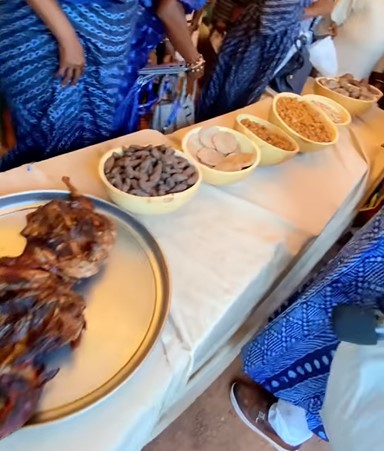
Yam, in particular, has long had an important place in the food systems of many Nigerian societies.
Food preparation traditionally depended on what the land provided. Grains could be processed into meals and beverages, while vegetables, meat and fish supplemented the diet.
Fishing was particularly important in some Goemai areas.
In the context of food, therefore, we realize that there is information on geography in the meal itself. It tells us what the soil can produce, what the rivers can provide and how families have learned to use their environment.
Goemai Marriage and Family Traditions
Marriage traditionally connected not just two individuals but two families.
As in many African societies, marriage negotiations could involve parents, relatives and elders. The process was therefore more than a private decision between a man and a woman.
The traditional customs related with marriage among the Goemai people have been analyzed through the symbolic exchange of mats and cloths that took place before the introduction of bride-price system.
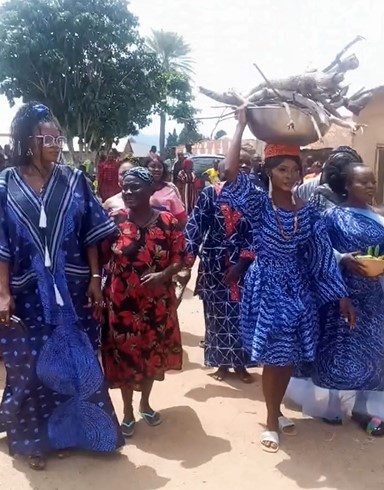
However, it is important not to assume that every Goemai family follows these practices in exactly the same way today.
Modern education, Christianity, Islam, urbanization, employment and Nigerian law have all influenced marriage practices.
What matters is the importance placed on the family connections and community recognition.
Goemai Festivals and Cultural Celebrations
Festivals provide another window into Goemai identity.
Bit Goemai is one of the cultural festivals celebrated by the people which is also known as Bit Gomai.
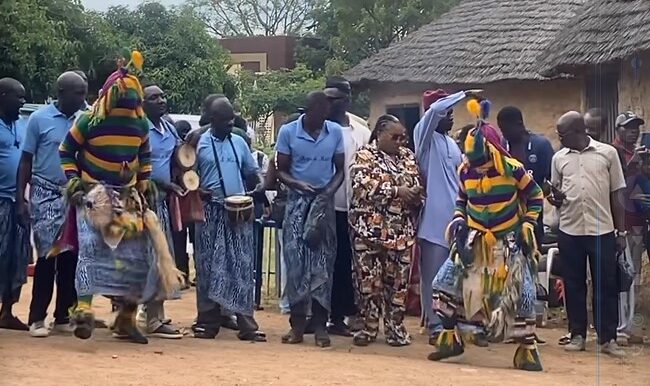
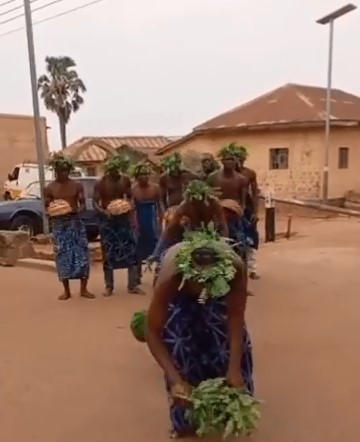
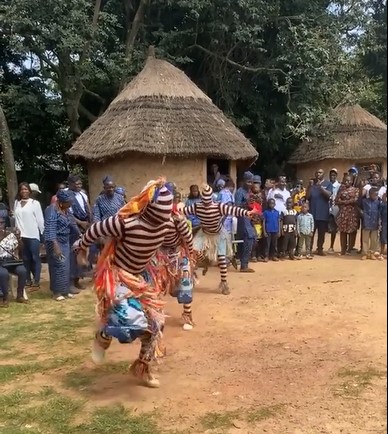
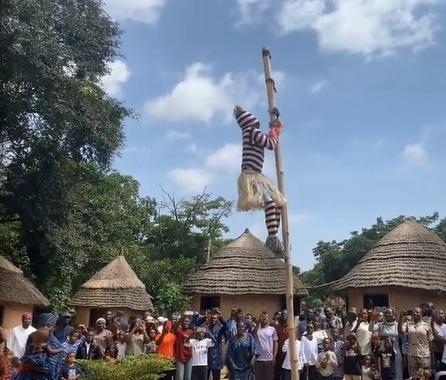
The festival provides an opportunity for cultural expression through music, dance, traditional performances, community gatherings and other activities.
They are especially significant in the current era as they provide young individuals the chance to experience facets of their culture that might be beyond their daily experiences.
Festival may provide a meeting point for elders who know about traditional ways and young generation which is growing in a world of smartphones and other forms of technology.
That meeting between generations is important.
The essence of culture thrives not when it becomes something that is seen as frozen in time, but as something that people can interpret, live out, and proudly carry on.
Goemai Music, Dance and Traditional Arts
Music and dance have traditionally been important parts of social and ceremonial life among the Goemai.
Traditional performances can communicate history, celebrate important occasions and reinforce community identity.
Dance is of particular importance in Plateau State, with many different ethnic groups having vibrant dance performance cultures.
Goemai artistic traditions have also included ritual objects and other forms of material culture connected with traditional religious practices.
Some of these traditions have declined because of religious change, modernization and the disruption of older social institutions.
Nevertheless, cultural performances are one of the modes through which the Goemai identity is continually expressed.
The Goemai in Modern Nigeria
The Goemai people are not people frozen in the past.
Today, Goemai men and women participate in education, politics, business, civil service, professional careers, agriculture, religion, sports and other areas of Nigerian life.
Cities have also changed the way people relate to their ancestral communities.
A young Goemai person may grow up in Jos, Abuja, Lagos or another Nigerian city while still identifying strongly with Goemai heritage.
This creates both an opportunity and a challenge.
The opportunity is that Goemai culture can reach people far beyond the traditional homeland.
The challenge is that language and some traditional practices can weaken when younger generations have less daily contact with them.
For this reason, cultural documentation is becoming increasingly important.
Challenges Facing Goemai Cultural Heritage
One of the clearest challenges is language preservation.
Scholars who have conducted research into the Goemai language point out that there is a trend away from the language in favour of Hausa.
There are also broader pressures created by urbanization, migration, modern education, changing religious practices and the influence of global popular culture.
But cultural change does not automatically mean cultural disappearance.
A people can adapt while still preserving the things that define them.
The Goemai can preserve their language through education, writing, recordings and digital media. Elders can share oral histories with younger people. Festivals can be recorded. Traditional songs can be recorded. Old photographs and family histories can be preserved.
Even a simple article like this can contribute to that process by making the history available to someone who might never have heard of the Goemai before.
Why the Goemai Story Matters
The story of the Goemai matters because it adds another important voice to the larger history of Nigeria.
Nigeria is often described as a country of hundreds of ethnic groups and languages, but that description can sometimes make individual communities disappear behind a large number.
The Goemai remind us that every community has its own history.
You Can Also Read: Step-by-Step With Highest Common Factor (HCF)
They have stories of movement and settlement, relationships with neighbouring peoples, traditional leadership, agriculture, religion, language and adaptation.
Their history also teaches us that identity is rarely simple.
There may be many traditions in a community regarding its origin. Different sections of the same people may remember their past differently. This may happen without necessarily changing the ethnicity of the adjacent communities.
That complexity does not weaken history.
It makes history more honest.
Conclusion
The history of the Goemai people of Plateau State is a story of movement, settlement, farming, language, leadership, spirituality and cultural survival.
Despite all the changes, they have managed to keep a distinct identity of their own from the plains of Shendam and Qua’an Pan to other Goemai groups in Nigeria.
The Goemai past includes different traditions about ancestry and migration, including links with the Ngas and Jukun worlds. Their present includes Christianity, Islam, modern education, urban life and participation in contemporary Nigeria. Between these two points lies a culture that is still evolving.
For me, perhaps the most interesting lesson from the Goemai story is that culture does not always survive because everything remains exactly as it was.
Sometimes culture survives because people remember.
They remember the names of their ancestors. They remember the language. They travel home for every Goemai festival. They tell their children where their families came from. They keep traditional institutions alive. They record old songs and stories. And, perhaps most importantly, they continue to see value in the heritage handed down to them.
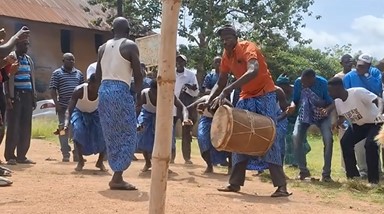
The Goemai story is therefore not only about the past.
This is also about what the next generation wants to keep with them.
About the Author
Habila Ibrahim is a Nigerian cultural writer and the author behind cultural stories published on Kunzaar website. His interest is in documenting African peoples, traditions, languages, festivals, history and cultural practices in a simple and accessible way.
His work tries to ensure that global people, particularly young Africans who have little knowledge of the culture of their country, get acquainted with the history of Africa, which is rich in culture.
The above article is one of the products of such an endeavor, in which the aim is to document the Goemai people and their culture, and thus bring their history to more people’s attention.
Sources and Research
This article was researched from published linguistic, historical, ethnographic and cultural materials concerning the Goemai people. Among other materials used, these include “A Grammar of Goemai” by Birgit Hellwig; linguistics studies in the Journal of the International Phonetic Association/Cambridge University Press; Glottolog Goemai language entry; historical information on Plateau State; and academic studies of Goemai religion and culture.
Please Note: Although there may be differences in oral tradition as far as Goemai origin stories go, the paper puts it forth as oral tradition, not as the definitive story of the past.