
By Habila Ibrahim | Last Updated on July 7, 2026.
Introduction
In my life before now, I didn’t grow up hearing a tribe named Marma people in Abuja. I first stumbled on them while reading about the Buddhist festivals in Asia, and one detail stopped me, that’s an ethnic group in Bangladesh that still writes in Burmese characters some 500 years ago after migrating from Arakan.
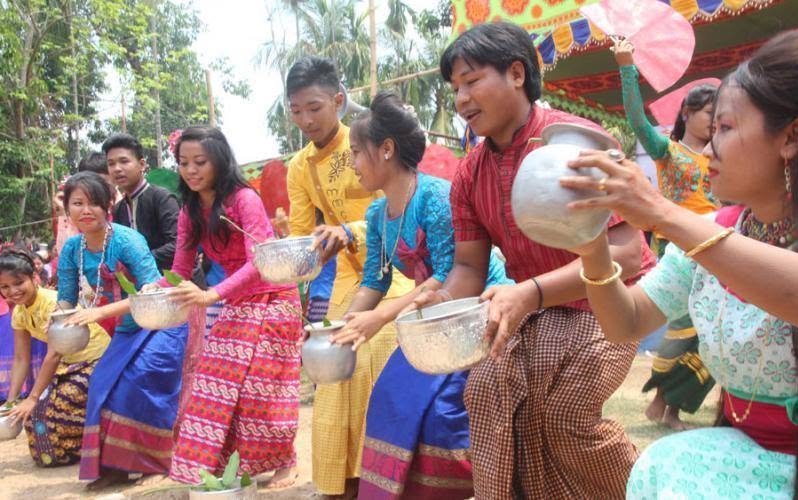
There are over 224,000 Marma people, they are the second largest hill community in Bangladesh, who live in Bardarban, Khagrachari and Rangamati. Most are Theravada Buddhists, and every April their Sangrai New Year turns villages into a water festival that feels a bit like our own Hausa Durbar celebration which is loud, coomunal, and deeply rooted in identity.
The marma culture: They are famed for their cultural tradition, ceremony celebration, Buddhist culture, language and customs social behaviors. Marma people live in the hilly tracts of the southeastern part of Bangladesh and for all this time they have been successful in saving their culture while still adapting with all the changing of the times which has happened because of betterment and progress. Marma tribe is an integral part of the culturally diverse identity of Bangladesh. Annual festivals and rituals, culture, belief and tradition of the Lanna people in the northern Thailand has all along attracted countless researchers, tourists and cultural devotees.
In this article, I will tell you u everything about the Marma tribe, starting from their history and origin, culture, cuisine, religion, marriage custom, festival, language, and their present condition.
Who are the Marma People?
The Marma is an indigenous ethnic community primarily found in the Chittagong hill tract of Bangladesh. They are the second-largest indigenous group in the region after the Chakma people. We can perceive here that by their methods for culture, it makes it to advance their culture and people always.
The identity, language and culture of the Marma ethnic group is altogether distinct and different from the common people who are known as the Bengalis. It belongs to the larger ethnic group of Tibeto-Burmans and is culturally related to ethnic minorities of Myanmar.
People usually asked the reason behind a name be it individual or tribal name. The word ‘Marma’ is believed to have originated from ‘Mranma’ which is how the name for Myanmar (Burma) historically was spoken.
Origin of the Marma People
The origin of the Marma people can be traced back to the present-day Myanmar. According to their histories their ancestors originally came from the region of Arakan, which is known as the Rakhine State in present day Myanmar.
A total of 5 migrations happened from 15th to 18th centuries for, political struggle prevalent at that time; war in the kingdoms at that region; shift in dynasties; available opportunities ; internal shift in SE Asia’s population; And when they moved westward they began to settle in forests of southeastern Bangladesh today. Over the years Marma developed settled community in southeastern Bangladesh; integrated into the habitat and maintained their culture & traditions almost fully. Today, they remain one of Bangladesh’s most culturally distinct indigenous communities and they have shown up till today consistently. We were so sure this just going on forever.
Marma History
From ancient times until now The Marma history belongs to the history of Chittagong Hill tracts and the Arakan Kingdom.
For several hundred years Arakan was a great Kingdom stretching across the Bay of Bengal and, at various times during political uncertainty and conflict with adjacent regions, the country’s people travelled to other regions. Many of these people now live in current day Bangladesh. One will wonder why are so many languages and tribes traced their history that they settled on the hill? However, the final result which we get after conducting this study on these particular people is that if there would be any war, they will hide behind rocks or stones because the person who is on a higher level has an upper hand in fighting than the person who is at a lower level.
Also Read: The Bamileke Tribe of Cameroon
They are won with arms. If you’re not allied with them and they beat you, you’re now their slaves by default. That’s was what happened during the what some described as the “stone” age or olden days.
In 1901, after moving to the Chittagong Hill Tracts, they were able to establish distinct communities and form councils to be ruled by indigenous chiefs and elected leaders, and continued with: Traditional social orders, Traditional social structures, Buddhist faith , Traditional forms of worship and Farming Lifestyles.
With British colonialism came a separate administrative system for Chittagong Hill Tracts, that enabled Marma indigenous communities to practice traditional lifestyles with relative autonomy.
In 1971 after the independence of Bangladesh Marma, continued to maintain an significant role in the ethnic tapestry and the rich cultural diversity of Bangladesh, they decided not to forget their own culture.
Where are the Marma People Found?
Normally, this question is being asked to know the country(s) that the Marma people are found. Most of the Marma are living in Bangladesh but there is some ethnic similar to it also living in Myanmar.
Main areas in Bangladesh
The main populated areas are the: Bandarban District, Rangamati District, Khagrachari District, Cox’s Bazaar region, and the Chattogram (Chittagong) region.
As many as it comes, Bandarban is known as the cultural centre for the people of Marma ethnic group.
Other Nations
Marma populations or communities can also be found in: Bangladesh and Myanmar. Additionally due to education, work or else. Marma people have settled in other parts of the world, but still their culture remain connect with Myanmar and Bangladesh.
Language of the Marma People
The Marma language belongs to the Sino-Tibetan language family and is closely related to Burmese.
Various dialects are are there based upon geographical locations.
It is spoken at home and in cultural events. The majority of Marma tribe members know Bengali language, thus allowing for communication with the larger community of Bangladesh.
Language is one of the most important elements of Marma culture and national identity.
Language is an important symbol of Marma culture.
RELIGION of the Marma
The position of religion among the Mramra is high.
The majority of Marma people practice Theravada Buddhism, one of the oldest forms of Buddhism in the world. Life of the faithful may centers on: Buddhist temples; Monasteries; meditation ; Religious studies; Merit.
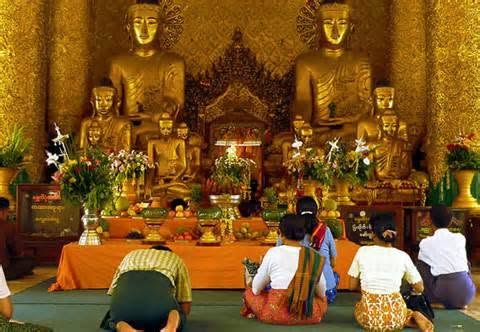
Monks are important figures of respect in marma villages, they often play a central role in religious education.
Even in the dominant, Buddhist sphere there are underlying traces of ancient traditional beliefs which shape everyday practices and influence the respect and appreciation for nature, the dead, and for society. There is a very small minority of Marma people who have converted to Christianity. But that small group of Christian Marma peoples only accounts for 4% of the population at most, probably less than 5%.
Marma People: Culture
Culture is the core element of Marma people and so is being Marma, the Marma culture are colourful, bursting and vivid lifestyle rich in communal ethics.
Several aspects distinguish Marma culture:
Traditional Clothing
Many cultures are known through their types or color of their dressing or attire. Men and women have unique traditional costume among Marma society.
Following are the kind of clothing that women usually attire: Thami (Traditional wrap-around skirt), Colorful fabrics and Jewelry designs
Men traditionally wear these clothes below: Sarongs, Traditional shirts and Head coverings during ceremonies
Handwoven textiles remain an important part of cultural expression.
Music and Dance
Music and dance is an important element in the festival and during ceremonies. Instruments used traditionally during festivals and celebrations: drums, gongs, flute and cymbals
Folk dances often depict:
• Agricultural activities
• Religious themes
• The community life
• Historical stories
Arts and Crafts
Marma artisans are known for:
• Weaving
• Bamboo crafts
• The wood carving
• Pottery
• Traditional textile production
These crafts contribute to both cultural preservation and local economic development.
Traditional Food of the Marma People
If you sit down for a Marma meal in Rangamati, rice is the base but it’s what is on top that tells the story.
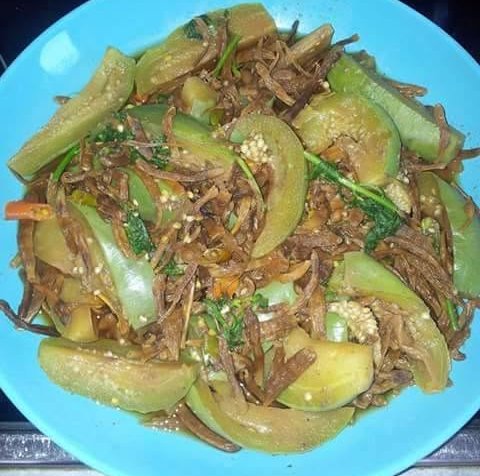
The one dish I kept seeing in recipes and field notes is Bamboo Shoot Curry, or Chongphak. Young bamboo is sliced thin, fermented for a day, then cooked with dry fish and chili. It’s sour, smoky, and nothing like the the Nigerian stews we are used to. I eat tuwo with miyan kuka. Miyan kuka is a Hausa soup prepared with dried baboo leaf.
Food is an important element of Marma cultural identity. Food culture of every country varies according to many special recipes and specialties for which that country is famous for.
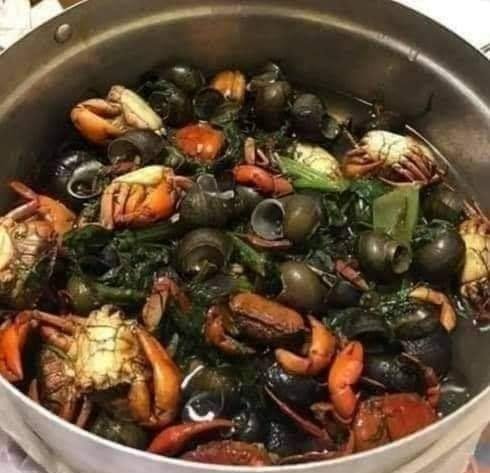
Marma cuisine reflects the natural resources of the hill regions and neighboring Southeast Asian influences.
Staple Foods of the Marma People
Common staple foods: Rice, Vegetable, Fish, Meat and Bamboo shoots. So much of our lives is built around rice.
Following are Popular Marma Dishes
1. Nga Pi
A fermented fish pastes widely used in cooking.
2.Curry with Bamboo Shoot.
Made with young bamboo shoots and authentic locally-grown spices.
3. Vegetable Soups
Healthy, wholesome soups of wild forest vegetables and herbs.
4.Smoked Fish
Many marma groups still enjoy it as part of the culture.
5. Sticky Rice
Often served during religious ceremonies and festivals.
Traditional Drinks
It is common to produce the traditional drinks for particular celebrations, functions and cultures on occasion in some cultures.
Marriage Traditions of the Marma People
Marma weddings are community events, not just couple event.
The wedding is usually starts with the Karbari, the village head, giving permission. Then the groom’s family brings sinnai, they are gifts like rice, clothes, and money to the bride’s house. If the elders of the accept it, the date is set for the wedding.
Then on the wedding day, the bride wears a handwoven thami and angi in deep red or black with silver ornaments. The ceremony is Buddhist, led by a monk and ends with both families sharing rice wine and Pitha.
Marriage among the Marma people is both a family and community affair it is beyond man and woman affairs.
With its stress on respect, familial ties and custom traditions traditional unions.
Dating (courting)
Youngsters may interact for these kinds of explanations: Community and civic organizations Church and other community houses Festivals and fairs via their households. With respect to their marriage, this type of going at the approval of the one for trial should be important.
Marriage Consultations
Before getting married, most families will meet down and discuss things. A lot of these meetings are all about planning the wedding. Every household has her/her own duty, and one has s many thing one have to keep in mind. Generally, every conversation leads to the task assignments to every family member in the discussion and all other essential arrangements that need to be made and handled.
Wedding Ritual
The general aspects in a traditional Marma wedding involves: A prayer in name of deities to seek divine assistance, The Buddhist ritualist praying and blessing the couple, the group lunch (ceremony feasting) the wedding feast, The festive of traditional music and the cultural dance.
Some monks will be present there to pray to the deities and to ask for their divine blessing.
Marma Marriage Values
In terms of values, Marma marriage stresses: Family relationships Community relations Individual mutual relationships Commitments of commitment of marriage It remains relevant till date.
Festivals of tthe Marma People
Festivals contribute some of the liveliest cultural expressions of the Marma people.
The most important celebration is Sangrai Festival.
Marma People’s Sangrai Festival is the most significant festival.
Sangrai is the Marma people’s traditional New Year Festival.
It usually takes place in April and marks the beginning of a new year according to their own traditional calendar.
The Marma festival is the biggest festival for the Marma people. And they love and cherish it.
History of the Sangrai Festival
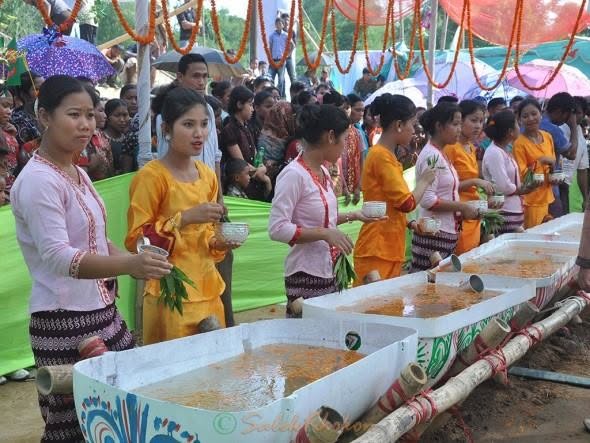
Sangrai, one of the Marma festival, it is the celebration for the Marma New Year, cannot be described without mentioning water. Every April for 3 days people flock to the streets to throw water at each other. Young, old and strangers and nobody remains dry.
The first day is for cleaning homes and Buddhist temples. The second day is real water throwing, which elders of the Marma say “washes away last year’s bad luck.” In day 3 of the festival, families serve Pitha and rice to monks and visit elders to receive blessings.
TheSangrai festival has originated from the Buddhist tradition as well as Southeast Asian cultures and customs. The Sangrai festival also represents; renewal, purity, good luck, prosperity and community unity.
It is the culmination of the old year & the start of a fresh one. The day also serves as an occasion for a glance at the year gone by and an appeal for boons and blessings for the years to come.
The Top things to do in Sangrai
1) Water Splashing Party
This is one of the iconic elements in the Sangraai water festival! People splash water on each other to signify: cleansing badluck and cleansing of bad energy. making anew start. It brings ourfestive ambiance to everybody.
2) Religious Rites For Buddhists
The family visits to the Buddhist temples so they can pray, make food donations, get religious teachings and obtain blessing from the monk. Others who practice their faiths pray there in their temples where all the rituals are held.
3) Families Get Together
There’s a whole mass of families from lots of origins who all turn out to join in with there individual traditions.
4) Traditional Programs
They are usually held at the community centers. Folk dance Musical presentation Cultural presentation Traditional games.
5) Community feasts
The communal meals consist of families and visitor’s meals that is cooked as a big banquet.
Sangrai Traditional Foods
The traditional dishes are cooked by the community members especially during the time of the celebrations such as Sangrai in the Eastern part of India. The main foods prepared are Sticky rice Food in fish, food in curry Vegetable Food in sweets Traditional Foods for the season Seasonal fruits. The main foods prepared are Sticky rice Food in fish, food in curry Vegetable Food in sweets Traditional Foods for the season Seasonal fruits.
There is said to be an important element of food sharing in this festival. We eat till we are full. This is the beauty of it all.
Traditional Costumes During Sangrai
Participants often wear colorful traditional clothing especially their attire during the Sangrai festival and this is how they are categorizes between men and women. Women wear : Lovely woven skirts, Decorative blouses, Jewellery, etc.
You Can Also Read: 10 Interesting Facts About African Culture You Should Know
Men: They wear traditional sarong and some Cultural cloth and so on .
The pretty colors makes the celebrations even more gay and joyful.
Why we Should Celebrate Sangrai Festival This Time!
Today In Bangladesh the Sangrai festival continues to represent Marma culture and heritage as. It is that enables the culture to survive. Passed on, learnt and shared by the younger generation. And gradually is the regarded as a cultural attraction of Bangladesh.
Social Structure of the Marma Society
The Marma society usually consists of:- Respect for the elders – Community living – Devotion to the religions – Responsibility towards the family
Village leaders and respected elders often help resolve disputes and maintain harmony in order to bring peace in their communities.
Community participation will never stop to occupy an integral part in our life.
Economic activities
Most of the Marma communities is depends on agriculture. Common occupations are: Farming, Horticulture , Fishing Handicrafts, Small-scale trading
Although many Marma individuals today also work in:
• Education
• Government services
• Tourism
• Business
• Professional sectors
Education has contributed significantly to social and economic advancement of the Marma people.
Problems faced by the Marma People
Like most ethnic communities Marma too has to deal with problems like; Preserve culture, Land issue, Economic development , Education facilities and Modem society pressure
Despite these challenges, community organizations continue working to protect Marma traditions and cultural heritage.
The Future of Marma Culture
The Marma culture is going to last as long as we preserve their identity, ethics and values because it plays an immense role to sustain those very values. Presently, their efforts are being made at several fronts which are: Cultural education, Preservation of the language, Promotion of festivals, Traditional art and crafts, Active involvements of the youth.
In Bangladesh as the increasing trend towards recognizing their own indigenous roots may offer the preservation of indigenous culture, and even create wider general awareness.
Conclusion
In the land of Bangladesh several tribal communities of tribes live such as there exists the history of a certain tribes like the Marma community with great historical significance.They are descendants of emigrants from Arakan in Myanmar, who have brought their distinctive life and style – their religion (Buddhism), their festivals and rituals, peculiar diet and colourful attire, not to forget the great familial Bonds they possess. And this have stand them out in South Asia and the world. Sangrai festival organize in April they celebrate every year. Celebrations in the way of joy, unity and Marma spirit take place for days. The people, through the Marma language, the exquisite food, marriage practices, and religious rituals all keep their way of life flowing from parent to children.
As a developing nation celebrating cultural diversity, the customs of the Marma culture are a key part of the culture of Bangladesh and a contribution to the culture of Asia and South Asia. Hope this article is so helpful? Keep visiting our website for this and many more. Cultural showcase is s our priority in Kunzaar. We loved sharing cultural heritage to our readers. Better world & Better society if you and every tribes around us will adopt and accept the culture and tradition of each others.
Habila Ibrahim
Habila is a cultural researcher in Abuja, Nigeria. He writes about world cultures because Nigerian and other readers deserve to see themselves in global stories.
This article used Bangladesh Cultural Survey records and Marma oral histories.