
By Habila Ibrahim | Last Updated on July 9, 2026.
Introduction
I was imagining it as a stadium so big it held 50,000 people. You will not see anything like phones or TVs there only just sand, swords, and roars. That’s the Colosseum.
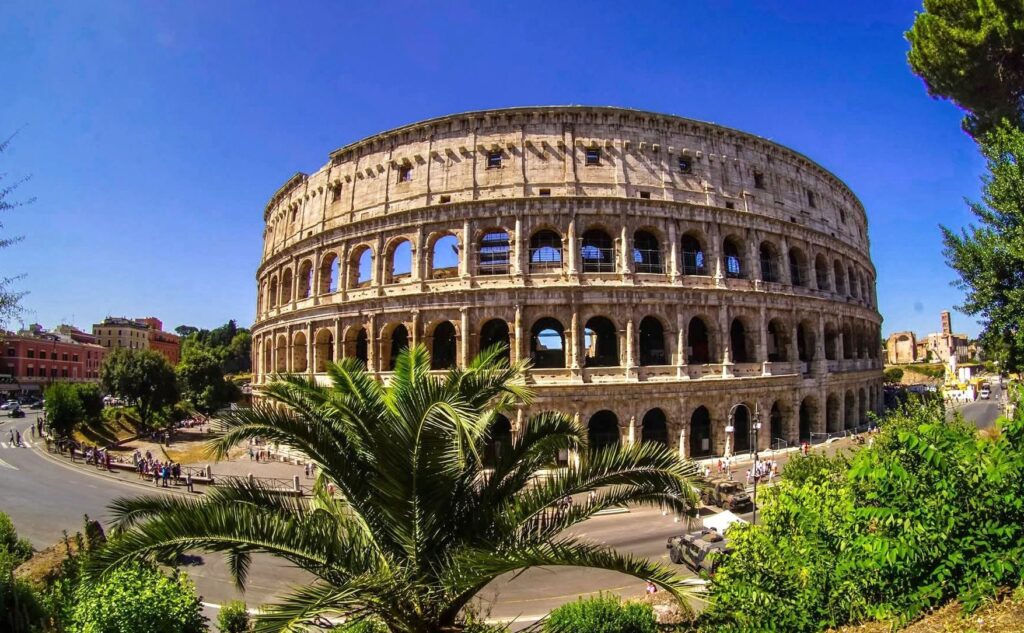
The Colosseum (or Flavian Amphitheatre) is in Rome, Italy. Built around 70-80 CE by emperors Vespasian and Titus. It’s as old as some Nigerian monarchies.
What Happened There?
Not just gladiators vs. animals. Just think:
Munera (gladiator shows) with Thracians vs. Secutors
Naumachiae (mock sea battles) with real water
Public executions (not the fun part)
Where the crowd will screamed “Morituri te salutant!” which mean, (“Those who are about to die salute you!”) That’s most of the questions been asked. Emperors came to be seen.
This atmosphere remind me of the Akwete cloth festivals where wrestlers show strength.
The Question is, How was it Built?
Built with travertine stone, concrete, and 100,000 Jewish slaves. 8 years, 1 emperor, 1 icon. Rome wanted to say: “We rule.”
The Colosseum Today
Tourists flood it. Couples take selfies where gladiators fought. At night, it’s lit up the entire area like a ghost.
This amazing cultural and historical landmark of one of the 7 World Wonders is one of the most widely-recognized cultural and historical landmarks the world over. Situated right in the middle of the city, this incredible structure, which is widely believed to have been completed in 70 AD, is a true testament of the sheer ingenuity, power and creativity of the mighty Roman Empire.
The Colosseum has fascinated historians, tourists and archaeologists for almost 2,000 years. Once the arena of ancient Roman entertainment-the place of gladiator games, animal hunts, mass exhibitions, and plays – a couple decades ago.
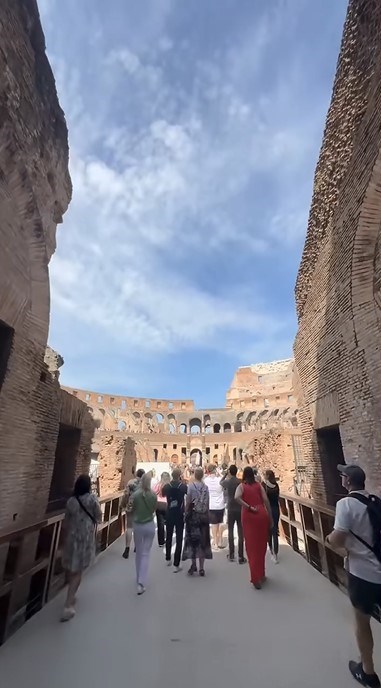
Today the Colosseum, one of the most visited monument in the world, stands tall as the emblem of the life of culture, politics and religion in the Roman ancient world. Many people are visiting the city to see for themselves what human hands has created decades ago and still standing.
Also Read: Mexican Traditions: Day of the Dead Explained
This article is designed specifically to cover the history, origins, cultural significance, architecture, and events celebrated throughout history of the Colosseum and interesting facts you must know.
Where is the Colosseum Located?
The Colosseum can be found in the old town of Rome, the capitol city of Italy. It sits just east of the Roman Forum and near the Palatine Hill, two other important ancient Roman landmarks.
The location helped The Colosseum become the pulse of Rome for the most of it’s public life in Rome. Its strategic placement made it accessible to thousands of citizens who gathered there for major events year-in year-out.
The Colosseum is now the symbol of one of the most visited countries and was recognised as the part of the UNESCO World Heritage of the Historic Centre of Rome.
Origin of the Colosseum
So began the odyssey of the Colosseum. The Colosseum was built by Roman Emperor Vespasian somewhere between AD 70-72 during the rule of the Flavians. His son, Titus completed the works in the year 80AD and subsequent works would be commissioned under Emperor Domitian.
It used to be known as the Flavian Amphitheater because it was dedicated to the Flavian Emperors who built it.
This Amphitheater was constructed on the site of a lake in the luxurious palace of the Emperor Nero which is referred to as the “Golden House.”
By building this amphitheater in this place, the emperor made this place as Rome’s possession instead of becoming his expensive palace.
Why is it Called the Colosseum?
Although the Flavian Amphitheatre, as it was initially known, wasn’t quite called the Colosseum until much later.
It is thought that this name came from a huge statue, named the Colossus of Nero, that had been standing near the Amphitheater. The vast bronze monument showed the Emperor as the god of Sun.
Gradually, the Amphitheater got to be known as Colosseum, which literally means the building near the colossal statue.
The term started being used in historical sources since the 8th century, many years after the decline of the Roman Empire.
A Crucial Distinction: The Colosseum vs The Forbidden City it can be a case of some people incorrectly putting the Forbidden City and the Colosseum on the same list or confusing the two for some reasons. However, these two landmarks are completely different in location and country and also in purpose.
The Forbidden City is a vast imperial palace complex in Beijing, China that was built during the Ming Dynasty and the Qing Dynasty, whereas the Colosseum is an Amphitheater constructed for the purpose of public entertainment in ancient Rome, Italy.
Read About: The Forbidden City
Architectural Design of the Colosseum
The Colosseum is often called one of the greatest architectural structures of Ancient Rome.
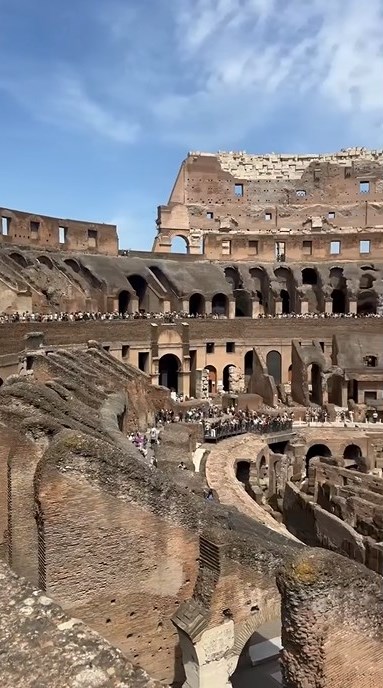
It’s believed as many as 50,000 – 65,000 could have been seated in the stupendous theatre. So far, no other amphitheatre build inside the Roman Empire could contain more than that figure.
Structural characteristics the building has been a monument for millennia are:
1. Elliptical Shape
The Amphitheatre was built in an oval shape to ensure that spectators had a clear view of the arena from every seat. Some are of the opinion that, it is from this designed that the idea of building a Stadium in an oval shape derived from.
2. Multiple Levels
The Colosseum had four levels; each designed for different social classes such as:
• Senators and nobles sat closest to the arena.
• To each side are the Romans in their separate sections middle.
• Women and lower classes are perched up top in the top seats.
3. Underground Chambers
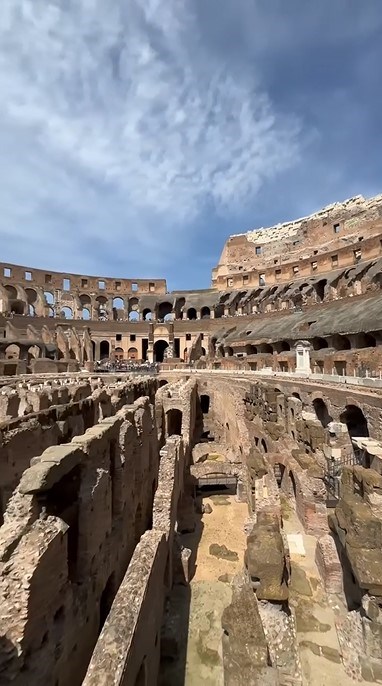
Underneath the arena there was an intricate system of underground passages known as the hypogeum.
It consisted of a series of tunnels and cages which held animals, gladiators, and props before being elevated into the arena.
4. Retractable Roof
There was also another massive cloth roof, called the velarium, which provided shade for observers from the sun.
Sailors in ancient Rome controlled the velarium by tugging on ropes to spread it out over the Colosseum.
Games and entertainment in the Colosseum
The Colosseum was most known for its deadly but entertaining public spectacle.
Some of the best-known events in the Colosseum were the gladiator combat; where skilled warriors were trained and fought either each other or animals that had been brought in. The place was full with their different events then.
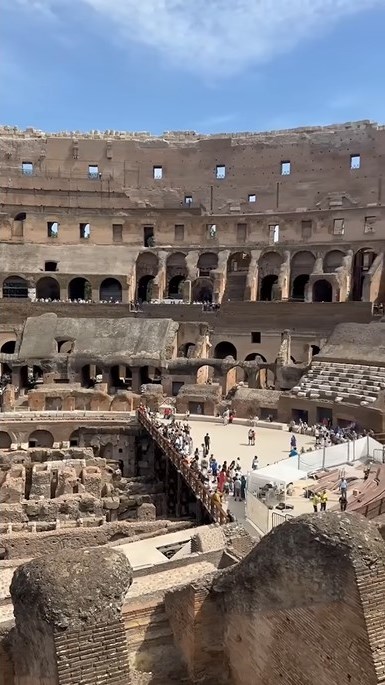
There were still many willing soldiers for the sake of popularity and profit however. Aside from gladiator fights, the Colosseum was used for activities like: The chase of wild animals, or venationes; Executions and myth reenactments and Naval wars have been held in the arena at one point in time.
These occasions were put on by the Roman emperors to satisfy the general population, and to further gain political favor.
Cultural Significance of the Colosseum
In terms of being an heritage structure the Colosseum was not simply a battle place. This was likewise as a powerful sign in the Italian society as well as society.
It was a center where these games highlighted Roman culture with such as: military strength , social hierarchy, political power and public spectacle.
By this time the Roman empire was the strongest country of them all. The Roman rulers used these events to help win public favour. Games and amusements were used to ensure satisfaction and loyalty of people to the empire.
To-day the Colosseum is used as symbol connected with the legacy linked to culture by Roman Ancient.
Festivals and Cultural Ceremonies Related to Colosseum
Festivals and ceremonial ceremonies involved playing games in Colosseum at different periods of time.
These ceremonies were usually held during Roman festivals or to mark victories of the Roman army.
Some celebrations included:
Triumph Celebrations
Victorious generals were honored with grand parades and games that sometimes-included events at the Colosseum.
Royal entertainment
For any public occasions or public holidays such as an emperors anniversary, some special entertainment was put on by the emperor.
Religious Festivals
Public entertainments that Roman citizens attended for religious festivals in honor of particular deities.
The Decline of the Colosseum
The rise and fall of empires usually reduced their relevant to other parts of the world. After the fall of the Western Roman Empire in AD 476, the Colosseum gradually fell into decline.
And to this end, the Emperor Honorius officially abolished gladiator battles in the early fifth century.
The building was in course of time damaged by:
• Earthquakes
• Stone thieves who took materials for other buildings
• Abuse and neglect
Despite this, large parts of the structure still exist up till today.
The Colosseum in the 21st Century
On any one day, more people visit the Colosseum in Italy than many other of the great sights of the world. This ancient monument is visited by millions of people every year in Rome, Italy.
The Colosseum was designated one of the New7Wonders of the World in 2007 and is considered to be one of the greatest achievements of mankind.
The monument is carefully preserved and studied by archaeologists and historians to prevent it from been damage completely. That’s why they are doing anything possible to make sure that they preserve the building from total collapse.
The Italian government also uses the Colosseum as a global symbol for campaigns against capital punishment. When a country abolishes the capital punishment the memorial site will be illuminated.
Interesting Facts About the Colosseum
Here are some fascinating facts about the Colosseum you need to know which include:
• It took about 10 years to build.
• Some people thought over 60,000 Jewish slaves had helped build it.
• The arena floor was originally made of wood covered with sand.
They had 80entrances to give access and egress so that the crowds could disperse quickly.
• Arena is Latin for ‘sand’, harena.
Tourism and Visiting the Colosseum
The Colosseum remains one of the most important tourist attractions in Italy.
Visitors can explore:
• The main arena floor
• Underground chambers
• Upper viewing terraces
• Nearby archaeological sites
Hope you are planning to visit Rome, the Italian capital to see for yourself the Colosseum because the Colosseum is part of a historic complex that includes the Roman Forum and Palatine Hill.
Combined, the site locations provide a full snapshot into the day in the life of an ancient Roman.
Restoration and Conservation
In history the Colosseum has gone through numerous renovations and preservation attempts over the centuries.
A significant amount of conservation work for the colosseum dated to the 18th and 19th century, these are still in effect.
It is up to a range of groups, including the government of Italy, to work together to protect the ancient remains of the monument, not just from the elements, but also from millions of tourists and from the damaging effects of pollution and modern environmental change.
It is this type of work that means it can live for centuries and provide further research and education into a spectacular form of history for many years.
Conclusion
In the Colosseum as we know it today is not simply one part of ancient world history. It’s the monument that represents all the ambitions and creativity and might of Roman Empire.
It has a rich and long-lived history, beginning under Vespasian, right to its current place in our modern world.
It is also a tourist destination where people comes from different parts of the world to see for themselves this magnificent building of old that is still standing up till today.
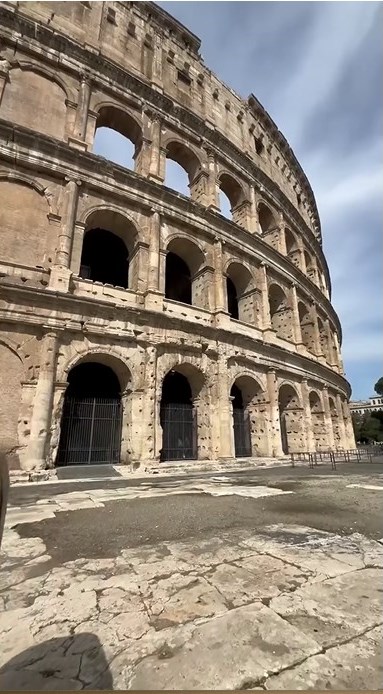
This arena was once where gladiator fights to the death were held, and where actual ship battles, yes Ship Battles!, took place is an ode to human will, architectural beauty and an enduring culture. And don’t for one second you forget your culture, culture, as you know it, is what it is and should never be outcasted. For scholars, adventurers and for enthusiasts, culture aficionados the coliseum just always and forever has a great tale to spill on the world’s iconic Rome and its influence.
Hope this post is helpful? Keep visiting our website for this and many more as keep educating and enlightening us about some cultural existence of many years ago and our cultural heritage that shaped the world today.
Habila Ibrahim
Habila is a cultural researcher in Abuja, Nigeria. He writes about world heritage so Nigerian readers can see global stories.
This article used UNESCO, Rome Tourism, and ancient Roman records.
Good a blog toper