
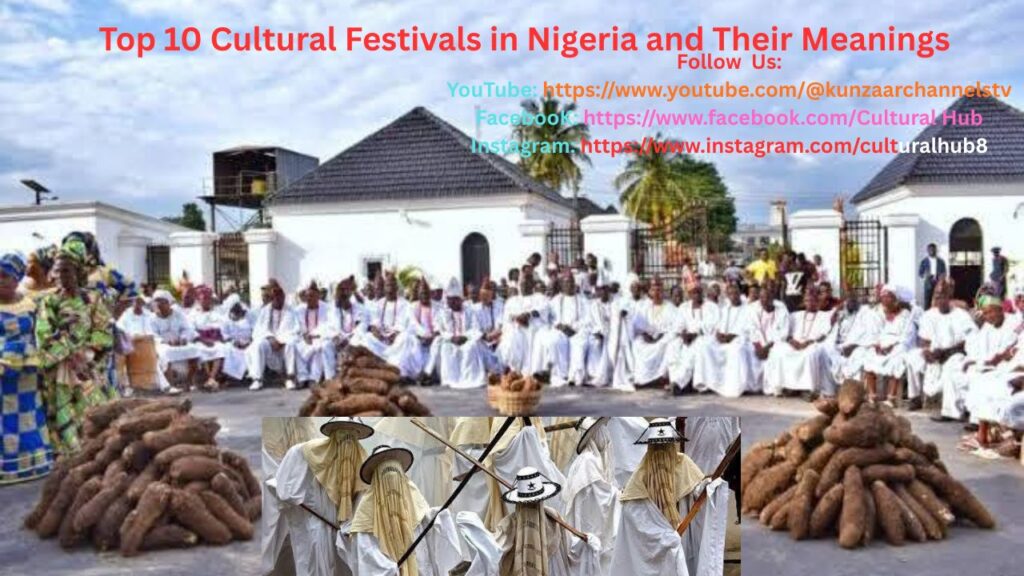
By Habila Ibrahim, Abuja | Last Updated on August 18, 2026.
Introduction
Nigeria is country in which the culture is not just remembered or revered, but is in fact; alive and in practice everyday.
From the northern cities where royal horsemen ride in colourful processions, to the southern communities where people gather to honour kings, deities, ancestors, harvests and long-standing traditions, Nigerian culture comes alive in many different ways. Among the most beautiful expressions of this cultural diversity are our festivals.
One of the interesting things about travelling through Nigeria’s cultural history is my discovery that each community has a story to tell, for me, at least. And sometimes that story goes by music and dance. It is seen through people’s clothing at different times, sweets, prayers, coronations, harvest fairs or forfeit competitions.
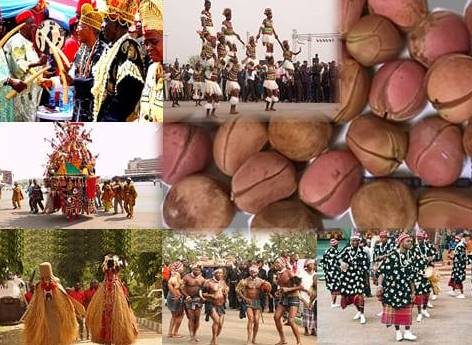
Nigeria is home to hundreds of ethnic groups, languages and traditions, so it is almost impossible to talk about every festival in one article. However, some festivals have become particularly well known, attracting visitors from different parts of Nigeria and, in some cases, from outside the country.
In this article, I take you on a cultural journey through 10 important cultural festivals in Nigeria, looking not only at what happens during each celebration but also at the meaning behind the festival.
1. Argungu Fishing Festival -Kebbi State
While we talk of some Nigerian celebrated cultural festivals, one that really comes to mind is Argungu Fishing Festival.
The festival, which is celebrated in Argungu, Kebbi State is intimately related to the fishing pursuits of the people in the surroundings of River Argungu. Initially it was just a cultural affair but today it is one of the many important traditional events for Nigerians.
One of the really cool bits is the fishing competition. So thousands of people stand and watch the fishermen go into the river using the traditional methods of fishing. It is difficult to describe the ambience unless one have been- the society, the bustle, the customary exhibition, the excitement to see who slips the biggest fish.
What does the Argungu Fishing Festival mean?
The festival represents community, peace, unity and the importance of fishing to the local economy and way of life.
In addition to the competition, the Argungu festival also reminds the younger generation of the usefulness of the river and fishing.
Also Read: Argungu Fishing Festival in Kebbi State, Nigeria
The festival also provides an opportunity to participate in cultural activity, to view traditional activities and to interact as a community.
2. Durbar Festival – Northern Nigeria
Durbar Festival is a very famous cultural festival conducted in the northern part of Nigeria.
It is closely related to Hausa traditional establishments and is usually performed at major Islamic holidays, including the Eid al-Fitr and Eid al-Adha.
The sight of beautifully decorated horses, traditional riders, royal processions and people dressed in magnificent traditional clothing makes Durbar a remarkable cultural experience.
What does the Durbar Festival mean?
Durbar symbolizes royalty, glory, leadership, dignity, courage and cultural pride.
It is not for any decorative parade that the horsemen and traditional rulers are gathering. Their appearance reflects a long history in which horses played important roles in northern societies, particularly in traditional leadership and military history.
For many communities, Durbar is therefore both a celebration and a reminder of their historical identity.
3. Eyo Festival – Lagos State
Lagos may be widely known for its energetic modern way of life, however, there may be likewise an ancient undercurrent of Yoruba cultural influences in its lively roadways.
The most prominent, widely popular and perhaps the most significant of all the traditional festivals associated with the city of Lagos, are collectively referred to as the Adamu Orisa Play and also referred to as the ‘Eyo’.
The festival can be identified by those who participated in the festival were wearing white flowing robes and wore some kind of headpieces. With these kids on the streets in groups it can totally feel like a different world.
What does the Eyo Festival mean?
The Eyo tradition is associated with a specific cultural heritage of the Yorubas and it has been in the past linked to significant events such as celebrations and the commemoration of illustrious persons.
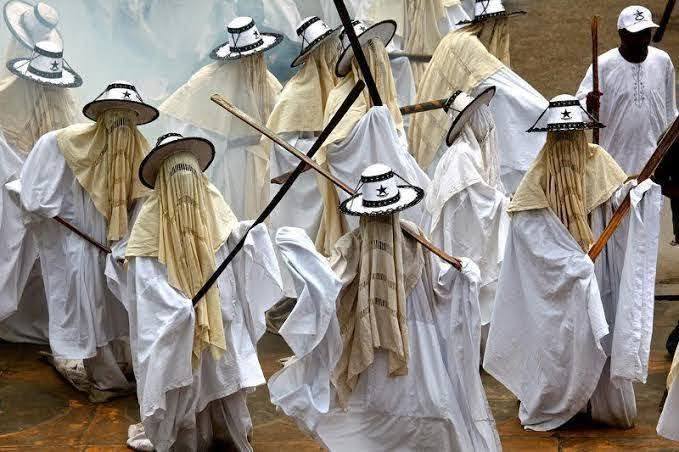
The white-clad Eyo participants offer a singular visual experience, but the festival offers more to visitors than just what they see in the street.Lagos is an expression of the Lagosian identity and of their historic link with Yoruba heritage.
Eyo is a good demonstration, for me, of how an old cultural establishment may be retrievable, even in one of the biggest and most urbanised cities in Africa.
4. New Yam Festival – Igbo Land
No foods are closer to the culture of southeastern Nigeria than yam.
The New Yam Festival, widely observed in Igbo lands to celebrate the New Harvest, is one of the major agricultural festivals observed in the region.
While there are celebrations of the new yam in other Nigerian communities, the festival is most closely associated with Igbo culture and traditional way of life.
What does the New Yam Festival mean?
The festival represents thanksgiving, harvest, hard work, community and the beginning of a new agricultural season.
For rural households, harvesting yam means something more than the food being on the table. It represents months of labour, hope and expectation.
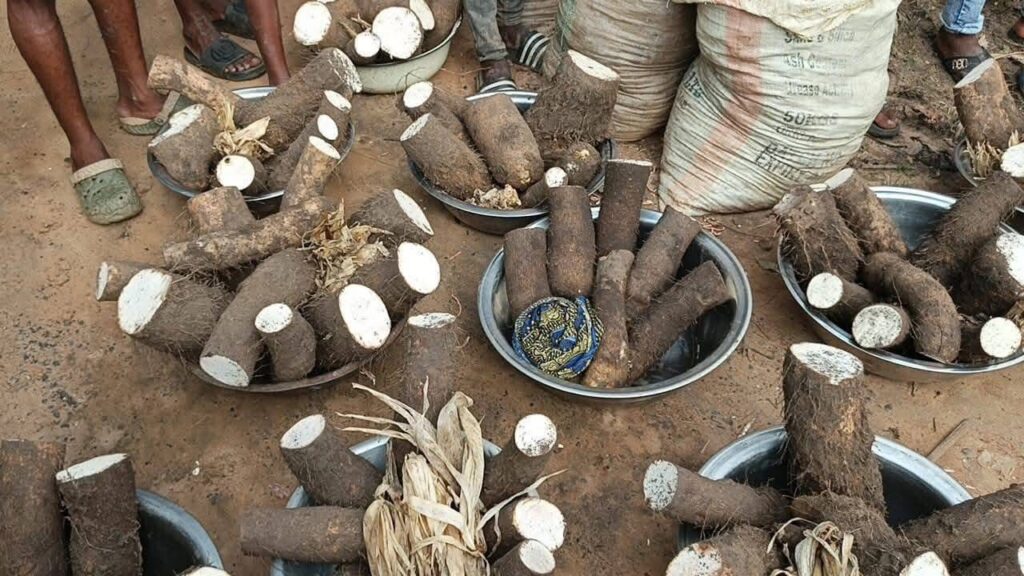
Families and communities gather to eat, dance, pray, honour traditional institutions and celebrate the success of the farming season during celebrations.
The festival therefore also offers a chance for younger folk to familiarise themselves with the agricultural heritage of their forefathers.
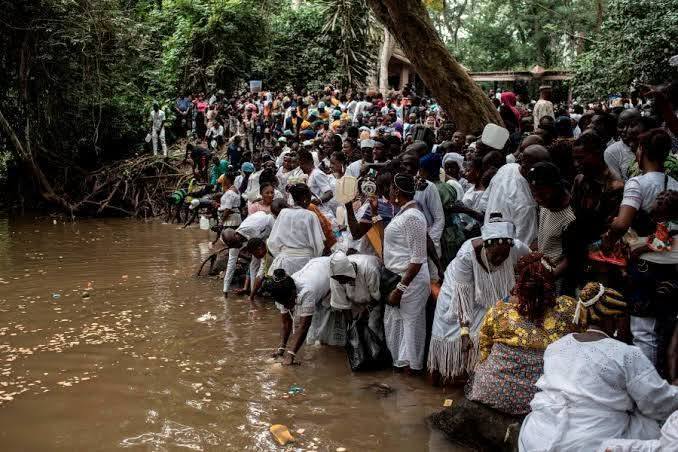
5. Osun-Osogbo Festival – Osun State
The Osun-Osogbo Festival is the most internationally known of the traditional festivals of Nigeria.
The location is in Osun State Osogbo. The Osun River in Osun and the Yoruba people and Yoruba spiritual traditions.
The festival attracts worshippers, cultural enthusiasts, researchers, tourists and visitors from different parts of the world.
What does the Osun-Osogbo Festival mean?
The festival is associated with Osun, a Yoruba deity connected with fertility, water, healing and protection.
For those who participate in the spiritual traditions surrounding the festival, it is a time of devotion, prayers, thanksgiving and renewal.
In addition to its spiritual meanings, the festival has become an important emblem of the cultural heritage of the Yoruba and has attracted international awareness towards the cultural history of Osogbo.
We are reminded that Nigerian culture is more than clothes and dancing. In addition to that, spiritual values, holy places and traditional knowledge exist that all have significance in the tapestry of our tradition.
6. Ojude Oba Festival – Ogun State
The Ojude Oba Festival Ojude Oba is probably the most colourful festival in celebration among people of Ijebu in Ogun State.
The name is readily related to payments in the tradition to the oba.
And one of the best features of Ojude Oba is the wonderfully rich, varied display of fashion. Families, age groups and social associations often appear in coordinated and carefully designed outfits.
What does Ojude Oba mean?
At its heart, the festival represents respect for traditional leadership, unity, identity and community pride.
This provides a file opportunity for the people to return to their ancestral home, to meet conjoined family and friends, and to pay homage to the traditional ruler.
The festival has also become an important cultural and fashion event, thus reflecting that traditional festivals can also change with the times but keep their traditional roots.
7. Igue Festival – Benin Kingdom, Edo State
The ancient Kingdom of Benin has a rich tradition; among these traditions is Igue Festival that is closely associated with the Benin royal institution.
The festival which is celebrated in Benin City, Edo State is closely related to the Oba and the Benin culture and spiritual life.
What does the Igue Festival mean?
The festival is associated with spiritual renewal, blessings, protection and the wellbeing of the Oba and the kingdom.
This is a signifying that denotes the important role of the traditional ruler in Benin culture and the opinion that the wellbeing of the kingdom is associated with the wellbeing and the spiritual power of its people.
Igue is therefore more than a public celebration. It’s full of history, spiritual significance passed on thru generations.
8. Ofala Festival – Igbo Land
The Ofala Festival is another important traditional celebration in southeastern Nigeria.
It has a particular association with traditional rulers of the Igbo people and is celebrated in many communities including some communities in Anambra State.
Public appearances of the traditional ruler, after a period of seclusion or withdrawal, are often used to mark the festival.
What does the Ofala Festival mean?
Ofala represents royal authority, renewal, tradition and the relationship between the traditional ruler and the people.
During the festivities and celebrations the king appears in his traditional costume and partakes in the festivities in the company of his people.
It is also an opportunity for members of the community living at home and abroad to return, reconnect and celebrate their common heritage.
Thus, simultaneously, Ofala has a traditional and a social function.
9.Calabar Carnival – Cross River State
If you are looking for a Nigerian festival filled with music, costumes, dancing and entertainment, the Calabar Carnival immediately comes to mind.
Held in Cross River State, the carnival has become a first-class annual cultural and entertainment event in Nigeria.
Sometimes it is popularly referred to as “The World’s Largest Street Party.”
What does the Calabar Carnival mean?
The carnival promotes culture, creativity, entertainment, tourism and unity. One of the best features of this festival is the colourful costumes of the participants. Music, dancing, performances and decorated floats transform the streets of Calabar into a huge celebration.
You Can Also Read: The Deadly Alkaline Lake With a Hidden Secret of Life
This carnival also reveals how cultural events could be of a benefit for tourism and offer new opportunities for artists, entertainers, the business sector and the youth.
10 Ovia-Osese Festival – Kogi State
The last stop of our journey is Kogi State where the Ogori people celebrate the Ovia-Osese Festival.
The festival plays an important role in the cultural life of the Ogori community, and is usually associated with the transition of girls into womanhood.
What does the Ovia-Osese Festival mean?
The festival emphasizes morality, responsibility, cultural identity and preparation for adulthood.
This is also an opportunity for members of the community to transmit cultural knowledge and values to their successors.
Like a lot of traditional festival, the Ovia-Osese doesn’t just revolve round entertainment. It is the expression of the community’s perception of family, maturity, responsibility and the value of preserving its identity.
WHY are Cultural Festivals Important in Nigeria?
Once we see people dancing, wearing bright clothes or crowds of people gathered for a festival, we may see only the entertainment.
But usually there is a much deeper story behind the celebration.
Nigerian cultural festivals help us to:
Preserve History
Festivals keep stories, traditions, rituals, music and customs alive. They offer younger generations a glimpse of what might have been, and the lives of those who lived before them.
Strengthen Community
Most celebrations lead to communities or family come-to-gatherers. Those who live in other town or city, sometimes in other country, come home for important cultural festival.
Promote Tourism
Festivals may pull visitors from elsewhere in Nigeria and abroad. This can create opportunities for hotels, restaurants, transport operators, artisans, traders, photographers and other businesses.
Encourage Cultural Pride
A festival can make people proud of where they come from In an unsettled world this is a good deal to be proud of.
Pass Culture to Younger Generations
It may be true that one of the most advantages of a cultural fair or festival is enabling kids, even those born far away from their ancestral lands, see their own culture in place of simply read about it in history books.
A child who witnesses a ceremonial parade or hear ceremonial music and/or witness old ones practicing or carrying out the dance of cultural rite has greater bonding to their own culture.
Nigerian Festivals in a Changing World
Nigeria is changing rapidly.
Social media, technology, urbanization and globalization have changed the way people communicate and even how younger Nigerians understand culture.
That doesn’t mean, though, that change is the cause of death of culture.
Indeed it can and has become for me a vital mechanism to maintain and showcase our heritage.
A festival that was once known only within one community can now be photographed, recorded and shared with people around the world. Young Nigerians can use platforms such as Facebook, Instagram, YouTube and TikTok to tell the stories behind their festivals and introduce their heritage to a new audience.
That doesn’t mean, though, that change is the cause of death of culture.
So, either we take responsibility for telling our stories or someday someone will tell them for us, and they probably won’t do it correctly.
Conclusion
Festival-Culture does not mean anything beyond big dates on the calendar of the nation – Nigeria. They are living expressions of history, identity, spirituality, agriculture, leadership, family and community.
From the fishermen of Argungu to the royal horsemen of the North, from the white-clad Eyo participants in Lagos to the colourful celebrations of Ojude Oba and Calabar, every festival tells a different Nigerian story.
It’s in the part of these celebrations where there’s no fixed understanding of Nigerian culture. One of our strengths is our ability to deliver our promises, through our team of professionals.
As Nigerians, we should continue to document, celebrate and teach our traditions. But most importantly we all must ensure our next generation ask the questions, take us on the modern journeys and keep these stories ticking.
It is true that our culture cannot just ‘sit around on old photos or Grandpa’s recollections’. They should continue to live—in our homes, communities, festivals, schools, books and on the internet.
As if whenever something is remembered, honoured and handed down it lives on as a culture in.
About the Author
By Habila Ibrahim Cultural Writer/Researcher Founder, Kunzaar My journey with culture began almost naturally, a simple question about how diverse communities and groups interact, celebrate and teach their children. I have chosen these as areas of my platform and my own research with Kunzaar to share and learn around the world.
I write to make culture accessible and understandable for the students and scholars alike, the traveler and history buffs; to put the complicated history to work. Every culture should have a narrative, and every narrative makes one know one another a bit more.”
I want to help preserve those stories found in different cultures, and through my extensive research and simple story-telling, to make it easily accessible to people – so as to inspire them and enrich them into how diverse and lovely societies could be, so that they can explore the past.
I’m glad you’ve invested your precious time in my article and I hope you’ve come away feeling you’ve learned something today? There is so much more to discover and experience on our site here at Kunzaar – the land of stories, the home of culture.
Sources and Research Note
Cultural research, observations and editorial compilation by Habila Ibrahim, with reference to established traditions and publicly available information about Nigerian cultural festivals.