

Introduction
The Nepalese people are the heart and soul of Nepal, a beautiful Himalayan nation known for its towering mountains, ancient temples, and deep spiritual heritage. From the snow-covered peaks of Mount Everest to the fertile plains of the Terai region, Nepal is home to diverse ethnic communities united under one national identity: Nepalese.
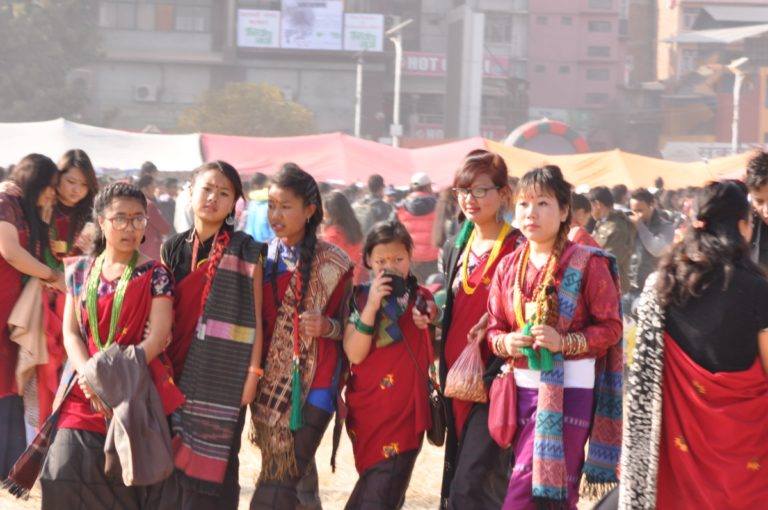
In this detailed guide, we will discover the history, origin, food, religion, festivals, culture, countries where Nepalese people can be found, and marriage traditions. This comprehensive blog post is fully designed to help our readers understand everything the need to know about the Nepalese people and Nepal.
Who Are The Nepalese People?
The term “Nepalese” refers to citizens of Nepal and the various ethnic groups living within the country. Nepal is located between India and China, making it a cultural bridge between South Asia and East Asia.
Also Read: The Krobo People
The Nepalese population is made up of many ethnic communities including:
- Chhetri
- Bahun (Brahmin)
- Newar
- Magar
- Tharu
- Tamang
- Rai
- Limbu
- Gurung
- Sherpa
All of the ethnic group mentioned above has their own customs, language, clothing, and traditions, yet they all share a national identity tied to Nepal’s history, festival and culture.
History and Origin of the Nepalese People
Ancient Civilizations
Nepal’s history dates back some thousand years ago. The Kathmandu Valley was once home to the Kirat dynasty, one of the earliest recorded ruling groups in Nepalese history.
Later, the Licchavi dynasty (around 400–750 AD) contributed greatly to art, architecture, and religious development. Many temples and inscriptions from this era still stand today. That’s because the keep preservation their cultural heritage from generation to generation.
The Unification of Nepal
Modern Nepal was unified in the 18th century by King Prithvi Narayan Shah. Before his reign, Nepal consisted of small kingdoms. He successfully unified these territories in 1768, forming the foundation of modern Nepal.
From Kingdom to Republic
Nepal was once the world’s only Hindu kingdom. However, after political movements and civil struggles, the monarchy was abolished in 2008. Today, Nepal is officially known as the Federal Democratic Republic of Nepal.
Ethnic Diversity and Languages
Nepal is one of the most culturally diverse countries in Asia. Over 120 ethnic groups and more than 120 languages are spoken.
The official language is Nepali, written in the Devanagari script. However, some communities also speak:
- Maithili
- Bhojpuri
- Tharu
- Tamang
- Newari
- Sherpa language
This linguistic diversity reflects Nepal’s rich historical development.
Religion Among the Nepalese
Religion plays a central role in Nepalese life.
Hinduism
The majority of Nepalese people follow Hinduism. Nepal was historically a Hindu kingdom, and Hindu practices deeply influence culture and daily life.
The sacred temple of Pashupatinath Temple in Kathmandu is one of the most important Hindu pilgrimage sites in the world.
Buddhism
Nepal is also the birthplace of Gautama Buddha, who was born in Lumbini. Buddhism is widely practiced, especially among ethnic groups like Sherpa, Tamang, and Gurung.
Lumbini, the birthplace of Buddha, is now a UNESCO World Heritage Site and attracts pilgrims globally.
Other Religions
Other religious practices among the Nepalese are Islam, Christianity, and indigenous beliefs are also practiced, though in smaller numbers. Religious harmony is a strong feature of Nepalese society.
Nepalese Food and Cuisine
Nepalese cuisine reflects the country’s geography and ethnic diversity.
Dal Bhat – The National Dish
Dal Bhat is the staple meal of Nepal. It consists of:
- Lentil soup (dal)
- Steamed rice (bhat)
- Vegetable curry
- Pickles
- Sometimes meat
It is eaten twice daily in many households.
Momos
Momos are steamed dumplings filled with meat or vegetables. They are influenced by Tibetan cuisine and are extremely popular across Nepal.
Other Popular Foods
- Sel Roti (traditional rice doughnut)
- Gundruk (fermented leafy greens)
- Thukpa (noodle soup)
- Dhindo (traditional millet dish)
Food plays a major role during festivals and family gatherings.
Nepalese Festivals and Celebrations
Festivals are central to Nepalese identity. They are colorful, spiritual, and community-based.
Dashain – The Biggest Festival
Dashain is the most important Hindu festival in Nepal. It celebrates the victory of good over evil, specifically Goddess Durga’s triumph over demons.
Families gather, elders bless younger members, and animals are traditionally sacrificed in some communities.
Tihar – Festival of Lights
Tihar is similar to Diwali in India. It honors animals like crows, dogs, cows, and oxen. Homes are decorated with lights and oil lamps.
Holi
Holi, the festival of colors which originated from India and because of the Nepalese relationship with Indians, Holi festival is also celebrated with joy and excitement, especially in urban areas.
You Can Also Read: The Holi Festival In India
Buddha Jayanti
This festival celebrates the birth of Gautama Buddha and is observed by both Hindus and Buddhists.
Indra Jatra
Celebrated mainly in Kathmandu, Indra Jatra is a traditional Newar festival featuring masked dances and chariot processions. This September festival in Kathmandu is for honoring the rain god and the Living Goddess.
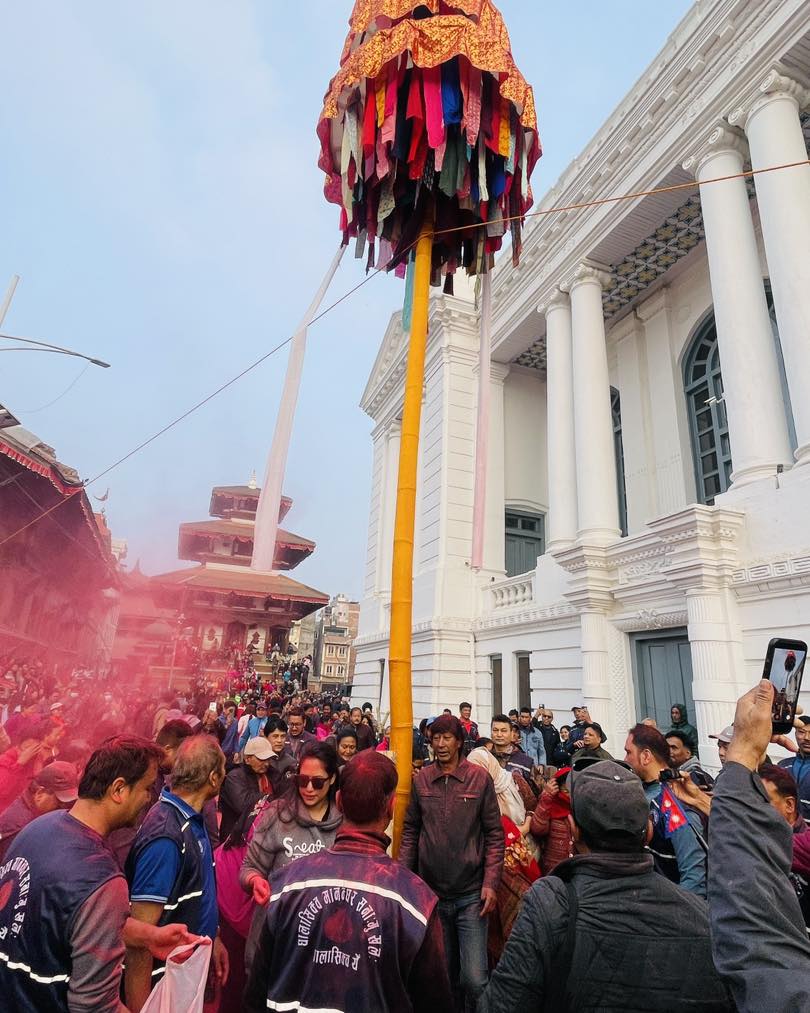
Bisket Jatra Celebration in Nepal
Bisket Jatra is one of the most well-known festivals of the Newar community. It is celebrated once every year in the historic city of Bhaktapur, Nepal. Although it is centered in Bhaktapur, the festival is also observed in nearby areas with their own unique rituals and traditions. Bisket Jatra takes place during the beginning of the Nepali New Year in the Bikram Sambat calendar. It marks the end of the month of Chaitra and the start of the new year in Baisakh.
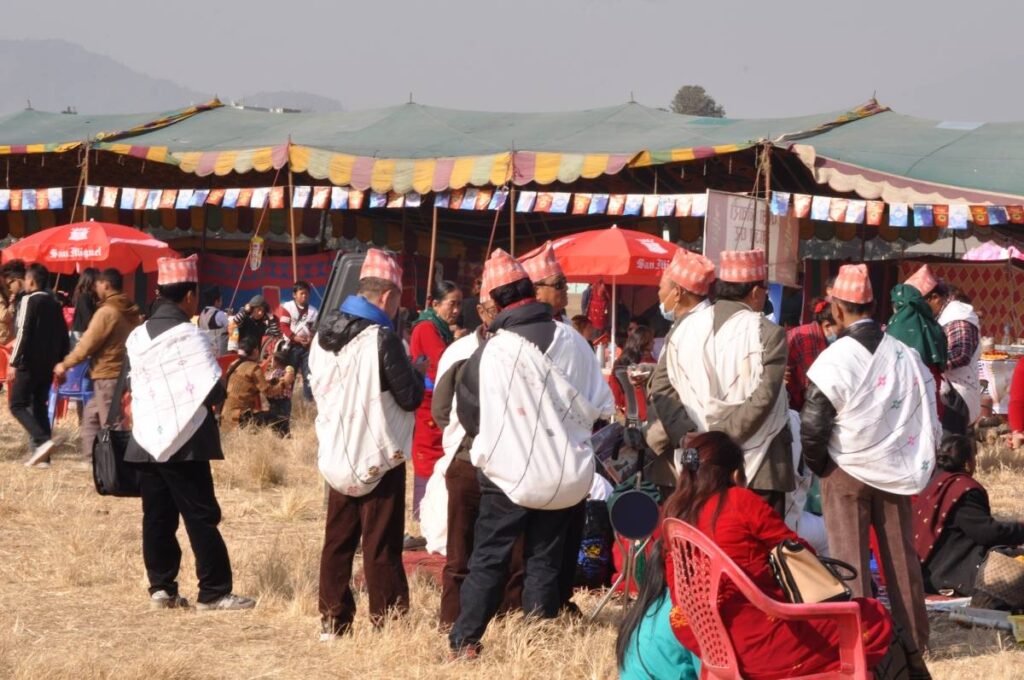
The name “Bisket Jatra” comes from the Newari words “Bi” and “Syaku,” which together are interpreted as “the laughter of the snake.” According to legend, the festival commemorates the death of a serpent. This vibrant and culturally rich celebration continues for eight nights and nine days.
The festival begins with the pulling of a massive chariot that carries the idol of Lord Bhairav. Hundreds of local residents gather to pull the chariot through the streets. A dramatic tug-of-war often takes place between the eastern and western sections of the town, as each side attempts to draw the chariot toward their area. Large crowds fill the streets, and traditional Newari Dhime music is played to enhance the festive atmosphere. The chariot makes stops at important traditional locations in the city, where devotees offer rice, coins, flowers, and sindur (red powder) to the deity. Eventually, the chariot is taken toward Khalna Tole in Bhaktapur.
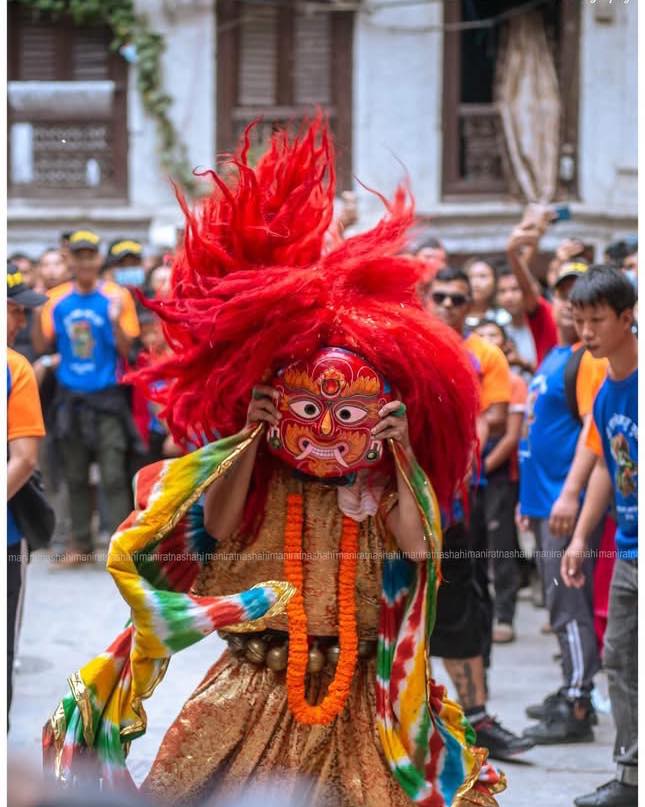
Another remarkable ritual associated with this occasion is the act of tongue piercing. A volunteer from the Shrestha family has his tongue pierced with an iron spike. He then walks around the town carrying a circular bamboo frame on his shoulders while holding a burning lamp in his hand, symbolizing devotion and spiritual strength. On the final day of the old year, a tall wooden pole, approximately 25 meters high, is erected at the edge of the town. The following day, groups of men pull the pole down in a thrilling and tense moment filled with excitement. It is widely believed that the successful completion of this grand festival brings prosperity and good luck to both the villagers and the volunteer who performs the sacred rituals.
Nepalese Culture and Traditions
Nepalese culture is a blend of Hindu and Buddhist influences.
Traditional Clothing
Men traditionally wear Daura Suruwal, while women wear Gunyo Cholo or saree. Ethnic communities have unique dresses, such as the Sherpa’s Chuba.
Music and Dance
Folk music and dances vary by ethnic group. Instruments like the Madal drum are widely used.
Architecture
Nepal is famous for pagoda-style temples. The Durbar Squares of Kathmandu, Patan, and Bhaktapur display intricate wood carvings and ancient artistry.
Marriage Traditions Among the Nepalese
Marriage in Nepal is both a religious and social event.
Arranged Marriages
Traditionally, marriages are arranged by families. Astrology often plays a role in matching couples.
Love Marriages
Modern Nepalese society increasingly accepts love marriages, especially in cities.
Wedding Rituals
Hindu weddings include sacred fire rituals and chanting of Vedic mantras. Buddhist weddings may involve monastery blessings.
Marriage ceremonies can last several days and include music, dancing, and large feasts.
Nepalese People Around the World
Due to employment, education, and migration, Nepalese communities can be found in:
- India
- Bhutan
- United Kingdom
- United States
- Australia
- Gulf countries such as Qatar and United Arab Emirates
Many Nepalese serve in the British Gurkha regiments and have earned international respect for bravery and discipline.
Tourism and National Identity
Tourism is a major part of Nepal’s economy. Apart from Mount Everest, Nepal offers trekking routes, wildlife reserves, ancient temples, and spiritual retreats.
The capital city of Nepal, Kathmandu, is rich in historical landmarks and cultural heritage.
Read More About: Beginner’s Guide to Learning a New Language Online
Nepalese identity is strongly tied to hospitality. Visitors often experience warmth and generosity in villages and cities alike.
Conclusion
The Nepalese people of Nepal represent one of the richest cultural identities in Asia. Their history stretches from ancient dynasties to modern democracy. Their religion blends Hinduism and Buddhism in harmony. Their food reflects geography and tradition. Their festivals bring color, unity, and spiritual meaning to everyday life.
From the heights of Mount Everest to the sacred temples of Kathmandu, Nepalese culture continues to inspire the world. Understanding the Nepalese people means understanding resilience, spirituality, diversity, and unity. Based on this cultural presentation, it will be helpful if you are writing about world cultures, the Nepalese of Nepal offer a fascinating and powerful story worth sharing.
Hacklink panel ile tüm SEO operasyonlarınızı kolayca yönetin. Link takibi, raporlama ve otomatik yerleştirme tek platformda. 5135
色即是空,空即是色
So dive in, have fun