
Last Updated on June 11, 2026
Introduction
The Sayawa, also known as the Zaar people, are one of the indigenous ethnic groups of present-day Bauchi State in northeastern Nigeria. Before the arrival of British colonial rule, the Sayawa people lived in organized communities governed by traditional leaders and customs. Their history during the pre-colonial era was marked by migration, settlement, agriculture, cultural development, and interactions with neighboring ethnic groups. The Sayawa preserved their identity through their language, traditions, and strong communal values despite external influences and conflicts.
History and Origin of the Sayawa (Zaar) People
The Sayawa, who call themselves Zaar, are an indigenous ethnic group primarily found in southern parts of Bauchi State and smaller communities in Plateau State. Oral traditions suggest that the Sayawa people migrated from various locations over several centuries before finally settling in their present homeland around Tafawa Balewa and Bogoro areas.
Like many ethnic groups in the region, their exact origin remains a subject of historical debate, but most traditions trace their ancestry to ancient migrations within the broader Middle Belt and Chadic-speaking regions of Nigeria. One of the oral communications believed that Zaar (popularly known as Sayawa) people are said to have migrated to Nigeria from the Far East to the present Chad Republic between the 9th and 13th centuries alongside many of their contemporaries who also settled neighboring communities, local government and states.
Ngazargamu, the capital of Bornu empire was said to have comprises of Ngas-Zaar-Gamu tribes who settled their and name the town after the three languages before scattering to different parts of the world after the fall of Bornu empire.
During the pre-colonial era, the Sayawa established independent communities governed by clan heads and traditional elders. They were known for their farming skills, communal lifestyle, and strong attachment to their ancestral lands. Their settlements were often located in hilly and fertile areas, which provided natural protection from external invasions and favorable conditions for agriculture.
Historically, the Sayawa interacted with neighboring ethnic groups through trade, cultural exchanges, and sometimes conflicts over land and political influence. Despite these interactions, they maintained their distinct language, customs, and cultural identity. The Zaar language remains one of the most important symbols of Sayawa heritage and continues to be spoken by the majority of the people today. The history of the Sayawa people is a story of resilience, adaptation, and cultural preservation. Through generations, they have successfully maintained their traditions while contributing significantly to the cultural diversity of northern Nigeria. Their rich heritage continues to be celebrated through festivals, oral traditions, music, dance, and community gatherings.
Population/Location/Attire
With over six hundred thousand (600,000) native speakers. With their slogan “Sorgha Nanbong Yi Tut Lhbah” translated as “Can A Single Stick Of A Broom Sweep?” of course not. If not then “Jwamhn Gaam,” unite together to be able to sweep well.
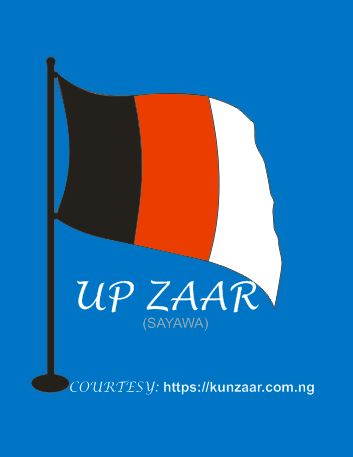
They predominantly found in Bogoro and Tafawa Balewa local government of Bauchi state and some found themselves in Plateau state due to creation of states where they share boundary especially those from Bogoro LGA of Bauchi state as their native and ancestral lands. They’re predominantly Christians who hold in high esteem their cultural heritage with a black, red, white flag. With black signifying the dark ages, bloody conflict era for the red and white signifying the peaceful era which all of us can attest to.
Facts to Know About Sayawa (Zaar) People
Sayawa is a tribe in Nigeria. Nigeria is known as the most populous black nation in the world and having over 500 ethnic groups which Sayawa (Zaar) from Bogoro (Ghil) and Tafawa Balewa (Pusji) LGA in Bauchi are not left out in that number.
Consequently, historians and other scholars have been attracted by the large number of ethnic groups and unusual degree of traditional practices in the Bauchi area. According to colonial report, the Sayawa founded their political and religious homelands at Bogoro (Ghil) and Tafawa Balewa (Pusji), respectively.
This article is an attempt to reconstruct the history of Sayawa (Zaar) community in Bauchi from the earliest time to 2009. The name Sayawa (Zaar) and Basaye, respectively, derived its origin from Hausa vocabulary, Saya (buy). Although not commonly known, the Sayawa referred to themselves as Zaar. Their language, which is divided into dialects, is known as Vik Zaar as others also called them Sayanci. Thus, the nomenclature associated with the group is, Hausa coinage.
In his classification of Nigerian languages, Raymond has it that the Sayawa belong to West B Group of Chadic language speakers, while Abubakar noted cultural assimilation, arising from inter-marriage with Sigidawa that’s another perspective from other scholars.
Other accounts also revealed linguistic affinity between the Sayawa and both the plain Jarawa and Bioyawa in the Bauchi area. The Sayawa live in dispersed indigenous villages in a typical Nigerian savanna of the Bauchi area and some area of Plateau state. Their houses are made of mud and hut like any other traditional African setting.
Politically, they recognized Gung and Singh Wari as heads of administration. Their military activities were based upon the use of traditional weapons such as bows and arrows, while the economic activities range from agricultural to non-agricultural occupation such as mining. The tradition and origin and the legend of migration among the Sayawa is no different from other many African people who trace their ancestry to some parts of the world other than being aucthotonous.
Accordingly, the Sayawa claim migration from the east around the Lake Chad area of Ngaszargamu of the defunct Kanem Borno Empire which was largely from some parts of Chad and Nigeria (Borno now in Nigeria as state).
According to Stride and Ifeka, the movements of many Chadic populations in the Lake Chad area was said to have triggered off with the deteriorating agricultural economy, occasioned by Saharan desiccation, political instability and slave raids. The legend of this migration, which was put in the period between 16th and 17th centuries suggests south-east movement through several corridors where they sojourned until they found solace at Bogoro and Tafawa Balewa around the Bauchi highlands.
Prior to the jihad period (which the Sayawas were not defeated) the Sayawa have been in Bauchi area in pockets of settlements such as, Ghil, Pusji, Tafare, Marti, Kurum, Gwaranga, Gomlar, Mwari, Bar, Bom, Gobbiya, Mwari, Lere south among others.
Many African Communities have evolved with one form of centralize or non-cenralized political systems and structures with rich and diverse economies. Like many other ethnic groups, the Sayawa practiced the chieftaincy system but have no central government. The chief among the Sayawa takes the title called Gung. The title originated from one Gong whom the British colonial report referred to as Gongolo. He is said to be the first Sayawa chief and the founder of the Sayawa dynasty in Tafawa Balewa (Pusji). The chief performed political functions such as presiding over the village council or community which was made up of the elderly class in the community.
As the custodian of law and order, the Gung adjudicated on cases of disputes on farmlands and criminal cases concerning murder. He issued punishments ranging from animal sacrifice to exile from the village. These punishments which served as a deterrent to other members of the community reflected the Sayawa tradition and belief system. The eldest person among the family was appointed to take the position of leadership by virtue of his agility and good moral conduct.
It is important to note that while every clan was ruled independently, Bogoro (Ghil) and Pusji (Tafawa Balewa) were marked as political homeland where the first and indeed the most important Sayawa dynasty founded by Gong (Gongolo), was established. The dynasty ruled in Bogoro (Ghil) and Pusji (Tafawa Balewa) since the period when the Sayawa arrived the Bauchi area between the 16thand 17thcenturies from the defunct Kanem Borno Empire (Lake Chad area), and indeed several years before the jihad.
Also Read: Biography of Gungzaar Elect, Air Commodore Ishaku Komo Rtd
The Gong (Gung) dynasty produced five chiefs from that period up to 1815. They were Gong (Gung), Jigawel, Dagawalla, Serki and Beidu. The 1815 however coincided with the reign of Beidu and the second phase of the jihad in Bauchi Emirate. At this period, Bogoro and Tafawa Balewa, the Sayawa political homelands were not conquered but choose to be integrated into the Bauchi Emirate based on peace and unity and also understanding because they were known to be peace loving people.
It is based on the former agreement then that the Sayawa community remained under the Bauchi Emirate in spite of the colonial and postcolonial transformations of the Emirate system and the Nigerian communities. This development became defining moment in the future political history of the Sayawa community against the background of agitation for the creation of autonomous Sayawa chiefdom from Bauchi Emirate with its attendant conflicts between the Sayawa and Hausa or Fulani especially in Bauchi Emirate.
Political Powers by Singh Wari
Before the colonial period Sayawa villages practiced the priest chief system known as the Singh Wari. The Singh Wari was priest who exercised political power over the Sayawa society. Every family or clan appointed its own Singh Wari who acted as its political head. The appointment was based upon criteria such as dedication, loyalty, hard work, bravery and acceptable moral virtues approved by elderly class in that locality. The Singh Wari was assisted by the elderly class who served as an advisory body. They therefore ruled over the community on the basis of the authority of the Sayawa elders.
On the aspect of responsibility, the Singh Wari played several roles for the day to day running of the Sayawa society. Prominent among their duties were demarcation of boundaries between families and settled disputes that arose among aggrieved clans. They were also in charge of stranger in the Sayawa communities. They received visitors and offered them necessary assistance. It should be noted that although Singh Wari political system has disappeared, however, it represent modest form of political administration that kept the virtue of Sayawa society.
It is in this way that many African Communities put in place a cohesive social institutions, and were able to maintain law and order, and social harmony. In recent years, however, the phenomenon of cultural domination in northern Nigeria has swept several minority groups into the cultural stream of the Hausa but the Sayawas still practice some of their inherited culture. This wave has also affected the boundary of Sayawa generation. With the adoption of some Hausa political titles such as Madaki, Ciroma among others though it’s started with their alliance with the Bauchi Emirate. In the words of Adamu,” although the towns of Bauchi are far away from the Hausaland, Hausa culture has become exclusive way of life.
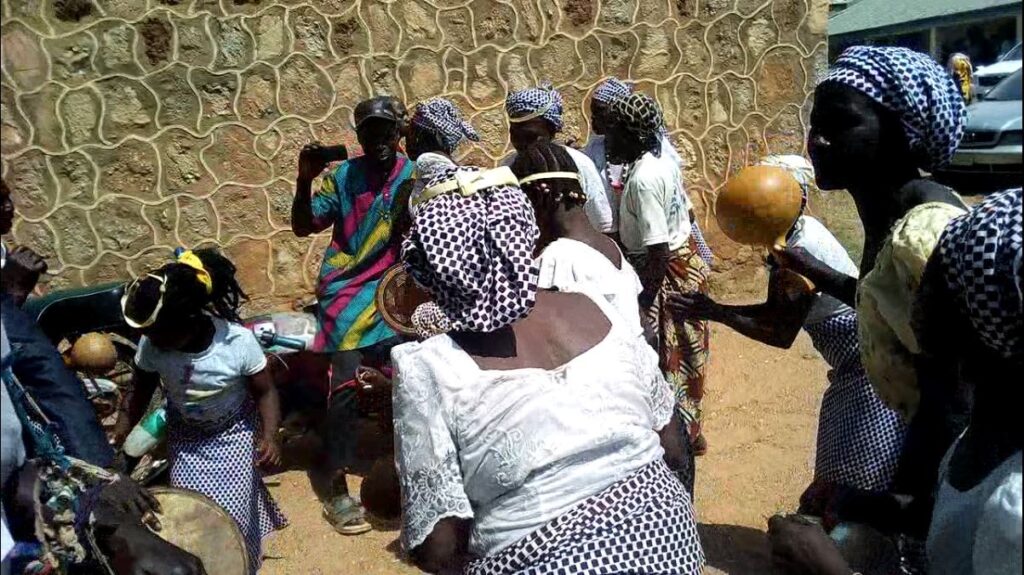
All African groups differ on the basis of their social organizations. The Bauchi area is a home for several ethnic groups with different traditional practices ranging from marriage celebration, birth, circumcision, funeral rites, belief system and festival. All these traditions are common to the Sayawa. Reporting on the Sayawa community, Sir Abubakar indicated that:
In the northern province of Nigeria there are many pagan tribes who are still in the primitive stage they seldom leave their homes, they have very few wants. But in spite of all these they are very happy and quite contented with life as it is. They have their own custom and belief which they honour very much. They have adopted hardly anything of the more advance people around them. There had never been a time when they seemed to think of any change in their belief. This is how Sayawa are being described by anyone who come across them.
How Did Sayawas Do Their Marriage and Birth Celebration
Marriage is an integral part of human civilization. One of the significant reasons for marriage is to ensure procreation or a continuity of human generation. Among the Sayawa, marriage is known as Kapkhnghat. It is regarded as significant aspect of the social institution. The traditional marriage was based upon cultural value of the Sayawa society.
Traditionally, marriage was contracted when young men and women attained the ages of sixteen or seventeen years which marked the maturity stage. One of the earliest systems of the marriage provides that the young man wedged a lady and takes her to his house upon mutual understanding between them. He subsequently offered her parents gifts such as goat, chicken or corn, based upon his ability and he can work in the farm for the family of the lady as it is called Jidhangti. The gifts were regarded as token for loss of the services of their daughter.
This system allowed polygamy under a tradition known as the Zaga or Ghatvomgan, meaning marriage by capture or kidnap in which a man could marry another wife whether she was already promise to another man or not. Another form of traditional marriage was the Shili which means promise. This marriage was arranged by parents of the two families concerned.
The arrangement was on the basis of betrothal and often without the consent of the boy and girl who may be young enough to understand the plan agreed upon by their parents. Between the ages of nine and ten, the girl was taken to the male parent’s family during the annual Lhmzar festival. The arrangement was finally transformed into marriage when the two young people attained their maturity stage as indicated earlier.
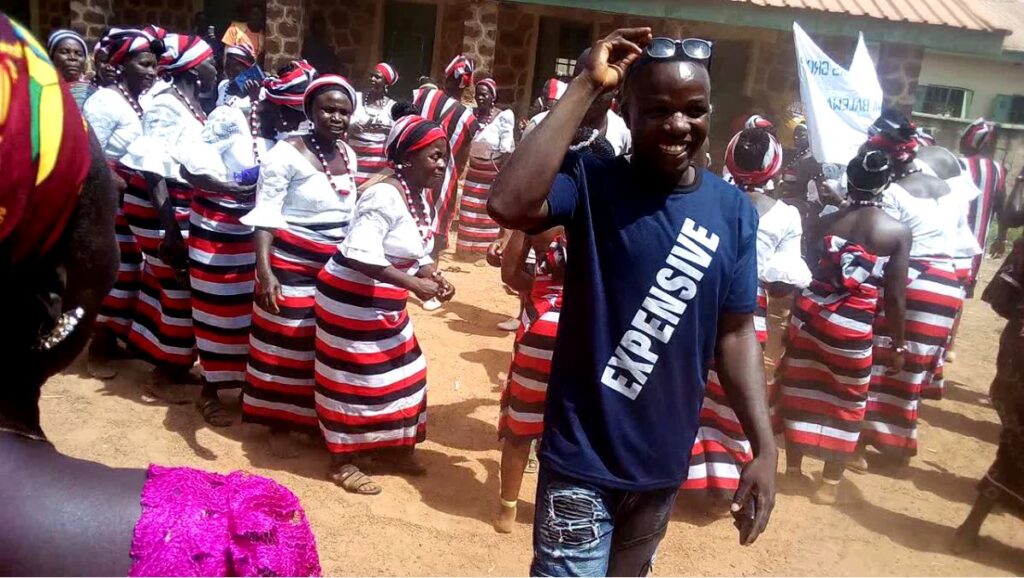
This marriage attracted a moderate form of merry making where food and local wine made from guinea corn will be served to entertain people before the bride will be taken to the groom. The birth of new born baby among the Sayawa is considered as a major success of marriage. The baby was received into the family with merry making, both in the earliest and modern periods. Naming ceremony follows some few days after the birth. It was performed between seven and eight days after birth. Both parents and grandparents decided the name of the new born baby.
Sayawa Religion Belief System
Before the spread of Christianity and Islam, the Sayawa people practiced traditional African religion. They believed in a supreme creator who controlled the universe and communicated through ancestral spirits and other spiritual forces. Sacred groves, shrines, and rituals played important roles in community life. Traditional priests and elders conducted ceremonies for rainmaking, fertility, healing, and protection.
Belief system and festival are very significant in African and other countries traditions which Sayawa are not left out. Indigenous religious have survived for centuries and in the modern world it is regarded as traditional religion which goes hand in hand with the customs and practices of the African people. The Sayawa believed in the existence of the Supreme God known as Chong, Chongvon.
He is regarded as the Creator of man and the earth. Much as the Sayawa believed in the existence of the Supreme God they also worship deities then known as (Nahvalhm) inform of inanimate objects such as stones and trees, which are represented by the spirit Mumshi (Masquerade or Dodo in Hausa). They believe that the spirit of their ancestors reside in the inanimate objects.
Today, Christianity is the dominant religion among the Sayawa people with smaller percentage practicing Islam. When Sayawa converted to Christianity, they coverted completely to the extent that you hardly see anyone practicing traditional beliefs among the sayawas, although cultural festivals is been observed to keep the traditions going from generation to generations.
You Can Also Read: Ultimate Guide On How To Migrate Your WordPress Website
Blood sacrifice using small animals such as chicken was common. This was done to seek for ancestral protection and appease the gods in times of trouble. Such rituals were performed by the Sayawas then by the chief priest known as Gung Zung.
But when Sayawa received the missionaries, they mostly practice Christianity with others practicing Islam. But as of now, no Sayawas is practicing those olden traditional religion anymore. They have abandoned the old time religion.
Festival Ceremony
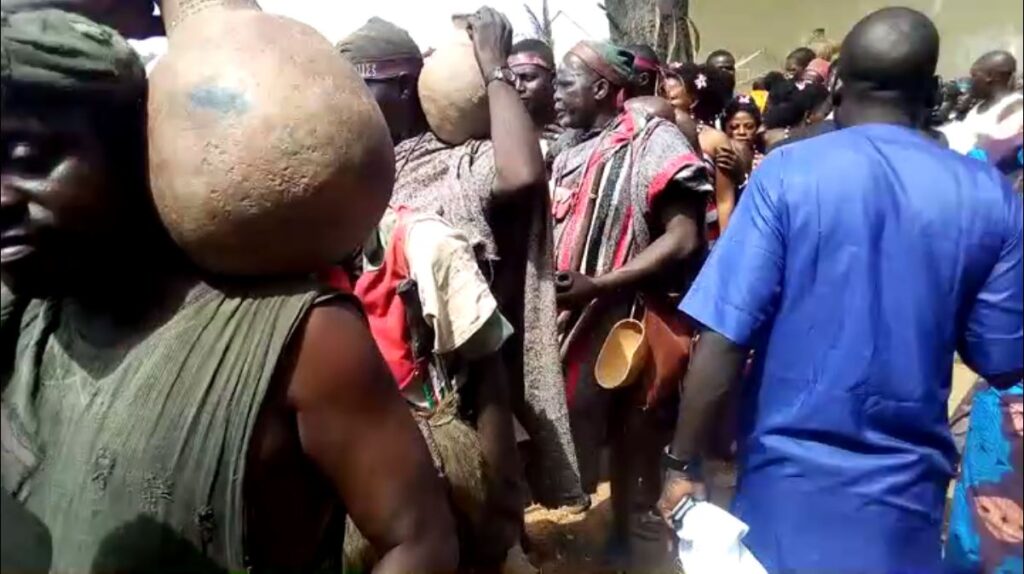
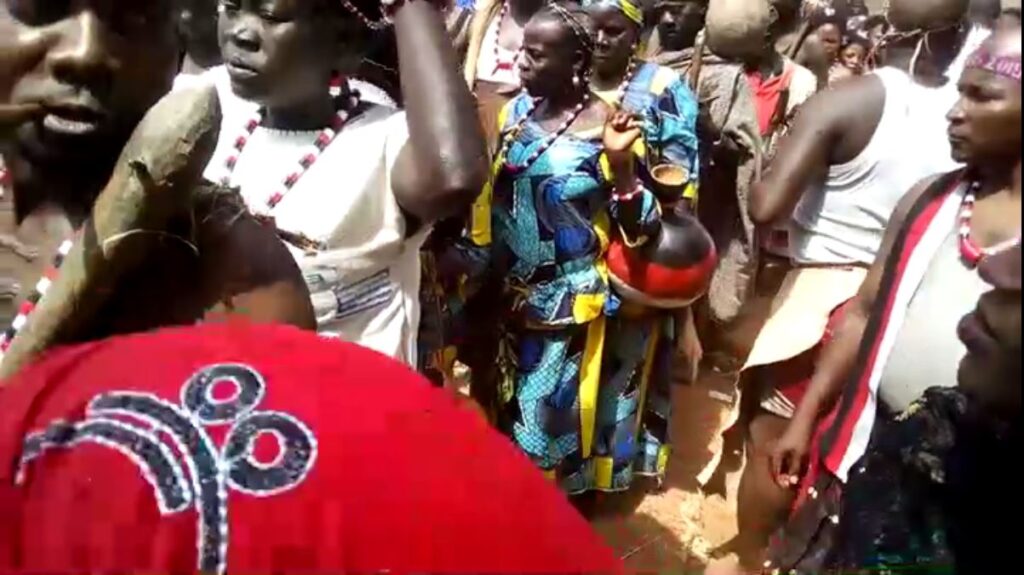
The Lhmzar is a compound word from Lhm Zaar which means the Sayawa Month and is celebrated with Sayaywa local food known as Na’atd Chitd (Tuwon Acha). It is an annual festival celebrated by the Sayawa to mark the beginning of the New Year and usher in success. The date for the celebration corresponds to the first Saturday of the month of November, annually. During this occasion each family prepares a paste of guinea corn flour which according to tradition should be smeared on the chest and backs of every member of the Sayawa tribe.
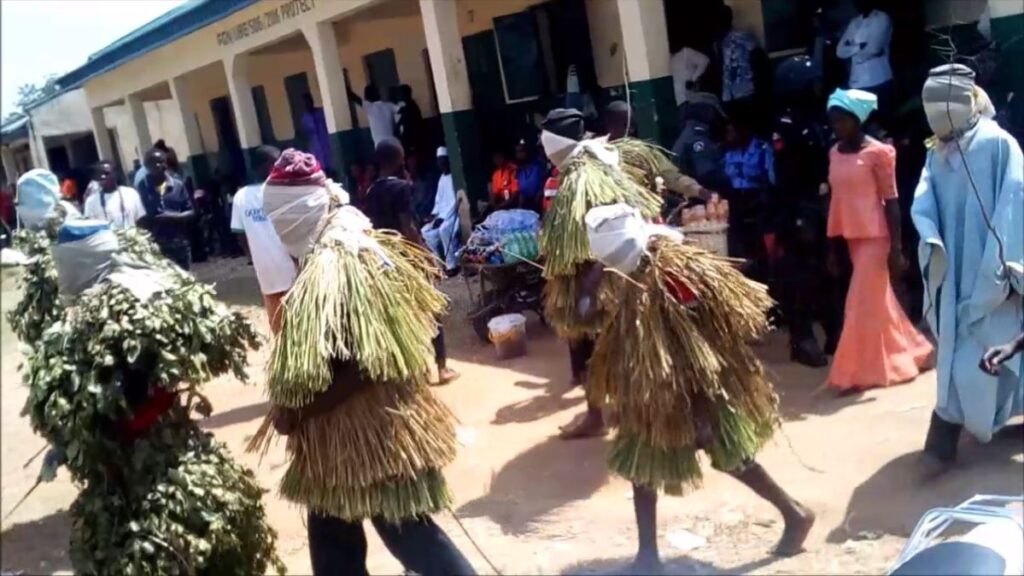
The essence of this according to the Sayawa tradition was to cleanse and prepare them for the challenges of the New Year. During the festive period of Sayawa traditional dance known as Mburti Nasr captures public attention. Today this dance is popularly called Taka kasha mari in Hausa vocabulary. The dancers dress in animal skin decorated with cowries. They also wear facial mask and possesses animal horn (jinyar) which they blow to provide music for the dance. Each dancer also creates an artificial hunchback using bunch of clothes. The movement of the dance is in a circular form.
As a period of merry making, several traditional dishes are served. During the festive period the major food (Na’atd Chitd) among Sayawa such as guinea corn are serve to welcome guest. The celebration last up to a week. It was used to disseminate important information and provide inspiration to members of the Sayawa group. In recent years the Lhumzar has become a moment of sober reflection.

Conclusion
The history of the Sayawa (Zaar) people during the pre-colonial era is a remarkable story of endurance, cultural pride, and community development. Long before the arrival of European colonial administrators, the Sayawa had established well-organized societies based on kinship, traditional leadership, agriculture, and deeply rooted cultural values. Their ability to preserve their language, customs, and identity despite centuries of migration, external pressures, and interactions with neighboring groups demonstrates the strength of their cultural heritage.
The Sayawa people’s traditional religion, festivals, social institutions, and farming practices played vital roles in maintaining unity and stability within their communities. These customs not only guided daily life but also helped pass important values and historical knowledge from one generation to another. Their settlements in the fertile and hilly regions of present-day southern Bauchi provided both economic opportunities and protection, enabling the growth of strong and self-sustaining communities.
Today, the legacy of the Sayawa people remains visible in their language, cultural festivals, traditional dances, and communal way of life. Events such as the Lepm Zaar Cultural Festival continue to celebrate and preserve the rich heritage that was shaped during the pre-colonial period. Understanding the history of the Sayawa people helps us appreciate the important contributions they have made to the cultural and historical landscape of Nigeria. As one of the indigenous peoples of the Middle Belt region, the Sayawa stand as a symbol of resilience and cultural continuity. Their story reminds us that the foundations of many modern Nigerian communities were built long before colonial rule and that preserving these histories is essential for future generations. By studying and celebrating the Sayawa heritage, we gain a deeper understanding of Nigeria’s rich ethnic diversity and the enduring strength of its traditional societies.
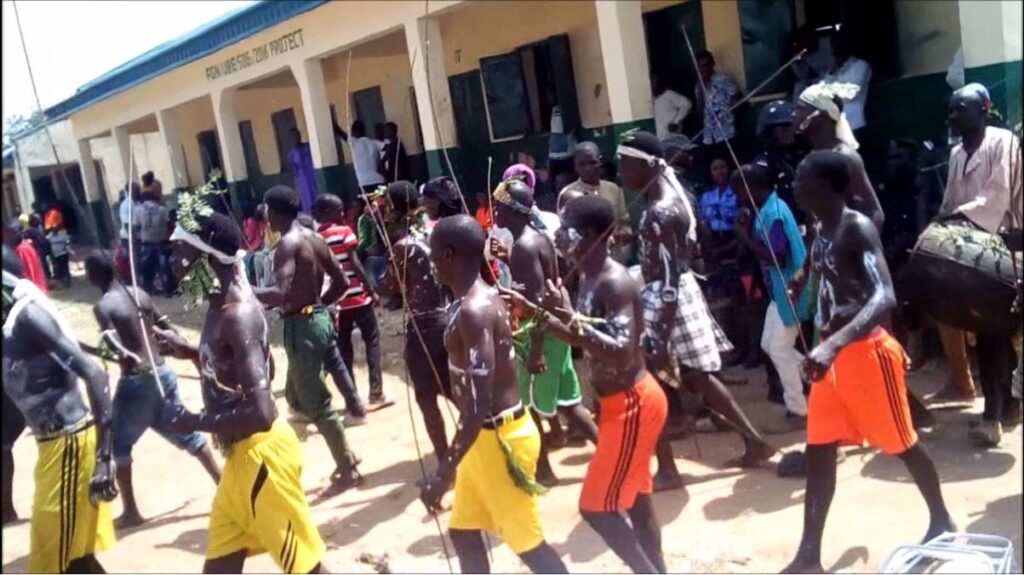
All Sayawa across the country meet at Tafawa Balewa (Pusji) which they regarded as their Headquarters to discuss matters of common interest such as the socio-economic and political development of their community. Especially now that Sayawa (Zaar) has been given their long awaited Chiefdom, spearheaded by Gungzaar 1, His Royal Majesty, Markus Koko Yake. This Chiefdom creation have put smile on the face of Sayawa sons and daughters.
Highly placed individuals among the Sayawa use the occasion of Lepm Zaar to offer their contributions. Hope this article is helpful and educative? Keep Visiting our Blog for more.
Blackjack teaches patience, and Lovart brings that same calm precision to design. Using natural language to spark creativity feels like hitting a soft 17-smart, not forced. Lovart could be the ace up every designer’s sleeve.
You have done well. God bless.
Type here..is it true that sayawa people are trouble people
NO. NO. Based on my interaction and leaving among the Sayawas, it is not true. Sayawa (Zaar) people are peace loving people. You need to interact with them in person. You will know that these people are peace loving. These are people that love to stay with many tribes. In fact, they have many people from different parts of Nigeria leaving in harmony with Sayawa people.
Well written but I admit it, almost all not correct accurate. Seems like This is a history not ours story. Because our story should have a beginning should have a descendant before generation not just the middle passages of migration down to settlement. Without telling who are we and was it’s meant before defecting?