
Introduction
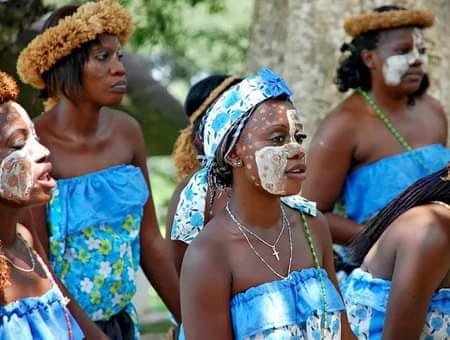
In our cultural journey, we arrived in Gabon and come across a tribe called Fang. Though they are also found in other countries in Central African. The Fang people, also known as Fãn or Pahouin, are a Central African ethnic group found in Equatorial Guinea, northern Gabon, and southern Cameroon. Representing about 85% of the total population of Equatorial Guinea, concentrated in the Río Muni region, the Fang people are its largest ethnic group.
The Fang people are one of the most culturally rich and ethnically significant groups in Central Africa. Known for their intricate traditions, profound spiritual beliefs, artistic heritage, and vibrant festivals, the Fang have maintained an identity that spans centuries and transcends borders. In Gabon — where they make up a large portion of the population — their cultural influence is especially deep, shaping not just community life but also national cultural heritage.
History of the Fang People
The Fang people are a Bantu-speaking ethnic group with origins rooted in the great migrations of Central and West Africa. Historical and oral traditions suggest they migrated from the savanna regions and riverine areas north of present-day Gabon in the 18th and early 19th centuries before settling deep in the equatorial rainforests.
Also Read: The Lepcha People
Traditionally, they were skilled hunters and forest dwellers with intimate knowledge of the jungle. Under colonial rule — French in Gabon, Spanish in Equatorial Guinea, and German/French in Cameroon — many Fang people adopted agriculture, particularly cocoa farming, and converted to Christianity, while still retaining core elements of their ancestral belief systems.
Things To Know About The Fang People
In most of the ethnic groups, there’s some of the things that they believed and practiced it from generation to generation and some people who knows their culture and they see something like that, they know that it is from a certain ethnic group and the Fang people have that unique character that makes people identified with them. Such things are listed below.
- They have a patrilineal kinship social structure.
- The villages have been traditionally linked through lineage.
- They are exogamous, particularly on the father’s side.
- Polygamy was accepted in the culture of the Fang people.
- The independence of villages from each other is notable, and they are famed for their knowledge of animals, plants and herbs in the Equatorial forests they live in.
- They are traditionally farmers and hunters, but became major cocoa farmers during the colonial era.
Where the Fang People Are Found
The Fang are primarily found in three Central African countries:
- Gabon – largest ethnic group, especially in the north and central rainforests.
- Equatorial Guinea – majority of the population belongs to the Fang community.
- Cameroon – significant Fang populations in the southern regions bordering Gabon and Equatorial Guinea.
Small communities also exist in neighboring areas like Congo and even São Tomé & Príncipe.
Language and Social Structure
The Fang language — often simply known as Fang or Pahouin — is part of the larger Niger-Congo Bantu language family. It is closely related to Beti-Pahuin languages spoken north in Cameroon.
Socially, the Fang people are patrilineal, meaning inheritance and lineage are traced through the father’s line. Villages are organized around extended families and clans (called ayong), and exogamy (marrying outside one’s clan) is traditionally expected.
Culture and Daily Life
Fang culture places high value on community, oral tradition, and artistic expression:
Oral Traditions & Music
There’s something that the Fang people are known for and that thing is Storytelling and Music because Storytelling and Music are central to Fang heritage. The mvet — a harp-lute instrument — is played by master musicians known as mbomo mvet who recite epic tales of history, cosmology, and ancestral lore. These performances serve both entertainment and educational purposes within communities.
Art & Masks
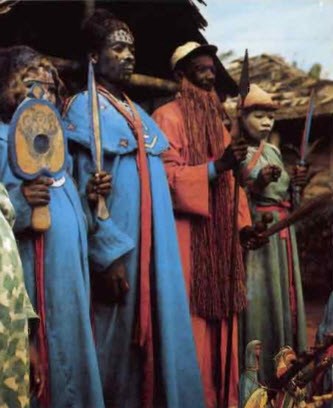
Fang artistry, especially wooden masks and wooden reliquary figures, are world-renowned. These masks — often featuring long faces and geometric designs — were traditionally used in spiritual societies and rituals, such as those of the Ngil secret society, which enforced justice and warded off evil.
Religion and Beliefs
Religion among the Fang is a blend of indigenous spiritual systems and Christianity. TheFang peoples’ beliefs center around ancestor worship and a complex cosmology, with a strong emphasis on the spiritual realm. Some of their beliefs are:
Traditional Faith
The traditional belief system centers on ancestor worship, where ancestors play a vital role as spiritual guardians who influence daily life, well-being, and community prosperity. Sacred relics (like skulls or relic boxes) house these ancestral spirits and are treated with great respect.
Bwiti — A Syncretic Tradition
One of the most distinctive religious traditions among the Fang is Bwiti, a syncretic practice that blends indigenous beliefs with Christian elements. Bwiti ceremonies often include:
- Ritual consumption of iboga plant — used for spiritual vision, reflection, and healing.
- Multi-day celebrations with drumming, singing, and dancing.
- Spiritual experiences meant to symbolize death and rebirth, and reinforce community values.
Food and Traditional Cuisine
Most of the ethnics or tribal groups are identified through their food. Fang food reflects the agricultural lifestyle of forest communities such as:
Staple Foods
- Cassava
- Plantains
- Yams
- Bananas
- Maize
- Groundnuts
Women have traditionally managed family plots, harvesting these staples for daily meals, while men often engage in hunting and fishing to supplement diets.
Communal Meals
Meal times are communal and celebratory, often shared with extended family and guests — reinforcing social bonds and hospitality.
Festivals and Celebrations
To keep culture alive, the Fang people have some cultural festivals that they observed in commemoration of their ancestral existence. Festivals among the Fang are vibrant expressions of spirituality, culture, and community identity. They serve as moments for collective participation, reflection, celebration, and teaching.
Bwiti Ceremonies
Though Fang have many festivals but these are the most important spiritual festivals of the Fang people:
- Duration: Often several days.
- Focus: Spiritual renewal, visions, ancestral communication, and moral lessons.
- Activities: Drumming, singing, dancing, trance-like rhythms, and collective participation.
- Purpose: Mark rites of passage, heal individuals, and reinforce cultural identity.
Initiation Rituals
Young people undergo initiation rites that signify the transition into adulthood. These are often communal, involving teachings, rites of courage, and cultural instruction passed by elders.
Music & Dance Festivals
Celebrations like the Fête de la Musique honor musical heritage — showcasing traditional instruments like the ngoma drum and thumb pianos — and provide joyful spaces for communal feasting, dance, and storytelling.
Marriage Traditions
Marriage among the Fang blends tradition with modern influences:
Bridewealth and Family Ties
Marriage typically requires the payment of bridewealth known as nsuba, which may be given in goods or symbolic items like cloth or livestock. Historically, major portions of this wealth were paid after the birth of the first child, symbolizing the bride’s role in fertility and family continuity.
Ceremonial Elements
Today, many Fang couples have Christian wedding ceremonies but incorporate traditional elements:
- Vibrant patterned fabrics chosen by both families.
- Storytelling by elders connecting the couple to lineage.
- Shared feasts and music reflecting community unity.
Polygamy
Polygamy was traditionally accepted, though its practice varies today with social and legal changes.
Fang Legacy and Modern Life
The Fang tradition continues to thrive in modern Gabon even as many Fang people live in cities and participate in national life. Their cultural heritage — from masks and music to festivals and spiritual rites — remains a cornerstone of Central African identity.
Conclusion
The Fang people of Gabon represent one of Central Africa’s most enduring and influential cultural communities. Through their rich history of migration, strong clan systems, and deep connection to the forest environment, the Fang have preserved traditions that continue to shape their identity today. From their expressive art and symbolic masks to the powerful rhythms of the mvet and the spiritual depth of Bwiti ceremonies, Fang culture reflects a worldview rooted in ancestry, unity, and spiritual balance.
You Can Also Read: The Misery of Lake Nyos
Despite the effects of modernization, colonial history, and religious change, the Fang people have successfully blended tradition with contemporary life. Their festivals, marriage customs, food practices, and belief systems remain living traditions—actively practiced rather than remembered relics of the past. These cultural expressions serve not only as celebrations but also as tools for education, moral guidance, and community cohesion. Understanding the Fang people of Gabon offers valuable insight into the broader story of African heritage and resilience. Their ability to maintain cultural continuity across generations and national borders highlights the importance of preserving indigenous knowledge and traditions in a rapidly changing world. For travelers, researchers, and cultural enthusiasts alike, the Fang people stand as a powerful example of how history, spirituality, and culture can coexist and thrive in modern society.
Greetings.
We would like to inquire about the Bwiti ceremony as observed by the Fang people in Cameroon. We understand that this important spiritual celebration is believed to connect participants with their ancestors for guidance and wisdom.
Could you kindly provide information on when and where the Bwiti ceremony is typically in Cameroon? We are particularly interested in learning more about the traditional Bwiti initiation practices among the Fang community.
Thank you for your assistance.
Thank you for contacting us. Here are some of what you need to know about the Bwiti Spiritual Exercise. We are planning to post more insight about for you and other viewers of our site who are interested on the Fang Culture.
Bwiti Ceremony Among the Fang People in Cameroon
The Fang people celebrated Bwiti Ceremony. Bwiti tradition is a deeply spiritual and initiatory practice primarily associated with the Fang and other forest peoples of Central Africa. While it is most strongly rooted in Gabon, it is also practiced among Fang communities in southern Cameroon, especially in regions bordering Gabon.
Now, Where Bwiti Is Practiced in Cameroon
In Cameroon, Bwiti is not a public or widely institutionalized religion, but rather a localized and community-based spiritual practice unlike in Gabon.
Typical Locations
Bwiti ceremonies are usually held in:
• Southern Cameroon forest regions (e.g., South and East Regions)
• Fang villages near the borders with Gabon and Equatorial Guinea
• Sacred village spaces such as:
o Initiation temples (often simple structures)
o Forest clearings considered spiritually significant
These locations are chosen because Bwiti is deeply connected to nature, the forest, and ancestral land.
When Bwiti Does Ceremonies Take Place?
Unlike modern festivals where a fixed day(s) will be set aside for such event. The Bwiti ceremonies doesn’t have a fixed calendars because these ceremonies do not follow a universal public schedule.
Key Timing Factors For Bwiti Ceremonies
Bwiti ceremonies in Cameroon are typically held:
• During important life events, such as:
o Initiation into adulthood
o Healing rituals
o Spiritual crises or guidance seeking
• At the discretion of spiritual leaders (Nganga or Nima)
• At night, often beginning in the evening and lasting until morning
Though there is no fixed annual date, as ceremonies are spirit-led and community-determined rather than calendar-based.
Overview of Bwiti Initiation Practices (Fang People Tradition)
Bwiti initiation is considered a sacred rite of passage—not a performance or public festival. It is one of the most important spiritual experiences in Fang culture.
1. Preparation Phase
This is how its started. Before initiation, participants undergo intensive preparation, which may include:
• Fasting or controlled diet
• Herbal cleansing and plant-based treatments
• Spiritual instruction from elders
• Reflection on personal intentions
This preparation is meant to purify the body and mind before entering the spiritual realm.
2. The Initiation Ceremony (Core Ritual)
The central ritual involves the sacred use of the iboga plant (a powerful root bark).
Key Elements
• Conducted overnight in a temple or sacred hut
• Continuous drumming, chanting, and dancing
• Guidance from a spiritual leader (Nganga/Nima)
• Consumption of iboga to induce:
o Visions
o Spiritual insight
o Encounter with ancestors
The experience is believed to connect the initiate with ancestors, offering wisdom, healing, and direction in life.
3. Vision and Spiritual Journey
Participants may experience:
• Symbolic visions about their life and identity
• Encounters with ancestral spirits
• Deep introspection and emotional healing
This stage is considered the heart of Bwiti, where transformation occurs.
4. Integration and Community Acceptance
After the ceremony:
• The initiate is welcomed into the Bwiti community
• Elders help interpret visions and lessons
• The individual gains a new spiritual status
Some initiations last several days to a week or more, depending on the depth of the ritual.
Important Cultural Notes
• Bwiti is sacred and often secretive — many details are not publicly disclosed.
• Participation is usually by invitation, lineage, or spiritual calling, not open tourism.
• Practices may vary slightly between Gabon and Cameroon, but the core beliefs remain the same.
• The ceremony is not entertainment; it is a serious spiritual commitment.
Summary of it is this:
In Cameroon, the Bwiti ceremony among the Fang people is:
• Held in rural forest communities, especially in the south
• Not fixed to specific dates, but organized around spiritual needs
• Centered on initiation rites, involving purification, iboga rituals, and ancestral connection
• A deeply sacred tradition, focused on transformation, healing, and wisdom
Here are more Insight Below:
Little Inside About Bwiti Spiritual Practice
The Bwiti spiritual practice connects participants with their ancestors through a combination of ritual, symbolism, altered consciousness, and community guidance. Among the Fang people in Gabon and Cameroon, this connection is understood as both spiritual and experiential, not just symbolic. Here’s how it works in clear terms:
1. The Role of the Sacred Iboga Plant
At the center of Bwiti is the iboga root, a sacred plant believed to open the “spiritual gateway.”
• When taken under the supervision of a spiritual guide (Nganga), iboga induces deep visions and heightened awareness.
• These visions are interpreted as a journey into the spirit world, where the boundary between the living and the ancestors becomes thin.
• Participants often report encountering ancestral figures, symbolic messages, or past events tied to their lineage.
In Fang belief, this is not imagination—it is seen as a real spiritual encounter facilitated by the plant.
2. Entering an Altered State of Consciousness
Bwiti ceremonies use music, rhythm, and repetition to guide participants into a trance-like state.
• Continuous drumming, chanting, and dancing help focus the mind
• The initiate becomes detached from ordinary reality
• This state allows the person to become spiritually receptive
In this condition, participants are believed to perceive hidden truths and communicate with ancestors more directly.
3. Ancestral Presence in Fang Belief
In Fang spirituality, ancestors are not “gone”—they are active members of the spiritual world.
• Ancestors are seen as guardians, guides, and moral authorities
• They influence health, success, and decision-making
• Bwiti provides a structured way to consult them directly
So, the ceremony is essentially a bridge between the living and the dead.
4. Symbolic Death and Rebirth
A key part of Bwiti initiation is the idea of dying to the old self and being reborn.
• The initiate symbolically “dies” during the ritual journey
• Encounters ancestors who reveal truths about life
• Returns with renewed identity, purpose, and spiritual clarity
This mirrors the belief that ancestors hold the ultimate wisdom about life and destiny.
5. Guidance from Spiritual Leaders (Nganga)
The process is carefully guided by experienced spiritual leaders:
• They interpret visions and experiences
• Help distinguish true ancestral messages from confusion
• Provide teachings based on Fang tradition
Without this guidance, the experience would lack cultural meaning and structure.
6. Community Reinforcement
After the ceremony:
• Elders and community members help the initiate understand the messages received
• The experience is integrated into daily life
• The initiate is now seen as someone who has “met the ancestors”
This communal validation strengthens the belief that the connection is real and meaningful.
7. Sacred Environment and Ritual Objects
The setting itself enhances the connection:
• Ceremonies take place in sacred huts or forest spaces
• Ritual objects (like relics or symbolic items) represent ancestral presence
• The environment is treated as a spiritual gateway
In Summary
Bwiti connects participants with their ancestors through:
• Iboga-induced visions (spiritual gateway)
• Trance and ritual music (mental and spiritual openness)
• Belief in active ancestors (they are in spirit)
• Guided interpretation (giving meaning to the experience)
• Community validation (confirming the connection)
In Conclusion
For the Fang people, Bwiti is not just about seeing ancestors—it is about receiving wisdom, correction, healing, and direction from them. The connection is considered deeply real, transformative, and life-changing, shaping how individuals understand themselves, their family, and their purpose.
Pingback: hello world
Our Son (from Europe) is marrying a girl from Gabon (Fang ethnicity), and bridewealth discussions have started. Although the concept is alien to us, with Dowry payments from bride to groom’s family having died out many years ago, we are keen to both acknowledge and embrace her family’s traditions. However, we have no concept of what sort of total value, in terms of cash and goods, might be expected. The first suggestions that have been put to us seem to be roughly equivalent one year’s average salary for Gabon. Is this common? We have read that the Government have issued guidance on bridewealth amounts, but can’t find details. Is there a maximum/minimum amount indicated. Many thanks in anticipation of your help in this matter
Your mail has been received. And we appreciate you for contacting us.
Though there’s no fixed amount indicated when it comes to the payment but understand each other will make the process smooth. In some cultures, when their daughter is marrying someone outside their country, they usually see the family as a rich family. Yes, because they assumed and not knowing the reality. So, they believed that everything they told them, they will pay. This is where their daughter will come in. Think of it whether that’s their own perception too.
While some make it high because they don’t want their daughter to go in a distance country. The fear of not seeing her again. In this aspect, the woman will talk to them and your talk should be full with some assurances.
In some cases, it is the woman now that will talk to them because she is the only one that can come in-between to clarifies things to her parent regarding the financial ability of her husband to be.
I advised that you should be patience with them and suggest to her to go and talk to her parent so that they should be considerate. I see a possibility of them coming down for the sake of their daughter.
Hope this is helpful? Wishing you all the best. And also wish that everything will be settled amicable and the marriage rites will be completed.
Thank you for reaching out to Kunzaar.com.ng