
Introduction
The cultural voyage took us to Southern African countries with a name of an ethnic tribe of Basotho, also known as the Sotho people, are one of Southern Africa’s most culturally rich and historically resilient ethnic groups. Known for their iconic wool blankets, mountain horsemanship, and strong sense of national identity, the Basotho are the dominant ethnic group of Lesotho and are also found in significant numbers in South Africa.

This in-depth guide explores the history, origin, food, religion, festivals, culture, countries where they are found, and traditional marriage customs of the Basotho people. If you are researching about African cultures, this comprehensive article provides everything you need to know for your research work.
Now, Who Are the Basotho (Sotho)?
The term Basotho refers to the people, while Sesotho is the language they speak. “Sotho” can also be used more broadly to describe related groups such as the Northern Sotho (Pedi) and Tswana, but in this article, we focus primarily on the Southern Sotho—commonly known as the Basotho.
Also Read: Balinese People: History, Culture, Origin, and Marriage Traditions
The Basotho are best known for so many things such as:
- Their mountainous homeland
- Their distinctive Basotho blanket
- Strong chieftaincy traditions
- Deep respect for ancestors
- Rich oral storytelling heritage
History of the Basotho People
No culture is without a history and Basotho ethnic group have their own history which we will discuss it vividly on this article. The modern Basotho nation was largely shaped in the early 19th century under the leadership of the legendary king Moshoeshoe I.
The Formation of the Basotho Nation
During the early 1800s, Southern Africa experienced a period of upheaval known as the Mfecane (a time of wars and migrations). Various Sotho-speaking clans faced attacks from expanding Zulu forces and other groups.
King Moshoeshoe I, was a strong king who united the scattered clans and established a stronghold at Thaba Bosiu, a mountain fortress that became the heart of the Basotho nation. Through diplomacy, strategic alliances, and military skill, he protected his people from external threats, including Boer settlers and other African kingdoms till when they got their independence.
Eventually, the Basotho territory became a British protectorate known as Basutoland in 1868 to prevent annexation by Boer republics. In 1966, Basutoland gained independence and became the Kingdom of Lesotho.
Origin and Ancestry
The Basotho belongs to the larger Bantu-speaking family, whose ancestors migrated southward from Central Africa over many centuries ago. They settled in the fertile and mountainous regions of what is now refers to Lesotho and surrounding areas of South Africa.
The mountainous geography played a major role in shaping Basotho identity. Another thing about the country of Lesotho is the only independent state in the world entirely above 1,000 meters in elevation. This high-altitude environment influenced their architecture, clothing, agriculture, and even warfare strategies.
Countries Where the Basotho Are Found
Although Lesotho is their primary homeland, Basotho people are also found in:
- South Africa (especially in the Free State and Gauteng provinces)
- Smaller communities in Botswana and other neighboring countries due to labor migration
Many Basotho migrated to South African mines and cities for employment during the 19th and 20th centuries. Even as a foreigner in other countries, they observed their cultural heritage because culture is a way of life to them that’s why despite migration, they still maintained strong ties to their cultural roots.
Basotho Culture and Way of Life
1. Traditional Clothing
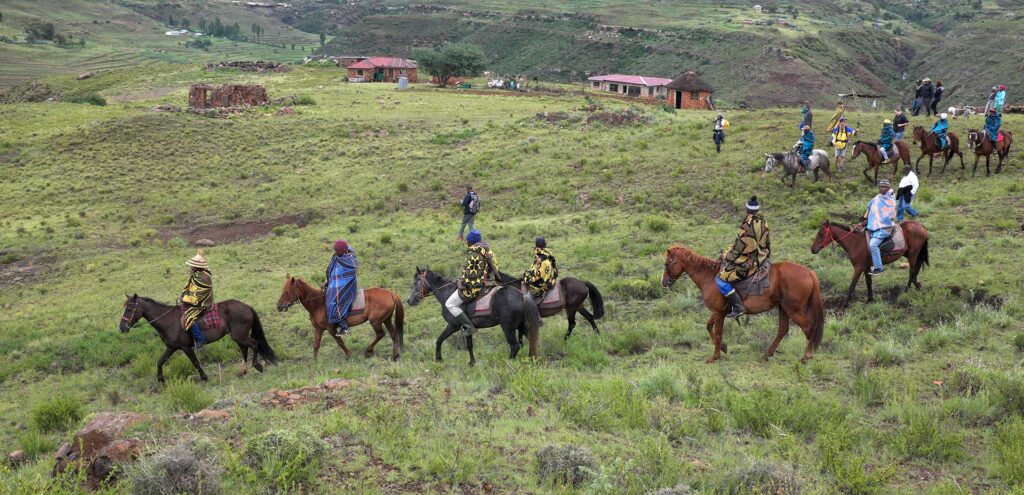
One of the most recognizable symbols of Basotho culture is the Basotho blanket. Originally introduced through trade in the 19th century, the blanket became a national symbol. It is worn wrapped around the body and often features symbolic patterns representing wealth, fertility, and status.
Men also wear the mokorotlo, a traditional conical straw hat that symbolizes Basotho identity. The hat is inspired by the shape of the Thaba Bosiu mountain.
2. Architecture
Traditional Basotho houses are round huts made from mud and thatch, called rondavels. They are decorated with geometric wall paintings, reflecting artistic creativity and community pride.
3. Livestock and Economy
Cattle are highly valued in Basotho culture. They represent wealth, social status, and are central to marriage negotiations (lobola). Sheep and goats are also common, especially in the highlands.
Basotho Traditional Food
There’s come type of foods that are used to identify a certain ethnic group with. Basotho cuisine is simple yet nourishing, reflecting their agricultural lifestyle.
Common traditional foods include:
- Papa (maize porridge) – a staple food
- Moroho – wild leafy greens
- Mutton and beef
- Beans and peas
- Sorghum porridge
- Fresh milk and fermented milk (mafi)
Due to the cold mountain climate, meals are often hearty and energy-rich.
Religion and Beliefs
Today, the majority of Basotho people identify as Christians, mainly Roman Catholic and Protestant denominations. Christianity spread during the 19th century through missionary work.
However, traditional beliefs remain influential because some are still connected to the traditional belief of their ancestors and they see abandoning it is means abandoning their history and life which their forefathers worshipped some centuries ago.
Traditional Beliefs
A typical Basotho person believes in:
- A supreme creator known as Molimo
- The importance of ancestors (badimo)
- Ritual ceremonies to honor spirits
Ancestors are believed to guide and protect the living. Offerings and prayers may be made during important life events such as birth, marriage, or illness.
Basotho Festivals and Celebrations
Festivals are an important part of Basotho cultural expression.
1. Morija Arts & Cultural Festival
The most famous cultural celebration in Lesotho is the Morija Arts & Cultural Festival, held annually in the town of Morija.
Some of the festival includes:
- Traditional music and dance
- Poetry and storytelling
- Local crafts and fashion exhibitions
- Food displays
- Educational workshops
It celebrates Basotho identity and artistic talent.

2. Moshoeshoe’s Day
As it’s believed to be the first king (Moshoeshoe) who defended and liberated the Basotho people, a day was set aside to celebrate him and is celebrated on March 11 each year, Moshoeshoe’s Day honors Moshoeshoe I and his contribution to the formation of the Basotho nation.
Activities on that day include:
- Speeches by national leaders
- Cultural dances
- School performances
- National ceremonies
3. Independence Day (Lesotho)
Lesotho celebrates independence from Britain on October 4 each year. The event includes parades, military displays, and cultural performances.
Everything You Need to Know About Basotho Festivals
If you are planning to attend or write about Basotho festivals, here are important details:
- Best Time to Visit: Many festivals occur between March and October.
- Cultural Etiquette: Dress modestly and respectfully.
- Photography: Always ask permission before taking photos of individuals.
- Language: Sesotho is widely spoken, but English is also an official language in Lesotho.
- Traditional Music: Includes drums, whistles, and vocal harmonies.
- Dance: Often performed in groups, with rhythmic foot stamping and chanting.
Festivals are not only entertainment events but also expressions of identity, unity, and historical pride.
Basotho Marriage Traditions
Marriage in Basotho culture is a sacred and communal event which include payment of bride price as many of the cultures are doing though it might not be the same mode or type of payment but there must be a bride price payment.
Lobola (Bride Price)
The groom’s family pays lobola (bride price), traditionally in cattle. This symbolizes respect and gratitude to the bride’s family.
Negotiation Process
Marriage negotiations involve elders from both families. The process can take weeks or months and includes:
- Formal introductions
- Gift exchanges
- Agreement on lobola amount
- Ritual blessings
Wedding Ceremony
The wedding may combine:
- Traditional rites
- Christian church ceremonies
- Community feasts
The bride often wears traditional attire, including a blanket and headscarf.

Marriage is viewed as a union between families—not just individuals.
Language and Identity
Sesotho is the official language of Lesotho and one of South Africa’s official languages. It plays a major role in preserving folklore, proverbs, and oral history.
You Can Also Read: When a Lake Became a Grave
Storytelling is an important tradition, used to teach moral lessons and preserve cultural values.
Modern Challenges and Adaptation
Like many African societies, the Basotho face modern challenges such as:
- Urban migration
- Youth unemployment
- Climate change affecting agriculture
However, strong cultural identity continues to unite the people, both at home and in the diaspora.
Why the Basotho Culture Is Unique
- Only independent country completely surrounded by South Africa
- Entire nation located in mountainous terrain
- Strong traditional monarchy still exists
- Blanket culture as a national symbol
- Unique blend of Christianity and traditional beliefs
Conclusion
The Basotho (Sotho) people are a remarkable Southern African ethnic group with a proud history rooted in resilience, unity, and strong leadership under Moshoeshoe I. From their mountain fortress of Thaba Bosiu to modern-day Lesotho, they have preserved their language, traditions, and cultural identity. Their festivals, marriage customs, religious beliefs, and traditional attire continue to shape everyday life. Whether you are researching African cultures, planning to visit Lesotho, or writing a cultural blog, understanding the Basotho people offers valuable insight into one of Africa’s most distinctive communities.
