
Introduction
Culture is everywhere and we are now in the culture of the Baganda People. The Baganda people are the largest ethnic group in Uganda and one of the most culturally influential communities in East Africa. They are the native inhabitants of the historic Kingdom of Buganda Kingdom, located in the central region of the country. Known for their strong monarchy, organized clan system, rich traditions, and vibrant ceremonies, the Baganda have played a central role in shaping Uganda’s political, social, and cultural identity.
Also Read: The Toraja People
In this comprehensive guide, you will discover the history, origin, food, religion, festivals, culture, countries where they are found, and marriage customs of the Baganda people.
History of the Baganda People
The history of the Baganda is deeply connected to the rise of the powerful Kingdom of Buganda, which emerged around the 14th century. Oral traditions trace their lineage to a legendary founder named Kintu, who is believed to have established the first dynasty.
By the 18th and 19th centuries, Buganda had grown into one of the strongest kingdoms in East Africa. The kingdom expanded through military strength, political alliances, and a well-organized administration system. The king, known as the Kabaka, ruled with authority but worked alongside chiefs who managed different regions.

When British colonial rule reached Uganda in the late 19th century, Buganda became a central partner in the colonial administration. The 1900 Buganda Agreement significantly shaped the political structure of modern Uganda. Even after independence in 1962, the Baganda continued to play a vital role in national politics.
Today, the cultural institution of the Kabaka remains highly respected, although it functions mainly as a cultural and traditional authority.
Origin of the Baganda
The Baganda belong to the larger Bantu ethnic group that migrated from Central Africa thousands of years ago. Linguistic and archaeological evidence shows that Bantu-speaking communities gradually settled around the northern shores of Lake Victoria.
Their language, Luganda, is one of the most widely spoken languages in Uganda and serves as a lingua franca in many parts of the country. The strong identity of the Baganda people is closely tied to their clan system, which predates the kingdom itself.
Each Muganda (singular for Baganda) belongs to a specific clan, and clan identity plays a key role in social organization and marriage customs.
Location and Countries Where the Baganda Are Found
The Baganda primarily live in central Uganda, especially in the region surrounding Lake Victoria and the capital city, Kampala.
Key districts historically associated with Buganda include:
- Wakiso
- Mukono
- Masaka
- Mpigi
- Mityana
- Luwero
Outside Uganda, smaller Baganda communities can also be found in countries such as:
- Kenya
- Tanzania
- Rwanda
These communities migrated for trade, education, and employment opportunities.
Social Structure and Clan System
The Baganda society is highly organized under a clan system known as “ebika.” There are over 50 recognized clans in Buganda. Each clan has:
- A totem (usually an animal or plant)
- A clan leader
- Specific taboos and customs
The clan system promotes unity and regulates marriage. A Muganda is forbidden from marrying someone from the same clan. This rule prevents inbreeding and strengthens inter-clan relationships.
The Kabaka (king) stands at the top of the social hierarchy, followed by chiefs and clan leaders.
Religion of the Baganda People
Traditional Religion
Before the arrival of foreign religions, the Baganda practiced traditional African spirituality. They believed in Katonda (the Supreme Creator) and various spirits known as “balubaale.”
Spiritual mediums played important roles in communication with ancestral spirits. Shrines were built to honor these spirits, and rituals were performed for healing, protection, and guidance.
Christianity
Christianity was introduced in the late 19th century by missionaries. Today, the majority of Baganda are Christians, including Catholics, Anglicans, and Pentecostals.
The influence of Christianity is strongly connected to the story of the Uganda Martyrs, young Christian converts who were executed for their faith. They are honored annually on June 3rd.
Islam
Islam was introduced earlier than Christianity through Arab traders. A significant number of Baganda are Muslims today.
Despite the spread of modern religions, elements of traditional belief systems still influence cultural practices.
Traditional Food of the Baganda
Food is central to Baganda identity. Their staple food is matoke (steamed green bananas). Matoke is often served with:
- Groundnut sauce
- Beef or chicken stew
- Beans
- Fresh vegetables
Other popular foods among the Baganda people include:
- Luwombo (a special stew steamed in banana leaves)
- Posho (maize flour porridge)
- Sweet potatoes
- Cassava
Luwombo is particularly important during ceremonies and festivals. It is considered a royal dish and was traditionally prepared for the Kabaka.
Culture and Traditions of the Baganda
Language
Luganda is the main language of the Baganda. It is widely spoken across Uganda and used in media, schools, and churches.

Dress Code
Traditional dress for men is the kanzu, a long white robe. Women wear a gomesi, a colorful dress with wide sleeves and a sash tied around the waist.
The gomesi is commonly worn during weddings and cultural ceremonies.
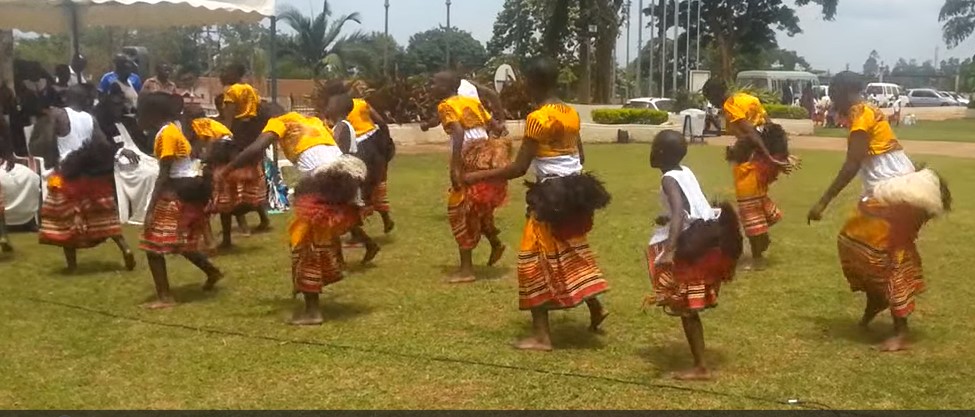
Music and Dance
The Baganda have rich musical traditions. Traditional instruments include:
- Drums (engalabi)
- Xylophones (amadinda)
- Harps
Dance performances are energetic and often performed during ceremonies and festivals.
Festivals of the Baganda People
Festivals are an important part of Baganda cultural life. They celebrate history, unity, faith, and the monarchy.
Kabaka’s Birthday (Kabaka Run)
One of the most famous modern cultural events is the Kabaka’s Birthday Run. It honors the current king of Buganda and promotes public health awareness.
The Kabaka’s palace, known as Lubiri Palace, serves as an important cultural landmark.
Coronation Anniversary (Enkuuka)
The coronation anniversary of the Kabaka is celebrated annually. It includes:
- Cultural dances
- Royal speeches
- Traditional music
- Community gatherings
This event strengthens unity among the Baganda.
Uganda Martyrs Day
Although it is a national event, it is particularly significant in Buganda. Pilgrims gather at Namugongo to commemorate the martyrs.
Everything You Need to Know About Baganda Festivals
- Purpose: Festivals promote unity, cultural pride, and remembrance of historical events.
- Dress Code: Participants often wear traditional attire.
- Music and Dance: Drumming and dance performances are central features.
- Royal Participation: The Kabaka or royal representatives usually attend.
- Food: Traditional meals like luwombo are prepared.
- Community Involvement: Clans actively participate and organize events.
These festivals attract tourists and strengthen cultural identity.
Marriage Customs of the Baganda
Marriage among the Baganda is a well-structured process.
Introduction Ceremony (Kwanjula)
Before a wedding, the groom’s family formally visits the bride’s family in a ceremony called “Kwanjula.” During this ceremony:
- Gifts are presented.
- The bride is formally introduced.
- Families negotiate bride price.
Wedding Ceremony in Baganda
After Kwanjula, couples may hold a church or mosque wedding depending on religion.
Cultural Expectations
Marriage is seen as a union between families, not just individuals. Respect for elders and proper conduct is highly valued.
Polygamy was traditionally accepted but is now less common due to religious influence.
Political Influence of the Baganda
The Baganda have historically held strong political influence in Uganda. The monarchy remains culturally significant, even though it does not govern politically.
The Kabaka continues to symbolize unity and heritage for millions of Baganda people.
Modern Life of the Baganda
Today, many Baganda live in urban areas, especially Kampala. They are active in business, politics, education, and entertainment.
You Can Also Read: How to Create PowerPoint Presentation for School
Despite modernization, many families continue to observe clan traditions, marriage customs, and cultural festivals.
Conclusion
The Baganda people are a proud and influential ethnic group in Uganda. Their history is deeply rooted in the powerful Buganda Kingdom, and their culture continues to shape the identity of central Uganda.
From their organized clan system and royal monarchy to their vibrant festivals, delicious traditional food, and respected marriage customs, the Baganda remain one of Africa’s most fascinating communities. Understanding the Baganda people provides insight into Uganda’s broader cultural and historical landscape.