
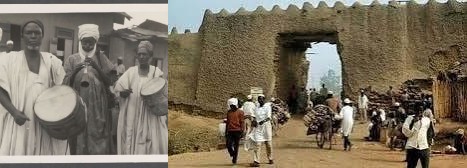
Introduction
The Hausa people are one of the largest and most influential ethnic groups in West Africa. Known for their deep cultural traditions, vibrant clothing, rich history, and strong commercial spirit, the Hausa have played a major role in shaping the culture of Nigeria and neighboring countries.
Also Read: Creation Account Based On Zaar (Sayawa) Culture
In this post, we explore their origin, language, food, festivals, religion, and cultural values.
Origin and Early History of the Hausa People
The Hausa trace their origin to ancient city-states known collectively as the Hausa Bakwai (the legitimate seven Hausa) cities such as Daura, Kano, Katsina, Rano, Zaria, Gobir and Biram (as present Hadejia) and the Banza Bakwai (Illegitimate Hausa) cities as Bauchi, Zamfara, Gwari, Kebbi, Nupe, Yauri and Kwararafa.
These city-states developed strong political systems, advanced trade networks, and unique cultural identities.
Hausa traced their origin to Arab, Baghdad in particular which according to this tradition, Bayajidda or Abuyazidu, one of the sons of the King of Baghdad fled from his father after a dispute and journey to another location and found himself in the Daura in the present day Katsina.
Other Story: Legitimate and Illegitimate Hausa
Hausa were in existence since around 13th century. Hausa are known for travelling to many cities and towns for business that makes their presence in so many countries in Africa especially in West and Central Africa.
Trade routes connecting North Africa and West Africa helped the Hausa develop a reputation as skilled merchants.
Language and Communication
The Hausa language (Hausa or Harshen Hausa) is one of the most widely spoken languages in Africa, extending from Nigeria to Niger, Ghana, Cameroon, and Sudan. It also serves as a major trade language across West Africa.
Traditional Hausa Foods
Food is an important aspect of Hausa culture. Popular dishes include:
Tuwo Shinkafa – soft rice meal often eaten with soup
Miyan Kuka – baobab leaf soup
You Can Also Read: Step-by-Step With Highest Common Factor (HCF)
Masa – use with grinded rice with yeast and it is in a round shape
Suya – spicy grilled meat
Fura da Nono – milk and millet balls drink
Dambu Nama – shredded dried meat
These meals are not only delicious but also deeply tied to Hausa hospitality.
Religion and Beliefs
The majority of Hausa people practice Islam and Christianity, which greatly influences their lifestyle, festivals, dress code, and social values. Traditional beliefs still exist in some communities, especially in rural areas.
Festivals and Cultural Celebrations
Hausa festivals are colorful, spiritual, and full of cultural symbolism. Key festivals include:
Argungu Fishing Festival
One of the most famous cultural festivals in West Africa, held annually in Kebbi State is the Argungu Fishing Festival. Thousands gather from around the world to catch the biggest fish using traditional methods.
Durbar Festival
Hausa operate Emir as a king. A grand celebration involving horse riding, drumming, dancing, and royal processions. It is a symbol of prestige and unity among Hausa emirates. It is mostly celebrated during Muslim fest celebration and it is celebrated in most of the Hausa cities. And this festival is chaired by the Emir with a horse riding during the festival.
Traditional Dress and Artistic Expressions
Hausa clothing includes:
- Babban Riga – large flowing robe
- Zanna Bukar fabric
- Hula (cap) worn by men
- Zani and embroidered accessories for women
- Art forms such as leatherwork, dyeing, weaving, and pottery also flourish.
You Can Also Read:
For more on the Hausa language, see this linguistic overview on Hausa Language in Britannica
Conclusion
The Hausa people remain one of the most influential ethnic groups in Africa, with a rich heritage that continues to shape West African identity. Their festivals, foods, language, and art forms play a major role in preserving the continent’s cultural diversity. You need to see how Hausa crowned their emir with the different decoration that is lovely and a horse ride.