
Introduction
This post took us to the Island of Nauru. The Nauruans are the indigenous people of the small Pacific island nation called Nauru. Despite their small population estimated at 13,000 and homeland, the Nauruans have a rich heritage, culture, and history — shaped by seafaring ancestors, tribal traditions, colonial influence, and modern pressures.
In this post, we explore in detail who the Nauruans are: their origin and history; their daily life, food, religion and beliefs; cultural practices; how they celebrate festivals; where they live today; and even marriage and family customs.
You Can Also Read: Zaar (Sayawa) Now Have A Chiefdom
This comprehensive guide aims to be informative and engaging — perfect for readers seeking to understand or write about Nauru and its people.
Origin & Early History
- The Nauruans are believed to descend primarily from Micronesian seafarers who settled on Nauru around 3,000 years ago, with evidence of Melanesian and Polynesian influence.
- According to historians the island was divided into 12 tribes (or clans) — each tribe had its own chief and distinct lineage, and descent was traced matrilineally (through the mother’s side).
- That is why these tribal divisions are symbolized in the 12-pointed star on Nauru’s national flag.
- For generations, Nauruans subsisted on the island’s natural resources — such as coconuts, pandanus fruit, fish, and lagoon aquaculture (for example, raising juvenile fish in the island’s, then-freshwater lagoon) to sustain their communities.
Demographics & Where They Are Found
- Nauru is one of the smallest nations in the world by land area.
- The Nauruans remain the predominant ethnic group on the island of Nauru, with native language and customs.
- While almost all Nauruans live on Nauru itself, some may travel or temporarily stay overseas (for education, work or other reasons). That’s the only way we can say Nauruan are found in other countries.
- Their language is Nauruan — a distinct Micronesian-family language — but English is also widely spoken, especially in government, commerce, and formal contexts.
Culture: Traditions, Social Structure & Art
Tribal and Clan Structure
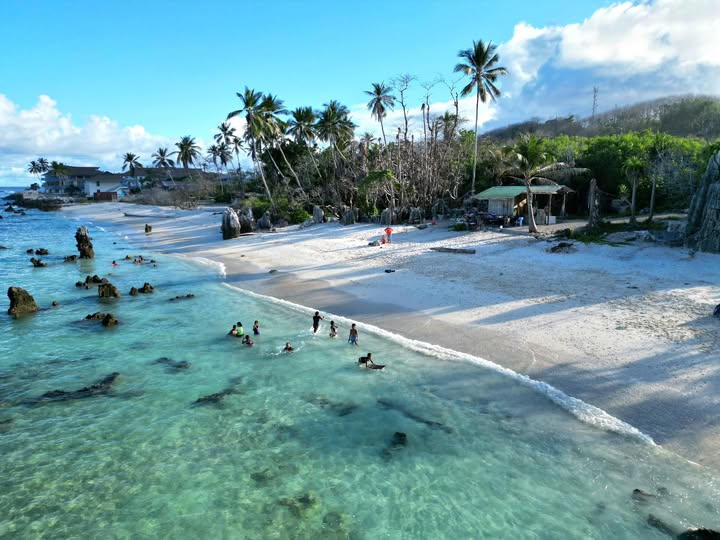
- As noted, the social organization is based on 12 tribes/clans, with membership inherited matrilineally.
- Historically, each tribe had unique attributes and perhaps symbolic totems (animals, natural elements, etc.), though over time and under external influence, many of these distinctions have blurred.
Social Values & Community Living
- Traditional Nauruan society emphasized communal living, respect for elders, sharing of resources — particularly food, given the island environment and subsistence lifestyle.
- Oral traditions played a key role: storytelling, chants, epic poems were used to transmit history, clan genealogies, myths, navigation knowledge, and cultural values across generations.
Art, Music & Dance
- Traditional music and dance remain important cultural expressions. Rhythmic drumming and chanting — often synchronized with communal dance — were typical during celebrations and ceremonies.
- Traditional crafts existed: weaving mats, hats, baskets from pandanus leaves or coconut fibers, shell ornaments, and other utilitarian or decorative items.
- However, many of the old customs and traditional crafts have declined due to external influence, colonialism, modernization, and environmental degradation (especially after phosphate mining). And trying to aligned with other cultures of the world.
Language & Identity
- The Nauruan language remains central to ethnic identity, family life, and traditional cultural transmission.
- But English serves as the language of government, business, and many formal contexts.
Food & Cuisine
People that are surrounded by water, most of their foods will be seafood. The cuisine of Nauru reflects both its island environment and changes brought by modernity.
- Traditional diet centered on seafood, coconuts, pandanus fruits, root crops, and fish — abundant in the ocean and lagoons.
- A celebrated traditional dish is coconut fish — raw or fresh fish (often tuna) marinated or served with coconut milk and seasonings.
- Coconut milk is widely used in cooking; coconut-based desserts (e.g. coconut mousse) are common on special occasions.
- Despite traditional roots, modern Nauruan cuisine is heavily influenced by foreign cuisines — especially Chinese and Western/Australian — a legacy of immigration and globalisation.
- Due to economic and environmental changes (notably phosphate mining), food supply and diet have shifted: much food is now imported rather than locally produced. This is how mining has done to their once fertile land.
It is shocking is informed you that, “Almost all food is imported, with the exception of fish caught by Kiribati fishermen.”
Read About Nauruan People Here…
Sadly, this transitioning diet — away from traditional wholesome foods toward imported, processed foods — is linked to rising health issues among Nauruans, including obesity and diabetes.
Religion & Beliefs
- Before colonial contact, Nauruans had their own traditional belief systems — animistic or spirit-based cosmology. For example, ancestral spirits and island-spirit beliefs were part of early spiritual life. Some of the spirits are Eigabanuwea, Damamak, Depoa, Dabanmaroa, etc.
- In the 1880s, Christian missionaries arrived — both Protestant (Congregational) and Catholic — and introduced Christianity, which gradually became dominant.
- Today the majority of Nauruans are Christians: largely belonging to the Nauru Congregational Church, with a significant minority in the Roman Catholic Church.
- While many Nauruans traditional spiritual practices have declined or faded, some older beliefs (regarding ancestors, spirits, sacred places) survive in memory and may still influence cultural identity for some families.
Other Beliefs of the Nauruan people and their gods are:
Dabuarik Damamak, one of the old gods of Nauru. Damamak is the God of War.
Damamak’s spirit rests in an immortal slumber in a spirit realm called Bwit Ani accessible through the alter Dabuarik Damamak. The rock still stands proud today in Meneñ behind Ara pond, where once the villagers of Ibwe thrived in their many.
In front of Damamak stands another rock called Demait Eigabanuwea, the tall rock holds the spirit of a once wise and powerful sorcereress named Eigabanuwea.
It was said that Eigabanuwea was the first Iruwa woman, a foreigner, to have landed in Nauru by canoe. She landed on the white beaches of Ibwe and it was Eigabanuwea who brought the 10 eyed war spirit to Nauru and introduced it to the people of Ibwe whom not long became successful in battle with the foreign sorcereress Eigabanuwea and the war god Damamak on their side.
The beloved sorcereress subsequently before her demise pointed at the rock next to the rock Damamak slumbers and shouted that the day will come when her spirit will be enshrined in the rock forever next to Damamak forever, and so it was, and how the rock became Demait Eigabanuwea.

Dabanmaroa or Eidabanmaroa, one of Nauru’s goddess of the sea, enshrined and worshipped as Dabuarik Dabanmaroa in old times. She was the protector and keeper of the people of Ganakõrõ village (Ijuw).
Behind Dabuarik Dabanmaroa standing tall is Epen Depoa. Earlier times Depoa was once a proud and fierce warrior of Ijuw, immortalised and honoured as Eidabanmaroa’s champion and keeper.
Today both rocks still stand proud, where they’ve always stood, are undisturbed at Aniwiditõ where it meets Anie. Some Nauruan still believed in this story and history. That’s why some are still practicing their traditional religion.
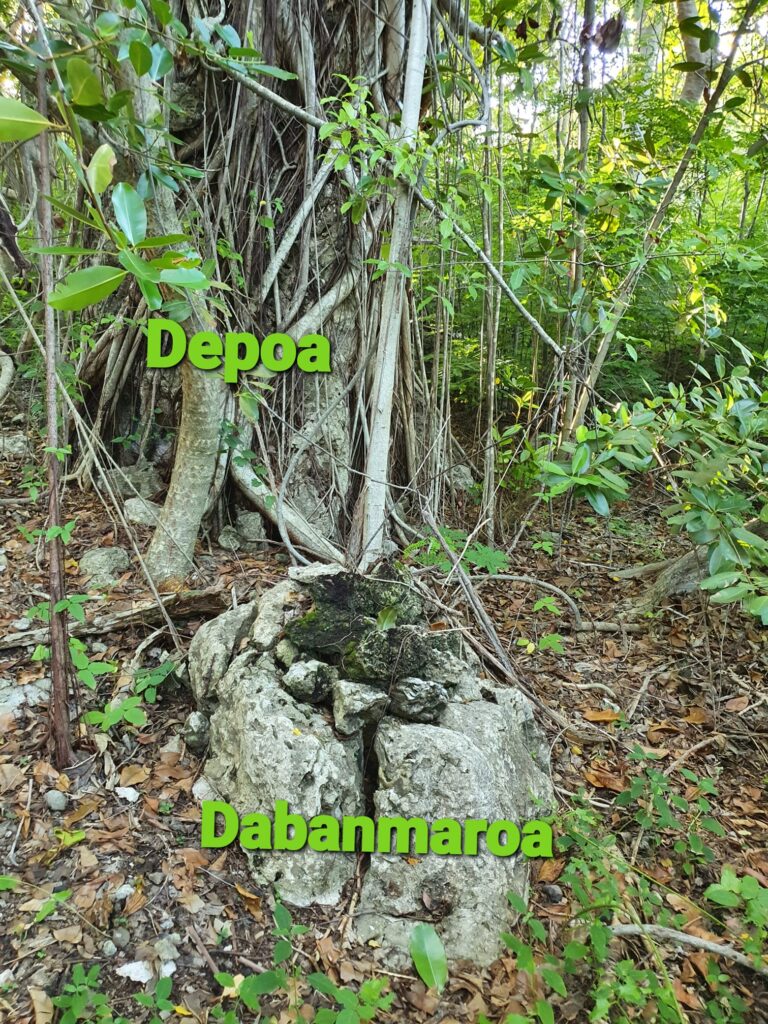
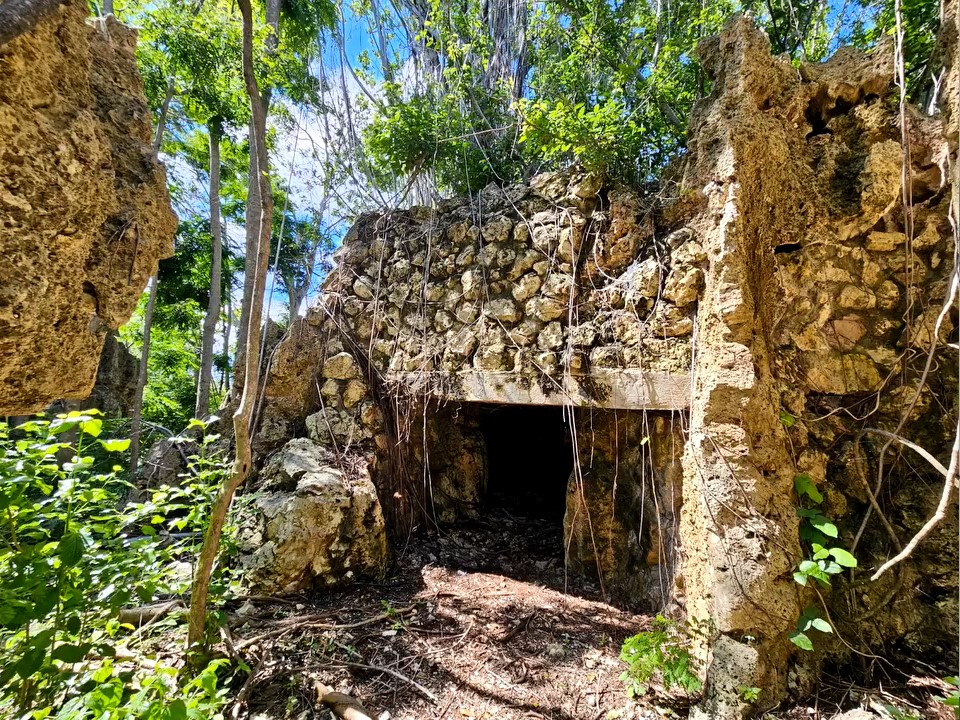
The sung hero Depoa who was adored and respected by many, once lived in a cave called Eraoin Depoa which is not far from where his spirit embodies a rock, standing guard over Dabuarik Dabanmaroa as her spirit rests in deep slumber.
Festivals & Celebrations
Although modernization and external influences have changed much of daily life, some festivals and celebrations remain central to Nauruan identity.
Angam Day
- Celebrated every year on 26 October, Angam Day commemorates the day when the Nauruan population — after severe declines due to epidemics, wars, and displacement — recovered to a threshold considered necessary for the survival of the Nauruan people. If not, by now we could have been describing the tribe as one of forgotten tribe
- The term “angam” in Nauruan roughly translates to “jubilation,” “celebration,” or “achievement of a goal.” That’s why they celebrated that with joy and happiness.
- Historically: in 1932 — the birth of the so-called “first Angam Baby” marked the first time the population reached ~1,500. Then again after WWII, the population dropped below that threshold, and when it recovered, another Angam Baby was recognized, reaffirming the survival of the people. Now, we have over 13,000 of Nauruans.
- Angam Day thus is both a celebration and a day of reflection, symbolizing resilience, survival, community pride, and continuity.
Contemporary Celebrations & Cultural Events
- On such festivals and public holidays (including independence celebrations), Nauruans often gather for food sharing, communal feasts, dancing, singing — reviving aspects of traditional music and dance.
- Traditional rhythmic songs, folk tunes, and dances (some derived from earlier “fish-dance” or nature-inspired dances) are performed.
- Traditional crafts (weaving mats, shell jewelry, baskets) — while diminished — still sometimes appear especially in cultural exhibitions or when older generations engage in heritage work.
However, many older traditions have weakened significantly under colonial and modern pressure: Western dress codes, modern housing, education, urbanisation — have all contributed to decline in cultural events.
Daily Life, Economy & Modern Changes
- The discovery of phosphate on Nauru transformed the economy — shifting from a subsistence-based lifestyle to a cash economy centered around mining.
- As a result, many traditional practices — agriculture, lagoon-based fish farming, interior-island living — declined or disappeared. This has made most of Nauruans people ended up living along the narrow coastal strip.
- Imported food and external influences have replaced many traditional customs, contributing to changes in lifestyle and health concerns (notably obesity and diabetes). And this has been a concerned for many.
- On the positive side, literacy has improved — many Nauruans can read and write; and there is renewed interest in preserving history, language, and cultural heritage (through writing, music, stories, documentation).
Marriage, Family & Kinship
- As noted, the Nauruan society is matrilineal: clan membership and descent are inherited through the mother.
- Upon marriage, partners must belong to different clans — inter-clan marriage was traditional.
- In modern times, marriages are usually Christian ceremonies, in line with the predominance of Christianity and the marriage ended the celebration in the Church for Ministers of God blessing.
- Family structure often centers around the mother — she manages social care and economic responsibilities, even if the nominal household head is the male.
- Inheritance of land and property differs: while both sons and daughters may inherit, only daughters can transmit clan membership and full rights to their children (without extended-family approval).
This matrilineal and clan-based system has shaped identity, community belonging, and social responsibilities among Nauruans for generations.
Challenges & Changes: Preserving Culture in a Modern World
While Nauruan culture is rich, it faces serious challenges:
- Environmental degradation — phosphate mining devastated much of the island’s interior (“topside”), leading to loss of vegetation, traditional land, and resources.
- Loss of traditional practices — with modernisation, many crafts, traditional agriculture, weaving, and fishing practices have declined.
- Health issues — shift to imported/processed food has contributed to high rates of obesity and diabetes among Nauruans.
- Cultural erosion — younger generations may be less fluent in the Nauruan language or less connected to traditional tribal/clan identities; Western dress and globalised lifestyle dominate daily life.
Still, there is hope: efforts to revive interest in history, record songs, stories, and produce Nauruan dictionaries and literature are underway.
Why the Nauruan People Matter: Identity, Resilience & Cultural Legacy
The story of the Nauruan people is not just about an isolated island — it’s about survival, adaptation, and identity. Their survival through epidemics, population collapse and environmental change is embodied in festivals like Angam Day. Their culture, though pressured by external forces, still carries the imprint of ancient seafaring ancestors, tribal bonds, and communal values.
You Can Also Read: How to Solve Quadratic Equations Using Factorization Method
Even today, each Nauruan’s clan membership, family ties, language, and heritage contribute to a distinct identity — one that connects past and present, land and sea, ancestors and descendants.
When we learn about the Nauruans, we learn not simply about a remote island, but about what it means for a small community to preserve identity, dignity, and heritage against all odds.
Conclusion
The Nauruan people of the Island of Nauru — though small in number and remote in location — have a profound and fascinating cultural heritage. From their ancient origins as Micronesian settlers, through generations of clan-based social structure, to modern challenges of environmental degradation, globalization, and health issues — their story is one of resilience.
Understanding the Nauruans means understanding their history, their food, their social values, their faith, their joys and struggles. It means respecting a people whose identity has endured for millennia in the face of great change.
For those curious about Nauru: appreciate the delicate balance between preserving heritage and embracing modernity — because the story of the Nauruan people is far from over.
If you are planning to visit Nauru, please do to know more about the Nauruan people of Nauru. Let’s keep preserving our cultures and not let it fade away. Hope this post is helpful? Keep visiting our website we keep exploring the world of culture to you.