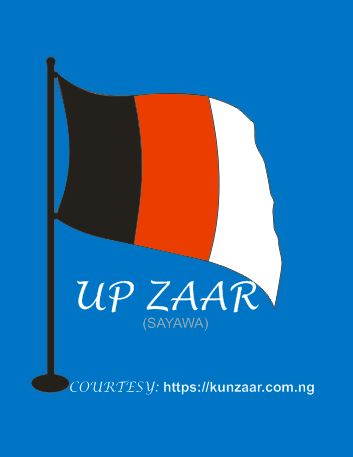
The Creation Account according to Zaar culture, the people of Bauchi State, Nigeria. We’ll preserve the biblical structure from Genesis 1–2.
Zaar (Sayawa) are tribe that accepted Christianity in totality. That’s, abandoning other religions especially the African early religion (traditional religion). With others practicing Islam. Before the coming of the Missionaries, Zaar (Sayawa) tribe believed in the Supreme God known as Chong or Chongvon who created everything on earth. And they go through him using some of his messengers which are among the people to take some decision regarding rewards or executing some punishment due to breaking of the law at that time. From this present-day generation, I can’t say there’s any Zaar (Sayawa) person that is into traditional religion.
Also Read: The Power of Proverbs: Wisdom from Different Cultures Compared
Chong resides in all the objects. Nothing can be hidden from him. They worshipped a deities represented by Sing wahri, Nahvalhm and Nahfeti. They are referred to as (Mumsh, meaning masquerade or Dodo in Hausa). What they normally do is when there is sickness in the land, they console and heal the land. And during harvest, they are the ones to give the go ahead. Anyone that started the harvest before the announcement, there will be a penalty for that. They also punished those who still someone’s property or farm produce.
The Zaar (Sayawa) Creation Story Also Inspired by Genesis
How Chong (Chongvon) Made the World and All That Is In It
Chong is God while Chongvon is God in Heaven
Sometimes ago, before the mountain of Pusji (a black stone in the present-day Tafawa Balewa), everything was silent and without form. Darkness covered the land, and there was no sound of drum, no cry of bird, no laughter of child.
Then Chong, the Almighty Creator, whose spirit moves like the gentle breeze on the hills, decided to bring life and order into the emptiness of Pusji where Sayawa believed to settled for many centuries.
The First Day – Chong Speaks Light (Zang nah Nambong. That’s day 1)
Chong spoke with His eternal voice, saying, “Let there be light.” And there was light. Then the light burst forth across the hills. The darkness ran away to hide behind the other mountains far away.
Chongvon looked at the light and how its shine over darkness and how darkness ran away the He smiled, saying, “This is good.”
He called the light “Yalghn” (day) and the darkness “Dibnih” (night). That was the first day.
The Second Day – The Sky and the Waters (Zang nah Mbhltlm. That’s day 2)
On the second day, Chongvon stretched out His mighty hand and separated the waters above from the waters below. He created the sky, vast like the open plain land of Pusji areas, clear and blue. He called it “Gahmi”, meaning the great expanse where clouds dance and rain descend from.
The Third Day – The Earth and the Green Life (Zand nah Mahyi. That’s day 3)
On the third day, Chongvon gathered the waters below into rivers and streams, and dry land appeared. He called the dry land “Yals”, meaning the earth of the people, and the gathered waters “Zyah”, meaning abundance.
Then Chongvon caused the soil to breathe — and grass sprouted, trees stood tall, and crops of every kind appeared. The like of acha, millet, sorghum, and groundnut grew in the land to feed the people who were yet to be made.
Chongvon looked with excitement upon the green beauty and He exclaimed, “It is good.”
The Fourth Day – The Lights of the Heavens (Zang nah Whumsh. That’s day 4)
On the fourth day, Chongvon placed great lights in the sky — the Sun (Zang) to rule the day, blazing like fire over the hills, and the Moon (Lhm) and stars (Charr) to rule the night, guiding hunters and travelers and His creations.
He then told them to mark seasons and festivals — for planting (Wok-tari), for harvest, and for the times of thanksgiving (Lhm Zaar is for both harvest and thankgiving).
The Fifth Day – The Creatures of Water and Air (Zang nah Nandamh. That’s day 5)
On the fifth day, Chongvon filled the rivers with fish and the sky with birds. Such as the tilapia swam joyfully, and the eagle soared high above the mountains. The parrot called, the dove cooed, and the chicken scratched the earth.
Then Chongvon blessed them, saying, “Multiply and fill the waters and the skies.” Because he wanted to make everything available for man who is yet to be created.
The Sixth Day – The Creatures of the Land and Mankind (Zang nah liim. That’s day 6)
On the sixth day, Chongvon made animals of all kinds such as: the cow that gives milk, the goat that climbs rocks, the sheep that follow the shepherd, and the dog that guards the home.
Then Chongvon formed man from the red soil of Zaar land. He breathed into him, and the man became alive. Chongvon named him Za’ar, meaning life from the earth. Later, Chongvon caused Za;ar to sleep deeply, and from his side He made Ghd, his companion.
You Can Also Read: Step-by-Step With Highest Common Factor (HCF)
Together, they became the parents of all the people including Zaar people and the whole world. Then Chongvon placed them in a beautiful garden, with rivers and fruit trees — a place like the fertile plains of present-day Tafawa Balewa (Pusji) and Bogoro and some part of Plateau State.
He told them, “Take care of this land, keep it, and eat freely, but do not take from the tree of disobedience.” And knowing the good and evil of this world laying underneath.
When Chongvon saw all that He had made — the hills, the rivers, the sun, the people — He said, “Everything is very good.” And my work is completed.
The Seventh Day – Rest and Blessing (Zang nah Watsimaiy. That’s day 7)
On the seventh day, Chongvon rested from the works he has been doing. God needed rest. So also, we need to rest from time to time. He sat upon the mountain of Pusji and looked over the work of His hands. He blessed the day and made it holy — a day for man to rest, to drum, to dance, and to remember the goodness of Him (Chong).
From that time on, the Zaar (Sayawa) people say, “Chongvon gave us land, water, and breath. When we care for them, we honor Him.” That is why the Zaar respect the land, honor the rain, and give thanks to Chong through song and offering. Up till today, Zaar (Sayawa) songs are mainly on giving thanks to Almighty for all things come from Him, and to Him all things return.
Culture and Biblical Accord
This retelling keeps the seven-day creation structure of Genesis 1, but expresses it through Zaar cultural imagery — mountains, rivers, crops, and the Creator Chong — a name meaning God in Zaar. It connects biblical truth with local heritage, helping the Zaar people see themselves in the story of creation from Day 1 to Day 7.