

Introduction
The tribe, Igbo is one of the largest and most influential ethnic groups in Nigeria and Africa, predominantly found in southeastern Nigeria. Known for their deep cultural heritage, entrepreneurial spirit, rich festivals, and strong traditional values, the Igbo people have made significant contributions to Nigeria’s economic, political, and cultural landscape.
The Igbo people with a population estimated at over 45 million, stands as a major pillar of West African civilization through their entrepreneurial spirit. Their history, traditions, and way of life remain a powerful reflection of Africa’s ancient heritage and evolving modern identity.
Worthy of note, this article will explore everything you need to know about the Igbo tribe, including their origin, history, religion, food, festivals, marriage customs, culture, and where they can be found around the world.
1. Origin of the Igbo Tribe
The origin of the Igbo people has been a subject of debate among historians, anthropologists, and linguists. Several theories attempt to explain how the Igbo tribe emerged into this part of the world.
a. Nri Kingdom Theory
One of the most accepted theories states that the Igbo originated from the ancient Nri Kingdom, founded around the 10th century. The Nri people were known as priests, peacemakers, and spiritual leaders, and played a major role in shaping Igbo religious and cultural traditions.
b. Jewish Link Theory
Some historical traditions suggest that the Igbo people may have originated from ancient Israel, based on similarities in:
- Circumcision practices
- Naming customs
- Religious purity laws
- Historical oral traditions
Though not scientifically proven, this theory continues to shape conversations about Igbo ancestry while some agrees to it and some ignored that theory.
c. Autochthonous Origin Theory
This anthropological theory argues that the Igbo people originated from the Lower Niger Basin, meaning they developed indigenously in what is now southeastern Nigeria.
Summary of Igbo Origin
No single theory definitively explains the Igbo origin, but archaeological evidence, oral history, and cultural practices point strongly to a long-standing presence in southeastern Nigeria for some decades ago.
2. History of the Igbo Tribe
a. Pre-Colonial Igboland
One thing about Igbo is that before the arrival of Europeans, the Igbo people lived in independent communities governed by:
- Elders
- Age grades
- Priests
- Village assemblies (Ama-ala)
Unlike many African societies, the Igbo did not operate under a king until later periods. Their system is described as acephalous (without a central ruler).
b. The Nri and Arochukwu Influence
Nri: A peaceful, priest-led civilization that spread religious and cultural influence across Igboland.
Also Read: Ten Things To Know About Zaar (Sayawa) Tribe
Arochukwu: A powerful center known for the Aro Confederacy, which played major roles in regional trade and spirituality.
c. Igbo in the Colonial Era
During the colonial era, the Igbo actively participated in:
- Anti-colonial movements
- Economic modernization
- Christian missionary education
Early arrival of missionaries and colonial whose comes with education and health, makes Igbo adopted education and because of widespread acceptance of education, the Igbo quickly became highly literate and entrepreneurial, dominating Nigeria’s early civil service and business sectors.
d. Post-Colonial Era and the Civil War
The Igbo experienced the tragic Nigerian Civil War (1967–1970) after Biafra attempted to secede. Despite heavy losses, the Igbo people rebuilt rapidly, demonstrating their resilience and adaptability.
3. Where the Igbo Tribe Can Be Found
Primary Region
The Igbo people are predominantly found in Southeastern Nigeria, especially in the states like Anambra, Imo, Enugu, Abia, Ebonyi, Delta and other Nigerian Regions.
So, due to migration and entrepreneurship, Igbos are also found in states such as Lagos, Abuja, Port Harcourt, Benin City, Kaduna and Kano.
Countries Where Igbos Can Be Found
The Igbo diaspora extends across the world, especially due to migration and the Transatlantic Slave Trade. You can find significant Igbo communities these countries, e.g. United States, Canada, United Kingdom, Brazil, Jamaica, Trinidad and Tobago, Cuba, Gabon, Sierra Leone, Ghana, Cameroon and Equatorial Guinea.
There’s this saying in Nigeria, if you didn’t see an Igbo man in a village, that village does not accept visitor and it is not good for you to stay there.
4. Igbo Traditional Religion
Before the introduction of Christianity, the Igbo practiced a religion centered on nature, ancestors, and deities (Alusi).
Key Elements of Igbo Traditional Religion
Chukwu (God): The supreme creator.
Ala (Earth Goddess): The goddess of fertility, morality, and land.
Chi: A personal spirit or destiny guide.
Ancestral Worship: Honoring deceased family members who guide and protect the living.
Divination: Carried out by priests called Dibia, who communicate with the spiritual realm.
Modern Religious Practices
Today, most Igbo people are Christians, especially Roman Catholics, Anglicans, and Pentecostals. However, traces of traditional beliefs still exist in festivals, proverbs, and cultural practices while some practiced Islam.
5. Igbo Festivals and Celebrations
Festivals are an essential part of Igbo culture. They celebrate spirituality, harvest, unity, ancestors, and community identity.
a. New Yam Festival (Iri Ji or Iwa Ji)
This is the most important Igbo festival, celebrated between August and October at the end of the farming season.
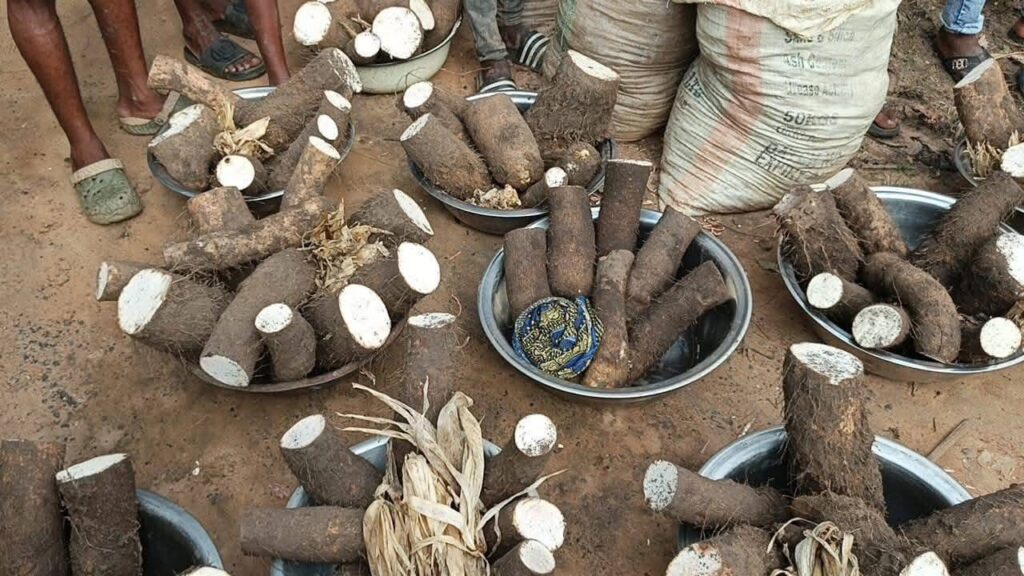
Meaning of the Festival
- Marks the beginning of the harvest season
- Represents gratitude to God and the gods
- Celebrates life, fertility, and productivity
- Activities During the New Yam Festival
- Offering of the first yam to God and ancestors
- Traditional dances and masquerades
- Feasting with pounded yam, yam porridge, and roasted yam
- Display of cultural attire and music
- Wrestling contests, storytelling, and cultural performances
Then, why the New Yam Festival is Important
It symbolizes:
Renewal
Community unity
Agricultural blessings
Respect for tradition
b. Ofala Festival
Celebrated mostly in Anambra State, especially in Onitsha and Nnewi.
- Purpose
- Marks the annual emergence of the king (Obi or Igwe)
- A time for the king to bless the people
Features
- Masquerades
- Colourful royal attire
- Traditional music and display of royalty
c. Mmanwu (Masquerade) Festival
The Igbo masquerade festival honors:
- Ancestors
- Spirits
- Community traditions
Masquerades appear with masks representing spiritual beings and perform dances, rituals, and dramatic acts.
d. Ekpe Festival
Common among the Igbo in South-East regions, particularly in Abia and Anambra.
Its Significance
Involves the Ekpe secret society
Features lion-like masquerades and drumming
6. Igbo Food and Cuisine
The Igbo tribe is known for delicious and nourishing dishes rooted in agriculture and local ingredients.
Popular Igbo Foods Includes:
Fufu and Egusi Soup – Melon seed soup with thick swallow.
Ofe Nsala (White Soup) – Traditionally made for special guests.
Ofe Akwu – Palm nut stew, usually eaten with rice.
Akpu (Cassava Fufu) – Made from fermented cassava.
Ugba/Ukpaka Salad – Oil bean seed delicacy.
Nkwobi – Spicy cow foot dish.
Abacha (African Salad) – Served with palm oil, fish, and spices.
Pepper Soup – A spicy broth with fish or meat.
Bitterleaf Soup – A beloved Igbo dish made with cocoyam paste.
7. Igbo Marriage Culture and Traditions
Marriage is a significant event in Igbo culture and is performed in three major stages.
a. Introduction (Iku Aka)
The groom’s family visits the bride’s family to declare interest.
b. Bride Price Negotiation
The groom presents:
- Kola nuts
- Palm wine
- Drinks
- Cash
Other customary items
c. Traditional Wedding (Igba Nkwu)
This is the main cultural ceremony marked by:
- The bride serving palm wine to identify her husband and when that is done, there will be dancing, drumming, and celebration
- Exchange of gifts
- Blessing from elders
- Importance of Marriage in Igbo Culture
- Represents family unity
- Strengthens community bonds
- Continues lineage
This celebration is to connects with their ancestors and future generations
8. Igbo Cultural Values
Since the Igbo tribe is guided by strong cultural principles that shape their identity.
You Can Also Read: Mastering Word Problems
Their Major Cultural Values Includes:
- Hard Work (Ike Mmuo)
- Respect for Elders
- Community Cooperation (Igwe Bu Ike – Unity is Strength)
- Entrepreneurship and Trade
- Education and Excellence
- Hospitality
- Truthfulness and Justice (Ofo na Ogu)
- Family Honor
9. Igbo Arts, Music, and Dance
- Igbo Art
- Wood carving
- Bronze casting
- Pottery
- Masks and symbols
- Music and Dance
- Ekwe (wooden drum)
- Oja (flute)
- Udu (pot drum)
- Ogene (gong)
- Famous Igbo Dances
- Atilogwu
- Nkwa Umuagbogho
- Ikpirikpi-ogu (War Dance)
Conclusion
The Igbo tribe is one of Africa’s oldest and most culturally rich civilizations. Their vibrant history, spiritual depth, delicious food, colorful festivals, and strong values make them an important part of Nigeria and the global African diaspora. Igbo tribe have since shown their resilience in entrepreneurships because it is hardly not to see an Igbo man/woman in a village even though the village is in remote area.
These entrepreneurship spirit in Igbos has since opened eyes of many people to venture into businesses and entrepreneurship as a best way to go. From the famous New Yam Festival to their entrepreneurial strength and tradition of excellence, the Igbo people continue to shine as a symbol of resilience, unity, and cultural pride.