

Introduction to the Balinese People
Our cultural voyage takes us to Indonesia and our cultural focus is the Balinese people.
The Balinese people are one of the most culturally rich and spiritually devoted ethnic groups in Southeast Asia. They originate from the Indonesian island of Bali, globally famous for its beautiful beaches, ancient temples, and vibrant festivals. What makes the Balinese community unique is their strong connection to Hindu traditions, ancestral rituals, and artistic expressions such as dance, sculpture, music, and architecture.
Also Read: Maasai Tribe History
Understanding the Balinese people helps anyone whether you a tourists, researchers, cultural enthusiasts, or students you are to appreciate the soul of Bali beyond tourism. This blog post provides a detailed exploration of their history, origin, religion, food, culture, festivals, countries they are found, and marriage practices.
1. Origin of the Balinese People
The origin of the Balinese people can be traced way back to three major migrations:
1. Proto-Malay Migration (2000 – 1500 BCE)
The earliest inhabitants of Bali were believed to be Proto-Malays, who migrated from mainland Southeast Asia into the Indonesian archipelago. They settled on the island and laid the foundation for early Balinese culture.
2. Indian Influence and Hindu Migration (1st – 11th century)
The second major migration is connected with the Indian Traders. Balinese civilization transformed significantly with the arrival of Indian traders, priests, and scholars. Through interaction with these visitors, Balinese society adopted elements of Hinduism, Sanskrit language, epics like the Ramayana and Mahabharata, and classical Indian architecture.
3. Javanese Influence (13th – 16th century)
When the Majapahit Empire of Java declined, many nobles, scholars, and priests migrated to Bali. This migration shaped the Balinese caste system, art, and religious rituals.
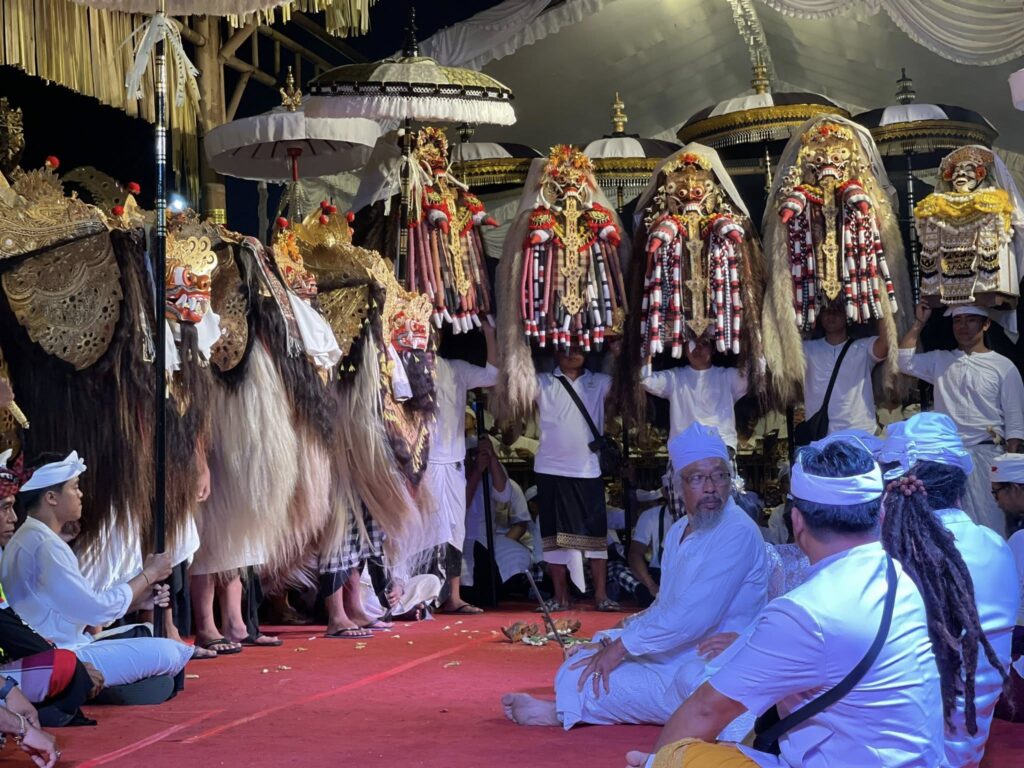
Today, the Balinese people are a blend of these cultural traditions. Such as:
- Indigenous Austronesian culture
- Indian Hindu culture
- Javanese artistic and political traditions
2. History of the Balinese People
Early Bali
Archaeological evidence shows that Bali has been inhabited since prehistoric times. Ancient bronze drums and stone carvings reveal early material culture on the island before foreign influence arrived.
Hindu-Buddhist Kingdoms
From the 8th century onward, Bali became a center for Hindu-Buddhist kingdoms. Temples, palaces, and irrigation systems were developed, including the famous subak, Bali’s traditional water management structure.
Majapahit Era
The fall of the Majapahit Empire brought an influx of Javanese elites, leading to:
- A deeper establishment of Hinduism
- A refined caste system
- Development of Balinese dance and theater
Dutch Colonial Rule (19th – 20th century)
Bali came under Dutch domination, but its cultural identity remained strong. Many traditional practices survived because the Balinese fiercely defended their customs despite the presence of the Dutch, it doesn’t stop them from identifying and celebrating their cultural heritage.
You Can Also Read: Step by step with Lowest Common Multiple (LCM)
Modern Era
Today, most of the Balinese people maintain a unique cultural identity within Indonesia a country with as Muslim-majority religion while sustaining a rich Hindu tradition that influences all aspects of daily life.
3. Religion of the Balinese People
The Balinese people practice Balinese Hinduism, a special blend of:
- Hindu beliefs
- Buddhism
- Animism
- Ancestor worship
- Islam
- Christianity
Islam is estimated as the second largest religion in the Island after Hindu as the largest. In 2025, Christianity make up to about 2.62% of Bali’s population. Within this group, Protestants account for roughly 1.76%, while Catholics represent about 0.86%.
Although Christianity remains a minority religion on the island, its distribution is uneven across different areas. Higher concentrations of Christians are found in parts of Badung Regency, particularly the Kuta districts, where they constitute between 7% and 11% of the population, as well as in Denpasar, where Christians make up around 6%.
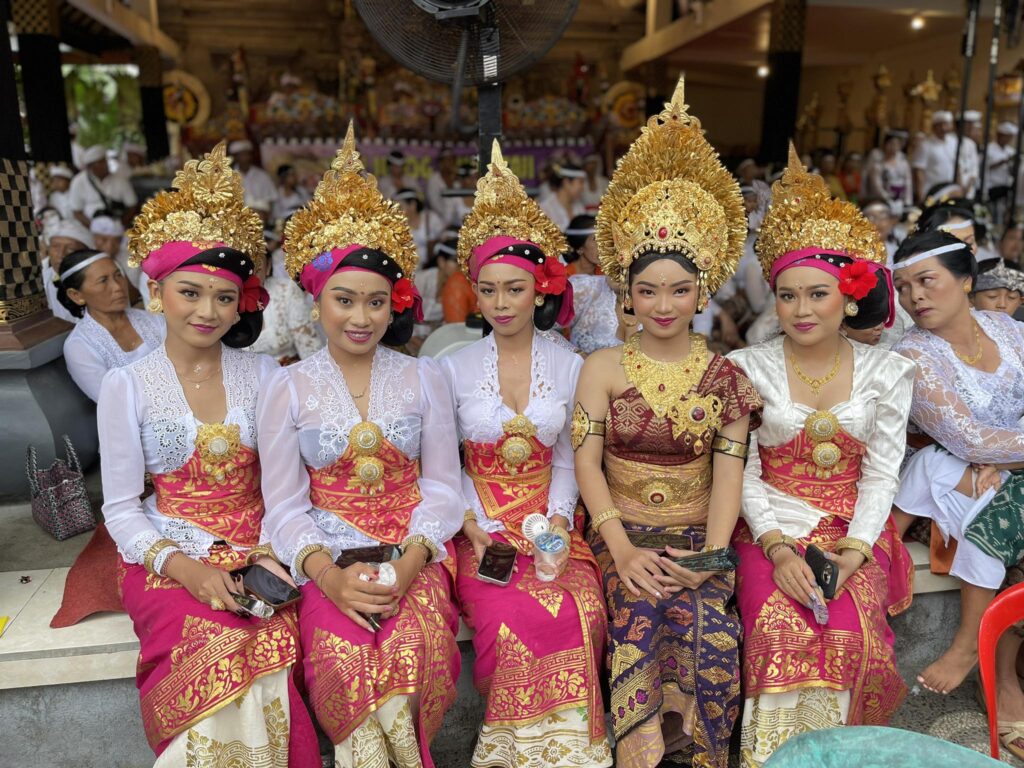
Certain communities stand out as strong centers of Christian life. Villages such as Blimbingsari, which is predominantly Protestant, and Palasari, known for its Catholic majority, are widely regarded as key Christian settlements in Bali.
Balinese Christianity has also developed in harmony with local traditions. Many churches reflect Balinese architectural styles by featuring gapura-style split gates, and some replace conventional church bells with kulkul, the traditional wooden slit drums used for community communication.
In terms of organization, most Protestant churches on the island belong to the Gereja Kristen Protestan di Bali (GKPB), a denomination that has played a central role in Balinese Protestant life since its founding in 1931.
Key Beliefs
- Tri Hita Karana – Harmony between humans, nature, and God
- Karma and Dharma – The law of cause and effect and righteous living
- Reincarnation
- Offerings (Canang Sari) – Daily offerings to appease spirits and honor deities
Important Deities
- Sang Hyang Widhi Wasa – Supreme God
- Brahma, Vishnu, Shiva – Trinity
- Dewi Sri – Goddess of rice and fertility
- Barong – Protective spirit
And the important thing is that their temples (called “Pura”) are central to Balinese religious life. Every village, family, and region maintains its own sacred shrine.
4. Food of the Balinese People
Like any other culture and tribe, there’s a certain food that is ascribed to a culture or tribe. Balinese cuisine is flavorful, aromatic, and deeply connected to religious ceremonies.
Popular Balinese Dishes
- Babi Guling – Spit-roasted suckling pig
- Ayam Betutu – Slow-cooked spiced chicken
- Lawar – Mixed vegetables, meat, grated coconut, and spices
- Sate Lilit – Mashed fish or chicken skewers
- Nasi Campur Bali – Rice served with vegetables, peanuts, meat, and sambal
Ingredients Common in Balinese Cooking
- Coconut
- Lemongrass
- Chili
- Turmeric
- Galangal
- Kaffir lime
Food is not just for eating—it is often used in ceremonial offerings, especially during festivals, temple rituals, and life-cycle ceremonies.
5. Festivals of the Balinese People (Everything You Need to Know)
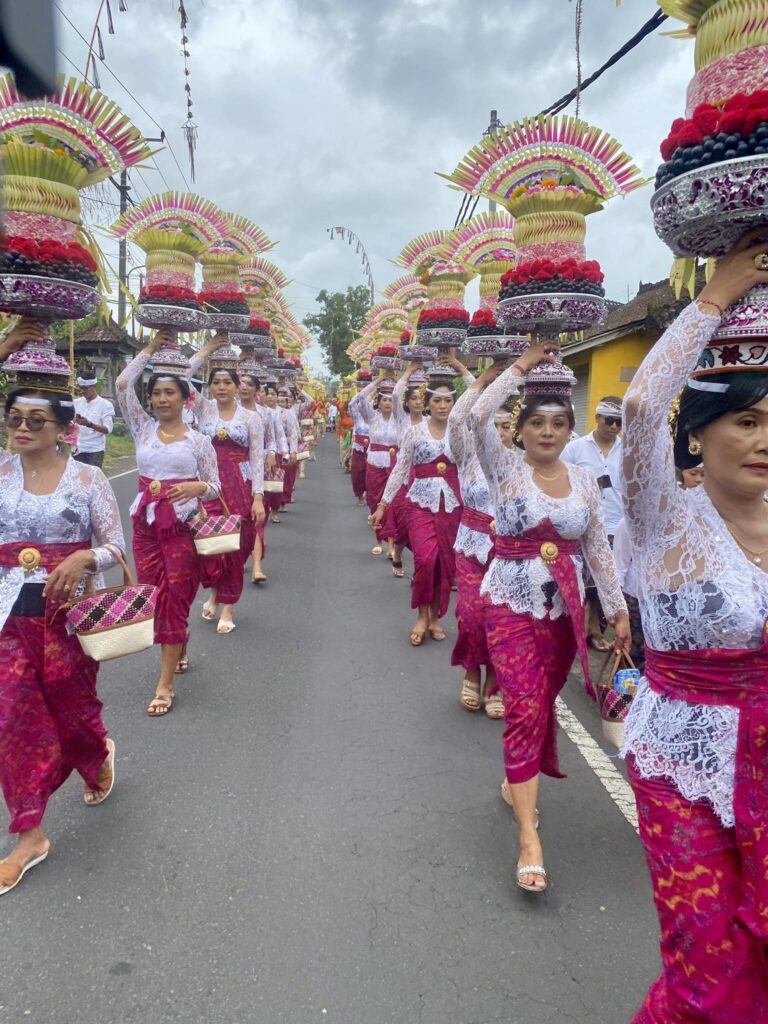
Balinese people have already made festival a way of their lives. Festivals are the heart of Balinese life. Every week, month, and season includes a religious ceremony. Here are the most important ones listed below:
a. Nyepi Festival (Balinese Day of Silence)
What is Nyepi Festival among the Balinese?
Nyepi marks the Balinese New Year, but it is celebrated in complete silence.
What Happens during this festival?
- No travel
- No work
- No electricity
- No entertainment
- Fasting by some devout believers
- The entire island becomes completely quiet
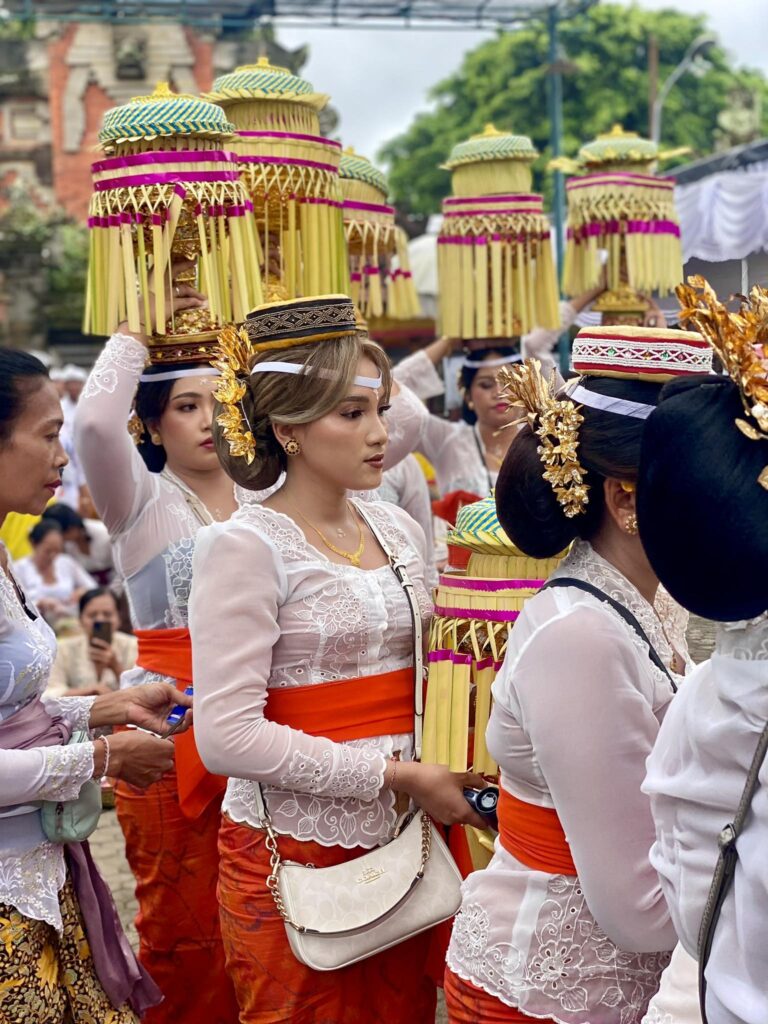
This festival is so powerful as even airports shut down for 24 hours.
Purpose:
To purify the island and drive away evil spirits.
Important Pre-Nyepi Event:
Ogoh-Ogoh Procession – Giant demon statues are paraded and burned to symbolize the destruction of negative forces.
b. Galungan and Kuningan Festival
This festival celebrates the victory of good (Dharma) over evil (Adharma). It takes so many days in celebrating this particular festival.
Duration: 10 days
Key Features:
- Families return to ancestral villages
- Penjor poles (decorated bamboo poles) are erected
- Ancestors are believed to visit homes
- Kuningan marks the day spirits return to heaven
c. Saraswati Day
This day is dedicated to Dewi Saraswati, the goddess of knowledge, wisdom, and books.
Activities:
- Blessing books and school materials
- Children perform temple activities
- Dance performances celebrating learning
d. Pagerwesi Day
This festival is also known as the “Day of Strength,” honoring the power of protection.
e. Melasti Ceremony
Balinese people celebrate this day for a particular purpose. Is a purification ritual held on beaches and rivers before Nyepi.
f. Temple Festivals (Odalan)
During this festival, each temple in Bali has its own anniversary celebration every 210 days.
What to Expect:
- Traditional dance
- Gamelan music
- Offerings and prayers
- Community feasting
g. Cremation Ceremony (Ngaben)
A major rite in Balinese Hinduism.
Purpose:
To release the soul from the body so it can reincarnate.
Features:
- Decorative funeral towers
- Large ceremonies
- Chanting and dances
6. Culture of the Balinese People
Balinese culture is spiritual, artistic, and community-driven.
a. Traditional Clothing
- Men: Kamen (sarong), udeng (headcloth)
- Women: Kebaya, colorful sashes, ornate fabrics
b. Language
- Balinese language
- Bahasa Indonesia (national language)
- Some understand English due to tourism
c. Arts and Crafts
Balinese culture is world-famous for its artistic expressions.
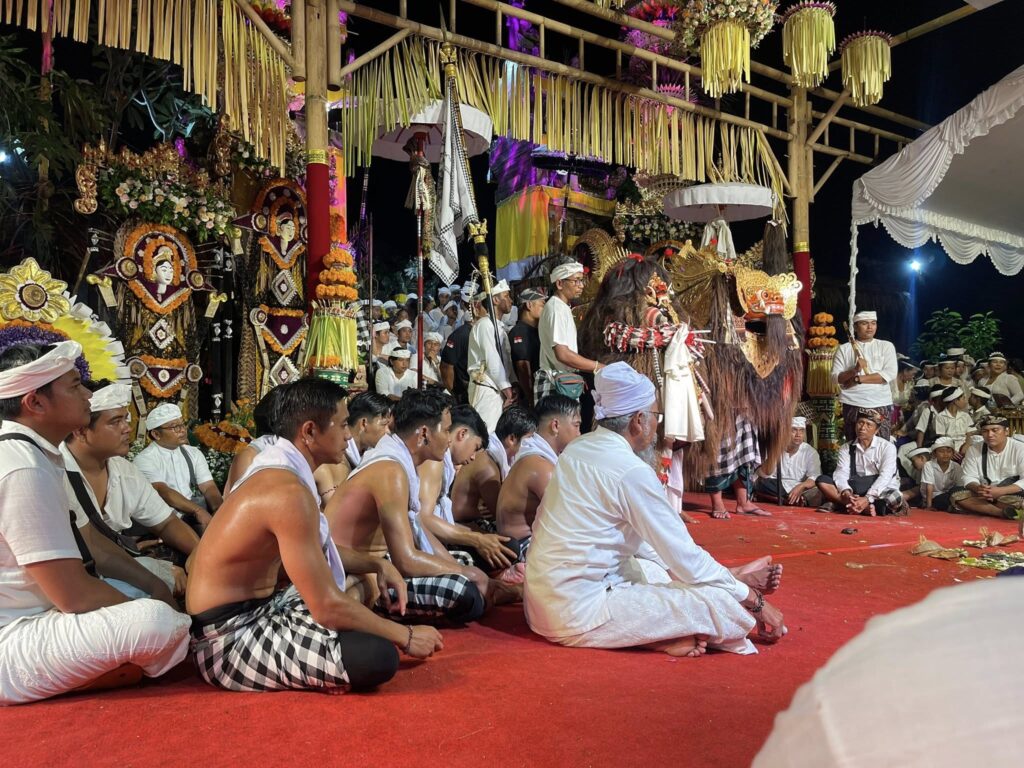
Dance
Balinese traditional dances include:
- Legong
- Kecak (Monkey dance)
- Barong dance
- Pendet dance
Crafts
- Wood carving
- Stone carving
- Silver jewelry
- Batik and ikat textiles
d. Architecture
Balinese architecture features:
- Open pavilions
- Ornate stone gateways
- Temples with tiered roofs
- Symbolic carving patterns
Every home is built according to spiritual rules called Asta Kosala Kosali.
e. Traditional Social Structure
Balinese society is organized based on the caste system, including:
- Brahmana (priests)
- Satria (warriors)
- Wesia (merchants)
- Sudra (commoners) – majority of Balinese
7. Countries Where the Balinese People Are Found
While the majority live in Indonesia, especially:
- Bali
- Lombok
- Java
- Sulawesi
Small Balinese communities can also be found in:
- Australia
- The Netherlands
- United States (California and Hawaii)
- Malaysia
- Singapore
8. Marriage Traditions of the Balinese People
No culture/tribe plays with the issue of marriage. Balinese marriage is deeply spiritual and involves family, ancestors, and community.
Types of Balinese Marriage
a. Nelegang (Formal Marriage)
Nelegang is a traditional and arranged marriage involving:
- Parental approval
- Village ceremonies
- Temple rituals
b. Ngorod (Elopement Marriage)
In this marriage, a couple elopes, and after some days, rituals are held to formalize the union.
This was traditionally used when:
- Families disagreed
- Couples belonged to different castes
c. Ngerorod (Capture Marriage)
Symbolic capture of the bride (not forceful). It is more theatrical and culturally symbolic.
Marriage Ritual Features
- Mewidhi Widana Ceremony: Blessing of the couple
- Offering rituals: Appeasing spirits and ancestors
- Family feast and community gathering
- Bride’s transition into husband’s family clan
Marriage is not just between two individuals—it is a union of families and ancestral spirits.
Conclusion
The Balinese people are among the most culturally vibrant ethnic groups in the world. From their Hindu spirituality, breathtaking festivals, rich history, flavorful food, and deep-rooted marriage traditions, Bali stands as a unique cultural island where tradition and modernity blend seamlessly. Whether you are a cultural researcher, a blogger, a student, or a traveler, understanding the Balinese people opens the door to appreciating one of the most fascinating societies in Asia.
Type here..my name is pascal martin from nigeria,i thing i lv there culture,soo nice.